
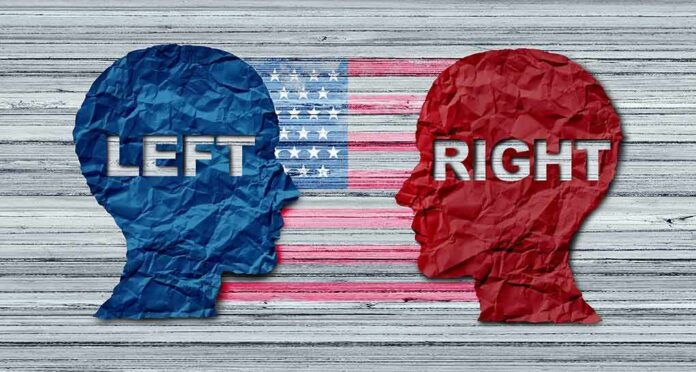
In Michigan’s Senate race, the economic argument is not abstract ideology but a fight over the state’s industrial future: whether progressive national programs like Medicare for All and the Green New Deal would safeguard families and retool auto manufacturing—or impose costs and disruptions that Michigan’s economy cannot easily absorb.
The Short Version
- Rogers has centered his case on economic risk, arguing El-Sayed’s progressive agenda would raise costs and threaten auto jobs tied to Michigan’s manufacturing base.
- El-Sayed counters that Rogers is politically tethered to President Trump and only distances himself from unpopular trade moves when public sentiment turns against them.
- The clash fits a familiar campaign template: Republicans nationalize races by labeling progressives “radical,” progressives localize costs by pointing to tariffs and health expenses.
- The real policy stakes run through autos: supply chains, energy inputs, consumer prices, and the pace of electrification and emissions policy.
What this fight is really about: Michigan’s economic operating system
The argument between Mike Rogers and Abdul El-Sayed is less a culture-war proxy than a dispute over Michigan’s operating system—how households insure against medical risk, how factories power and tool lines, and how the state wins the next generation of auto production. Rogers’s critique is straightforward: national progressive planks like Medicare for All and the Green New Deal sound aspirational, but at Michigan scale they could load the system with fiscal and compliance costs that ripple through payrolls, prices, and plant investment. In a state where nearly one in five jobs ties back to autos and their suppliers, transmission of even small policy shocks can be swift and nonlinear.
El-Sayed’s rejoinder is a mirror image: the real cost drivers are the status quo and tariff-heavy trade moves that raise input prices and consumer costs. He portrays Rogers as aligned with President Trump except when polling and pocketbook pain force tactical retreats, arguing that proximity to Trump would translate into votes that keep tariffs and inflationary pressures in place.
Mechanism: where costs show up in health care and autos
Health finance and automotive manufacturing are unforgiving to ambiguity. In health care, employer-sponsored plans anchor compensation for millions of Michiganders. Replacing that architecture with a single national payer is not just an eligibility change; it rewires provider reimbursement, benefit design, and hospital capital planning. Bridge Michigan’s analysis has long flagged the transition risk: moving nearly five million residents off employer insurance “all at once” substitutes theoretical long-run efficiency for immediate disruption in coverage pathways and provider economics. The fiscal ledger matters here—costs suppressed via administered prices still reappear as provider revenue constraints, network changes, or tax incidence somewhere else.
In autos, the Green New Deal label compresses a tangle of policies—emissions standards, clean power mandates, industrial subsidies, and labor provisions—into one banner. Each node hits a line-item: electricity rates for stamping plants, compliance engineering for powertrains, tooling for EV platforms, and qualification rules for tax credits. Firms can and do adapt when policy is durable and sequenced; they struggle when targets outrun infrastructure or when rule volatility scrambles capital planning. Rogers leans into that capital-formation reality to argue that aggressive, rapid mandates could erode Michigan’s competitive position versus Southern or international plants with lower power costs and laxer standards.
Trade policy as an economic pressure test
Tariffs are the cleanest pressure test because their incidence is observable: they lift input costs for manufacturers and retail prices for consumers. Michigan’s cross-border integration with Canada—autos, parts, steel, energy—magnifies the effect. Rogers’s recent break with the White House on the Canada tariff fight underscores that sensitivity; he called publicly to end the “tariff war,” acknowledging its pinch on Michigan consumers and raising the political cost of trade frictions that ricochet through the state’s supply chains. In debate, he even cited outreach to the administration to help land a deal—an implicit concession that tariff shocks and auto state interests are incompatible for long.
El-Sayed frames this as opportunistic repositioning, not principle—evidence, he argues, that Rogers will ultimately vote with Trump when it counts. That charge is political, not empirical, but it aligns with a broader Democratic strategy to turn tariff pain into a pocketbook indictment of Republican economic stewardship. The factual through-line is simpler: tariffs function as a tax on traded goods, and auto states pay that tax quickly and visibly. On that point, Rogers’s on-record divergence from the administration tracks industrial logic even if it complicates partisan optics.
Why the “extreme progressive” frame sticks in battlegrounds
Rogers’s “extreme progressive” label is not novel; it is the standard Republican play in competitive Senate contests and has been for cycles. The logic is tactical clarity: tie an opponent to government-run health care, climate mandates, and higher taxes, then argue those levers raise household costs and put local industries at risk. Analyses of prior cycles found Republican messaging casting Democrats as radical progressives in nearly every marquee race, reinforcing the frame across markets until it becomes ambient political weather. In Michigan, where price sensitivity is high and manufacturing identity is strong, that frame has natural traction—especially when voters are already attuned to energy bills, car prices, and insurance premiums.
El-Sayed’s counter is to mainstream his platform as cost-of-living policy: lower prescription prices, reduce surprise billing, accelerate clean manufacturing with federal investment, and localize jobs from the energy transition. He aims to flip the script by arguing that the biggest economic threat is policy drift—tariffs, health cost inflation, and climate exposure—not government action. The argument resonates if voters believe the transition can be financed and sequenced without spiking near-term costs, a tall order in a sector that plans capital over decade-long horizons.
Abdul El-Sayed Wins Michigan Senate Debate Because Mike Rogers Can’t Shake Trump https://t.co/gusvAHDVd5
— EugeneVDebs (@EugeneVDebs3) October 9, 2026
What to watch: sequencing, financing, and credible breakage points
Campaign rhetoric compresses timelines; governing success in Michigan will turn on sequencing. Three questions decide whether these competing visions help or hurt the state’s economy:
First, health financing glidepath. Any shift toward broader public coverage must define a procurement timetable, provider rate methodology, and tax-financing mix that prevents hospital balance-sheet shocks and preserves employer flexibility where it adds value. Analyses warning against an instant, mandatory rollover of employer plans are not ideological—they are operational.
Second, energy and industrial policy cadence. Michigan manufacturers can meet stringent emissions targets if power prices, grid reliability, and capital incentives align. If mandates outpace infrastructure or credit eligibility whiplashes, the result is stranded investment and offshored production—exactly what voters fear. Precision in standards and durability in subsidies matter more than slogans.
Third, trade détente with supply-chain allies. Ending punitive tariffs with Canada is not magnanimity; it is industrial hygiene for an auto state that depends on cross-border parts flow. Rogers’s public call to end the tariff fight is consistent with that math and should be read as an indicator of where policy will tend under pressure from Michigan’s business ecosystem.
Bottom line
On the evidentiary merits, Rogers’s economic critique of El-Sayed’s marquee proposals holds the initiative: Medicare for All and an aggressive Green New Deal entail real transition costs and execution risk in a state whose fortunes hinge on predictable health financing and capital-intensive manufacturing. El-Sayed’s attack on Rogers’s alignment with President Trump is politically potent but indirect; the discrete policy move with immediate Michigan impact—tariffs on Canada—now finds Rogers on the side of de-escalation. For voters deciding which vision better protects paychecks and plants, credibility will come from specifics: how each candidate would stage reforms, fund them, and shield Michigan’s auto complex from policy volatility. Absent that detail, “cost” remains a talking point. When the numbers pencil out, it becomes a plan.
Sources:
townhall.com, nbcnews.com, nytimes.com, clickondetroit.com, cbsnews.com, detroitnews.com, michiganindependent.com, mdjonline.com