When a missing 11-month-old was pulled from a shallow grave—alive, crying, and covered in the dirt that had concealed a two-foot dog crate—the rescue drove home a hard truth: in crimes involving children, physical facts often speak first and loudest. Intent, charges, and courtroom theories come later. Survival, in this case, came just in time.
The Short Version
- Deputies found 11-month-old Koah alive in a 2-by-2-foot dog crate buried under freshly disturbed earth near his family’s property in Lexington County, South Carolina.
- Sheriff Jay Koon said the towel wrapping likely created an air pocket that let Koah survive roughly a day underground; searchers heard crying as they dug.
- The site was about 50 yards from the home of the child’s paternal grandfather; the child had disappeared while in father Michael Comer’s orbit of care.
- Comer was arrested on separate charges as authorities worked with prosecutors on additional counts connected to the incident.
What Happened: The Rescue That Should Not Have Been Possible
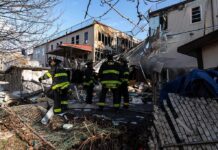
Search teams converged on a wooded area in Lexington County after an infant—identified in reporting as Koah—went missing in the care sequence that placed him with his father, Michael Comer. Investigators mapped the area around family property and noticed a patch of ground that looked wrong: freshly disturbed earth under a scatter of pine straw, the sort of surface irregularity that calls for a trowel and patience. As technicians excavated, they heard a sound searchers dream of and dread at once—a baby crying. Beneath the soil they reached a small wire dog crate, roughly two feet by two feet, swaddled in a towel. Inside, alive and “clinging to life,” was Koah.
Details from the sheriff’s account filled in the scene. The towel, stuffed inside the crate, likely trapped just enough air to keep the child breathing; the cooler outdoor temperatures may have slowed metabolic demand. Responders transported the child for care. Family members have since described the moment as a miracle, a rescue measured in minutes if not seconds, and credited both the searchers’ methodical work and providence for a survival that defies expectation.
The Physical Evidence and What It Tells Us
Some facts are not ambiguous. A baby was inside a crate. The crate was buried under dirt and pine straw. The burial site was close—about 50 yards—from the home of the child’s paternal grandfather, placing it squarely within the immediate search geography of the family’s property. Those elements align with concealment rather than accident. You do not drift into a wire crate or find yourself under a spade’s worth of earth by chance. In the vocabulary of investigators, this is a scene that reads deliberate: containerization, concealment, proximity to a known address, and an effort to obscure the surface with local ground cover.
Prosecutors, though, build cases on more than a scene diagram. Establishing who placed the child there and with what mental state are separate hurdles. Published accounts at the time centered on the child’s rescue and on Comer’s arrest for other offenses—burglary and resisting—while authorities coordinated with the solicitor on additional charges tied to the burial incident. The precision of the timeline—described by the sheriff as roughly 24 hours—and the survival mechanism—an inferred air pocket created by the towel—come from on-scene assessments rather than laboratory modeling; they are informative without being mechanical proofs.
How Search Teams Found the Crate
Finding a concealed infant outdoors depends on disciplined ground search and attention to anomalies. Investigators fanned out from known points—family residences, last-seen locations, and logical paths—then looked for sign: displaced soil, tool marks, unnatural patterns of pine straw or leaf litter. Fresh backfill is often looser and a shade lighter; pine needles sit differently over turned earth. Those contrasts drew technicians to the spot. The decision to probe rather than pass was the difference. Excavation began, and the faintest clue—crying from below—confirmed what the surface suggested. That cry also implied a cavity with at least intermittent airflow, consistent with the sheriff’s description of the towel’s role.
From a survival standpoint, an infant’s oxygen consumption, body temperature regulation, and dehydration risk make 24 hours underground a razor’s edge. Cooler ambient conditions and even a small air pocket can extend viability; conversely, heat, tight packing, or saturated soil would sharply shorten the window. The sheriff’s account fits a narrow, fortunate band of circumstances, and the outcome—alive on recovery, later described by family as without visible injury—was the outlier everyone hopes for and rarely sees.
The Family’s Ordeal and the Immediate Legal Posture
The disappearance set the family into panic and the county into motion. Reporting reconstructs the caregiving handoff that placed Koah with his father, followed by a gap—no vehicle to trigger an Amber Alert, no easy license plate broadcast—that forced a ground-up search strategy. When deputies pulled the crate from the soil, relatives heard by phone or radio relay that the child was alive; a grandmother’s “he’s alive” has since become the family’s shorthand for the pivot from dread to relief. Afterward, Comer was taken into custody on non-homicide counts while prosecutors evaluated case posture for potential additional charges arising from the incident.
Those charging decisions typically wait on formal statements, forensic processing, and consultations with child-protection and medical personnel. But the operational facts that day were enough to align law enforcement, emergency medicine, and family in purpose: stabilize the child, secure the site, and move quickly on the investigative steps that follow a recovery of this kind.
A MIRACLE BENEATH THE DIRT: BABY SURVIVES 24 HOURS BURIED ALIVE BY HIS OWN FATHER
SOUTH CAROLINA — November 10, 2026
What began as a desperate search for a missing 11-month-old boy ended in a discovery that authorities can scarcely explain. Buried beneath the earth, trapped… pic.twitter.com/Tap8c5v53i
— TommyCasanova1776 (@TommyNova1776) November 11, 2026
Why Scenes Like This Matter Beyond One Case
Incidents involving buried infants have long tested the line between what a crime scene shows and what a statute requires. Courts have treated clandestine burial, concealment in unusual containers, and flight as potent circumstantial evidence—signals of consciousness of guilt or intent—but have also insisted on specific proofs for particular charges, especially homicide and attempted homicide. In some historic infanticide cases, convictions faltered where prosecutors could not bridge the gap from suspicious concealment to the required elements of the charged offense. That legal discipline coexists with a public’s visceral response to facts like a crate under dirt: the moral shock is immediate; the legal theory is necessarily slower.
This case, however it proceeds in court, already carries two durable lessons. First, the craft of search—the granular reading of ground, the humility to follow small signs—saves lives. The “freshly disturbed earth” alert that triggered excavation is a teachable detail for every agency that conducts outdoor recoveries. Second, in child endangerment and abuse investigations, the physical tableau is not a backdrop; it is evidence with its own voice. A crate, a towel, and a shallow grave tell a story of risk and intent that prosecutors will test against statutes, but for a reader trying to understand what happened, they are enough to know the stakes were mortal and the rescue narrow.
A Miracle, and the Work That Made It Possible
Family members have called Koah’s survival a miracle. From a practitioner’s perspective, the miracle had collaborators: the caregiver who called quickly, the deputies who stretched a search from a doorway to the tree line, the technicians who caught the color change in the soil, the excavators who kept digging even before the cry, and the medical team that took over the moment the crate cleared daylight. Outcomes like this are not accidents; they are the compound interest of training paid forward into a single hour when it matters most.
Sources:
youtube.com, nbcnews.com, ksl.com, wchstv.com, abcnews4.com, cbsnews.com, abc7ny.com, kansas.com, wsoctv.com