
Ahead of a once‑in‑a‑generation World Cup final on U.S. soil, millions of Americans are being told to stay inside because the air outside is literally too dangerous to breathe.
Story Snapshot
- Smoke from hundreds of Canadian wildfires has pushed air quality into hazardous territory across large parts of the U.S. just days before the World Cup final near New York City.
- Detroit and Chicago ranked among the most polluted cities in the world this week, and officials in many states are urging people to stay indoors or wear masks outside.
- New York and New Jersey, host of Sunday’s Spain‑Argentina final, have faced “unhealthy” air, though forecasters expect a cold front and rain to improve conditions in time for kickoff.
- Health experts warn that fine particles in wildfire smoke can damage lungs, hearts, and other organs, raising questions about how governments are protecting basic public health.
Wildfire Smoke Turns Daily Life Hazardous Across the U.S.
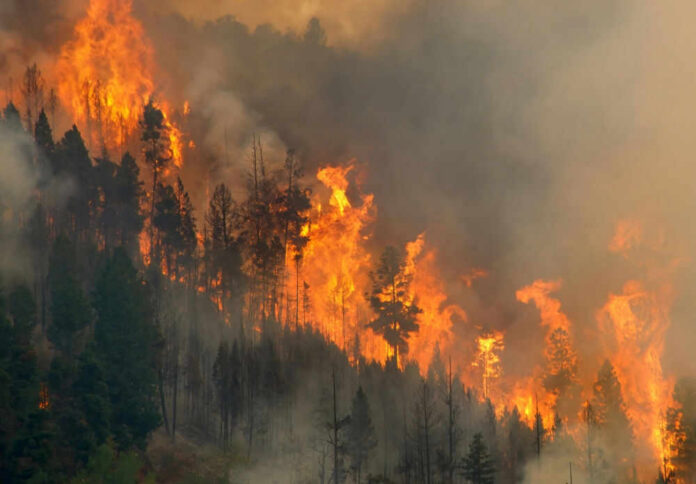
Heavy smoke from Canadian wildfires has spread across the Midwest, Great Lakes, and Northeast, turning normal outdoor life into a health risk for tens of millions of people. Detroit and Chicago recorded air quality index readings in the “hazardous” range, placing them among the most polluted cities on the planet this week. At those levels, public health agencies warn that everyone, not just vulnerable groups, faces a real danger from breathing the air for even short periods.
Officials across many states have issued air quality alerts and urged residents to stay indoors, limit exercise outside, and use masks when they must go out. In Washington, D.C., the air quality index reached the “very unhealthy” category, which triggers advice for all people to avoid unnecessary outdoor activity. Meteorologists say the worst smoke is coming from more than 200 fires burning out of control in Ontario and other parts of Canada, with upper‑level winds carrying the pollution deep into the United States.
World Cup Final Proceeds Under a Cloud of Uncertainty
New York City and neighboring New Jersey, home to MetLife Stadium where Spain and Argentina will play the World Cup final, have been shrouded in thick haze from the Canadian fires. On Thursday, smoke made the Manhattan skyline barely visible and pushed the metro area’s air into the “unhealthy” range, raising concerns about players training outdoors and fans heading to open‑air events. Spain still held practice outside in northern New Jersey despite hazardous readings, underscoring the pressure to keep global sports on schedule.
World Cup organizers say they are “monitoring closely” but have not set clear pollution limits that would force a delay or cancellation. Forecasts from the World Health Organization and private weather services point to a cold front and up to an inch of rain on Saturday that should sweep much of the smoke away from the New York‑New Jersey area before the 3 p.m. kickoff on Sunday. That expected improvement may spare the final, even as millions of nearby residents continue living under warnings that the air they breathe is unsafe.
Health Risks and the Bigger Question of Government Priorities
Doctors and health agencies stress that wildfire smoke is not just an annoyance; it is a mix of dangerous pollutants, especially very small particles known as PM2.5 that can travel deep into the lungs and bloodstream. Research reviewed by the World Health Organization and the United States Environmental Protection Agency links short‑term smoke exposure to spikes in asthma attacks, more emergency room visits, worsening heart disease, and even early death in some cases. One study found that smoke events can drive sharp jumps in cardiopulmonary problems across large, diverse patient groups.
𝐂𝐀𝐍𝐀𝐃𝐈𝐀𝐍 𝐖𝐈𝐋𝐃𝐅𝐈𝐑𝐄 𝐒𝐌𝐎𝐊𝐄 𝐂𝐇𝐎𝐊𝐄𝐒 𝟐𝟎 𝐒𝐓𝐀𝐓𝐄𝐒, 𝐌𝐈𝐍𝐍𝐄𝐀𝐏𝐎𝐋𝐈𝐒 𝐀𝐈𝐑 𝐐𝐔𝐀𝐋𝐈𝐓𝐘 𝐇𝐈𝐓𝐒 𝐇𝐀𝐙𝐀𝐑𝐃𝐎𝐔𝐒 𝟒𝟔𝟎
Smoke from wildfires burning across the Arrowhead region, the Boundary Waters Canoe Area Wilderness, and southern Canada… pic.twitter.com/VqLAoqsQ8R
— M.A. Rothman (@MichaelARothman) July 17, 2026
For many Americans watching this unfold, the situation feeds a growing frustration that government seems quicker to protect major events and global optics than to fix deeper problems that make daily life feel more fragile. On the left and the right, people who already worry about rising costs, strained health systems, and a distant political class now see a basic need—clean air—becoming a seasonal question mark. Scientists warn that wildfire smoke days across North America are no longer rare flukes but part of a long‑term shift toward smokier skies driven by changing climate and land management.
Smokier Skies Are Becoming the New Normal
Studies of air monitors across the United States show that wildfire smoke has reversed years of progress in cleaning up the air, especially in western and northern regions. Between 2018 and 2023, wildfire smoke was responsible for about a quarter of days with unhealthy ozone levels, with 2023 setting records because of Canadian fires. Another analysis found the average American experienced nearly 150 days of complete smoke coverage in their county in 2023, up from about 20 such days in earlier years.
These numbers confirm what people now feel on the ground: long‑range smoke from distant fires can disrupt work, school, sports, and simple time outside, far from where the flames burn. That reality does not fit neatly into old political talking points. Conservatives who distrust global climate deals and liberals who distrust fossil fuel interests both see a common problem when the air itself becomes a recurring hazard and leaders offer only temporary advisories and mask tips. As smoke settles over a World Cup final and over everyday neighborhoods alike, it sharpens a shared question for many Americans: if government cannot guarantee clean air on a regular basis, what exactly is it doing for the people it claims to serve?
Sources:
insiderpaper.com, bbc.com, npr.org, reuters.com, nytimes.com, pbs.org, science.nasa.gov, cnn.com, larkscientific.org, nicb.org, sciencedirect.com, pmc.ncbi.nlm.nih.gov, nwfirescience.org, repository.library.noaa.gov, pnas.org, preventionweb.net