
Institutions often prize rare expertise until identity collides with power; in Julia Curlee’s case, published reporting shows a seasoned national-security professional who was kept through a sweep of dismissals—until her transgender identity became public, at which point her access and employment ended.
The Short Version
- Published accounts depict Julia Curlee as a highly regarded intelligence professional retained through early staffing purges—until her transgender status became publicly known, after which she was removed.
- Her departure sits inside a broader, rapid remaking of national-security staffing in the first 70 days of President Trump’s second term, including cuts at the NSC and ODNI.
- Curlee has publicly criticized politically driven firings across the intelligence community and described concrete workplace barriers tied to being trans, including bathroom access restrictions.
- Federal law after Bostock makes adverse actions taken “because of” an employee’s transgender status unlawful under Title VII, sharpening how such disputes are evaluated.
What the reporting establishes: expertise valued, then identity made her expendable
The through-line across reputable coverage is consistent: Curlee—identified in reporting as a former CIA analyst, White House director for intelligence programs, and senior National Security Council official—was treated as indispensable during an early shakeup, then dismissed when her transgender identity became public. The Atlantic’s account is blunt: colleagues considered her “too essential to let go even when everyone else was fired,” a posture that vanished “the moment it became public that she was trans”. That juxtaposition—retention during a purge, followed by termination upon public disclosure—anchors the causality the reporting presents.
The record also includes an acknowledgment of her standing among peers. Contemporary commentary and profiles describe her as a highly regarded senior analyst, not a token presence or political appointee parachuted into a sensitive billet. That status matters; in national security, where clearances are hard-won and credibility is cumulative, reputational signals from colleagues are rarely casual.
The broader staffing context: a fast, top-down restructuring of national security roles
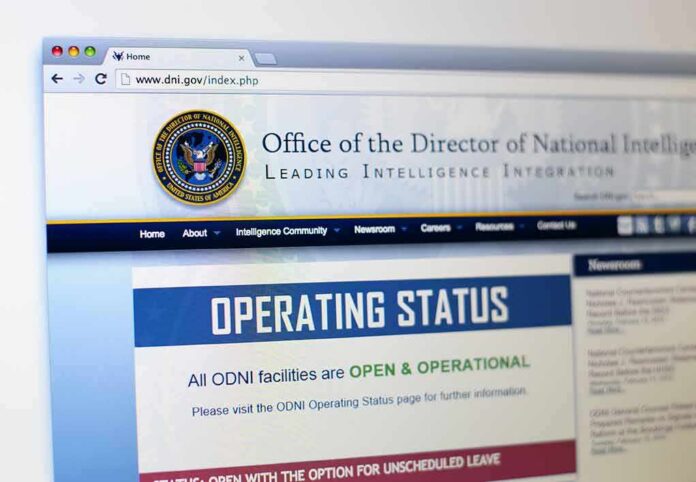
Curlee’s experience occurred amid an aggressive realignment of personnel in the opening months of the administration. Lawfare’s coverage—summarizing interviews and internal reporting—describes a “purge of the NSC” within the first 70 days of the term, with rapid turnover and reassignment shaping policy shops and staff functions. In parallel, the Office of the Director of National Intelligence experienced significant reductions. The Inquirer reported roughly 200 jobs cut since June 1, while other outlets chronicled leadership boasting about mass firings as a deliberate course, not attrition by neglect. Newsmax likewise framed ODNI cuts as an affirmative, early priority.
Against that backdrop, two realities can be true at once: administrations do reshape staff quickly, especially in national security, and individual cases can still turn on unlawful motives. The fact pattern in Curlee’s case—retained for expertise through a sweep, then removed when her identity became public—is exactly the sort of timing sequence employment lawyers recognize as probative, especially when paired with allegations of contemporaneous access or facilities restrictions that treat a protected characteristic as disqualifying.
Concrete workplace consequences alleged: “fired without explanation,” access curtailed
Reporting based on Curlee’s account states she was “fired without explanation” and describes steps that made day-to-day functioning untenable, including not being permitted to use the restroom—conduct that, if borne out, is classic evidence of a hostile work environment and disparate treatment tied to gender identity. While national-security workplaces have legitimate, sometimes stringent, access and compartmentation rules, bathroom restrictions are not a classification protocol; they are a workplace practice, and, after Bostock, policing it on the basis of a person’s transgender status invites legal exposure under Title VII.
Curlee also offered contemporaneous public criticism of politicized firings across the community. In coverage of ODNI reductions, she argued that “sacking dozens of seasoned officers in your first week isn’t reform—it’s performative firing to please a president who treats his own intelligence community as the enemy within”. That is not a mere workplace gripe; it is a description of a theory of governance in which loyalty optics trump institutional memory. Her critique aligns with the tempo and scale of personnel changes others documented at NSC and ODNI during the same period.
The legal lens: why the sequence matters after Bostock
Federal anti-discrimination law leaves little daylight on this point: under the Supreme Court’s 2020 decision in Bostock v. Clayton County, an employer who fires an employee for being transgender violates Title VII’s prohibition on discrimination “because of sex”. That holding applies to the federal government as employer. The practical effect is analytical clarity. Where an employee can show that an adverse action was taken because of transgender status, the law is violated—even if other factors played a role. Thus, evidence of timing (the shift after identity became public), inconsistent explanations (“fired without explanation”), and discriminatory workplace rules (bathroom restrictions) become legally salient, not merely narrative color.
At the same time, administrations retain wide latitude to restructure teams, eliminate positions, or change priorities—particularly in national security. The line Bostock draws does not stop reorganization; it bars using a protected characteristic as a but-for cause of an individual’s adverse treatment. That is why the specific sequence in Curlee’s case—essential through a purge, dismissed upon public disclosure of identity—carries weight in assessing motive, even when large-scale staffing changes are simultaneously underway.
The Trump White House needed me—until the fact that I am trans became public, by Julia Curleehttps://t.co/XcuLAkEmop
— Nell Minow (she/her) (@nminow) August 17, 2026
Why this episode resonates inside intelligence culture
National-security organizations depend on scarcer assets than budgets and buildings: judgment, institutional continuity, and the trust that lets people tell hard truths. When a team telegraphs that identity can erase expertise overnight, it chills candor and accelerates brain drain. Curlee’s profile—long-form work at CIA, senior roles touching White House processes, directorship-level responsibilities—represents precisely the kind of professional capital that is most expensive to replace. The costs of sudden removal are not just personal; they are operational, as portfolios shift to less experienced hands in the middle of complex threat cycles.
There is also a quieter cultural cost. Intelligence organizations have spent decades climbing out of earlier eras when entire classes of Americans—women, LGBTQ employees, immigrants with critical language skills—were sidelined by stereotype or suspicion. The modern framework, reinforced by Bostock, is not merely compliance; it is a recognition that diversity of background, when coupled with rigorous vetting and tradecraft, strengthens analytic performance. Episodes that signal a reversion to identity-based gatekeeping broadcast a message far beyond the individual case.
How to read cases like this going forward
Three questions separate the routine from the unlawful in federal personnel disputes of this type. First, timing: did adverse action follow closely on the heels of the employer learning the protected fact? Second, comparators: were similarly situated colleagues treated differently under the same restructuring? Third, contemporaneous conduct: do emails, access decisions, or workplace rules reflect identity-based reasoning? The public reporting on Curlee squarely addresses the first and, through allegations of restroom restrictions and “fired without explanation,” points toward the third. Comparator analysis typically requires internal records; those are not in open sources, but the ODNI and NSC staffing stories provide the macro backdrop against which such analysis would run.
For readers outside government, the policy implication is straightforward. Broad reorganizations will remain a feature of political transitions; they are lawful when grounded in mission design, not identity. The Bostock standard is settled law; it does not inhibit legitimate restructuring but does forbid using transgender status as the lever. Curlee’s account, supported by multiple outlets and set within a documented period of rapid staffing change, illustrates the difference—and the costs when leaders ignore it.
Sources:
theatlantic.com, newsmax.com, shows.acast.com, ground.news, alternet.org, lawfaremedia.org, x.com, substack.com