When gunfire tears through a crowded backyard, clarity must start with facts: nine people were shot at a Bloomington, Illinois Halloween party, one of them—19-year-old college cheerleader Giana Dettloff—was killed, and as of the days following, police had not yet made an arrest. Those are the hard edges of this case; everything that matters builds from there.
The Short Version
- Nine people were shot around 1:20–1:30 a.m. in a common backyard on East Division Street in Bloomington, Illinois; one victim, 19-year-old Giana Dettloff, died.
- A nearby officer reported hearing about 10 shots; police responded within minutes and began triage and scene control.
- The coroner identified Dettloff and attributed her death to multiple gunshot wounds to the chest and pelvic region.
- As of subsequent local reporting, no suspects were in custody; police are seeking video and witness accounts from attendees.
What Happened: The Established Record
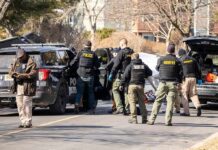
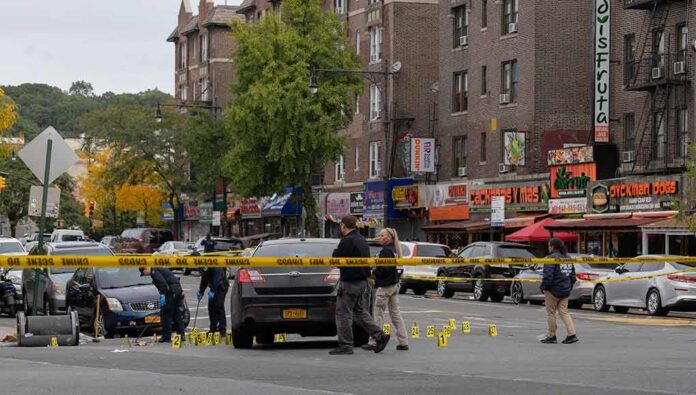
Shortly after 1:20 a.m., Bloomington police were called to the 100 block of East Division Street for a reported shooting. Multiple local outlets, attributing their information to police officials, reported nine people shot, one fatally. The setting was a backyard shared by rental properties—essentially a common yard behind buildings on East Division—where a Halloween party had drawn a large crowd of young people, many of them college-age. A nearby officer, on an unrelated call, heard roughly 10 shots, a detail that aligns with the rapid sequence many witnesses described in aftermath interviews to local stations. Police and emergency responders began immediate aid and transported victims to area hospitals. Ages of the injured ranged from mid-teens to early twenties, according to the police chief’s briefing to Chicago media. Two victims remained hospitalized in the days after the attack, reported to be in stable condition by local outlets citing police updates.
The McLean County coroner publicly identified the deceased victim as Giana (Gianna) Dettloff, a 19-year-old North Central College freshman cheerleader from the Chicago suburbs. The preliminary cause of death was multiple gunshot wounds to the chest and pelvis—language that reflects both the severity of her injuries and why she could not be saved despite rapid response. Coverage from CBS Chicago and other regional outlets anchored those specifics to on-record statements from the coroner and Bloomington police leadership.
Where It Occurred and Why That Matters
Investigators and local reporting consistently place the shooting outdoors in a common backyard adjacent to rental buildings in the 100 block of East Division Street, near Illinois Wesleyan University—off-campus, but proximate enough that students and visitors mix routinely in that area. The physical layout of common yards behind multi-unit housing influences both how a shooting unfolds and how it is solved: multiple sightlines, several egress points, and a dense cluster of potential cameras (doorbells, rear security units, alleyway views). Police urged residents to check private security systems and submit footage—standard practice in multi-attendee incidents where many small snippets, time-stamped, can stitch together trajectory and timing, from the first flash to the last flight from the scene.
The party size also matters. Reports and on-air segments referenced estimates of 150 to 200 attendees. Large outdoor gatherings degrade the reliability of solitary eyewitness accounts; chaos compresses perception. Conversely, the sheer number of phones and potential cameras becomes an evidentiary asset. When police emphasize canvassing for video and stills, they are not fishing—they are building a granular timeline: who entered and left, who displayed a firearm earlier in the night, who ran first when shots started, and from where the muzzle blasts originated. A nearby officer’s estimate of approximately 10 shots adds temporal structure to that reconstruction.
Victims and Verification: What Is Firmly Known
One death and eight additional gunshot injuries are not in dispute; both counts were attributed to named officials and corroborated across local outlets. The coroner’s identification of Dettloff, including wound locations, provides the medical backbone the public often seeks in the fog of a breaking event. The surviving victims’ identities have not been released in the available reports—common both for privacy and investigative integrity, especially when some victims are minors and others may become witnesses in a potential prosecution. Local outlets indicated that two remained hospitalized but stable several days later, a status conveyed by police spokespeople in routine updates.
Official briefings emphasized that, based on preliminary work, the incident appeared isolated—no ongoing threat to the wider public—while investigators still worked to determine whether one or multiple shooters fired. That pairing is not contradictory: detectives can assess risk to the general community from early indicators (discrete dispute versus roaming attacker) even as they sort the finer points of weapon count and exact motive.
Why This Qualifies as a Mass Shooting Under Common Usage
This incident meets the Gun Violence Archive’s statistical threshold for a mass shooting: four or more people shot, excluding any shooter. The federal government has no single statutory definition of “mass shooting”; counts vary by whether a dataset requires fatalities, public settings, or excludes certain criminal contexts. But the GVA threshold is widely used in media and research summaries, which is why local and national outlets apply the term when reporting nine gunshot victims at a single party.
That definitional backdrop clarifies rather than politicizes the language. The FBI’s reporting focuses on “active shooter” incidents and “mass killings” rather than a single “mass shooting” category, which is why one agency’s annual totals differ from journalistic compilations. For the Bloomington case, the public-health lens—people shot in a single event—accurately describes what occurred without implying conclusions about motive or premeditation that investigators have not announced.
How Investigations Like This Progress
Backyard party shootings are solved by layering evidence: witness interviews, 911 audio and dispatch logs to anchor time, body-worn camera video for first-arrival conditions, and, critically, ballistics. Shell casings—if recovered in sufficient number—permit caliber identification and, with National Integrated Ballistic Information Network (NIBIN) entry, the potential to link a weapon’s firing signature to other scenes. Autopsy and wound-pathology work informs firing direction and distance; together with casing location and any recovered projectiles, detectives can triangulate shooter position(s). When a nearby officer reports a specific shot count, that detail is cross-checked against casing tallies and audio captured by vehicles, home cameras, or even campus surveillance microphones. In cases with competing rumors, the physics of trajectories and the mathematics of timestamps tend to win.
Digital evidence has become determinative in crowded settings. Doorbell cameras pointed at alleys, balcony cameras overlooking the yard, even rideshare dashcams on cross streets—all can catch the prelude: individuals flashing a firearm earlier in the evening, a heated argument cresting minutes before the first shot, or a car that idles with its lights off at the moment the crowd surges. Bloomington police explicitly appealed for that material, a step that often precedes a focused person-of-interest identification and, later, charging decisions.
Human Consequence and Community Response
The death of a 19-year-old first-year college student at a social gathering resonates beyond crime statistics. Local reporting captured the immediate, human response: schools arranging support services, coaches and employers offering tributes, and peers organizing memorials. Those details are not incidental; they explain why communities treat incidents like this as civic wounds rather than isolated police files. They also sustain public cooperation with detectives when attention spans would otherwise fade—people respond to names and lives, not just case numbers.
What We Don’t Yet Know—Without Speculation
Police have not publicly identified a suspect, and officials have not said whether one or multiple shooters were involved. Motive remains unannounced, and the sequence immediately preceding the shots has not been detailed in official briefings. Those are ordinary blanks early in a complex case and are not evidence of contradiction or dispute; they are simply the parts of the file investigators protect while they pull on the right threads. As with any active investigation, more detail typically arrives after interviews are completed, digital evidence is cataloged, and forensic reports return.
Bloomington police said two victims of last weekend’s Halloween party shooting remain hospitalized in stable condition, while six others have been released. Giana Dettloff, 19, died at the scene. There is no suspect in custody. https://t.co/ahVHA9SJaa
— The Pantagraph (@Pantagraph) November 5, 2026
The Bottom Line
The core facts are clear: a Halloween party in a shared backyard on East Division Street in Bloomington ended in a mass shooting that killed a 19-year-old and wounded eight others. The coroner’s identification, the police chief’s victim counts and age ranges, and the officer’s account of approximately 10 shots establish a stable factual spine. Investigators are building the rest the way modern detectives do—by knitting witness accounts to video and ballistics—while the community mourns a young life cut short and waits for an arrest that, in cases like this, usually turns on the quality of shared evidence.
Sources:
thegatewaypundit.com, wglt.org, wbtv.com, 25newsnow.com, people.com, chicagotribune.com, gunviolencearchive.org, congress.gov, politifact.com, pewresearch.org, fbi.gov