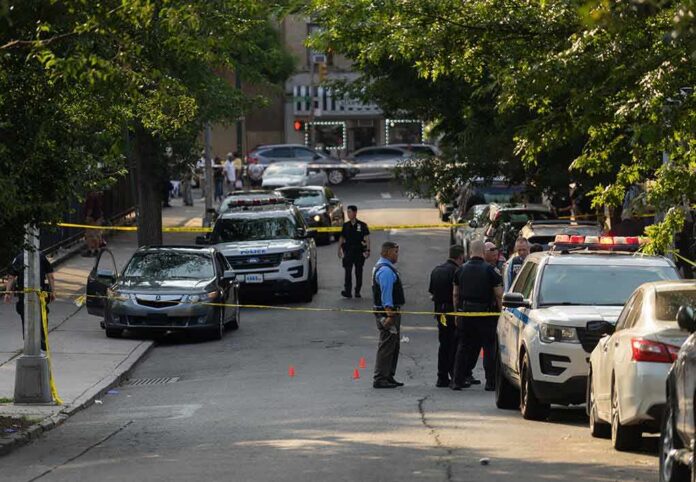
In the minutes it takes for officers to race up a stairwell and follow the sound of gunfire, the fate of multiple families is often decided; the downtown Minneapolis high-rise shooting illustrates how quickly an “active incident” becomes a complex homicide scene, and why clear early facts and disciplined follow-on investigation matter.
The Short Version
- Police responded within minutes to reports of gunfire at 15 East Grant Street and engaged an active shooter inside the building.
- Three people were killed, including the suspected gunman; several others, among them police officers, were injured.
- Investigators worked to determine whether the gunman’s death was self-inflicted or the result of police fire, a routine but consequential question in critical incidents.
- The response drew multiple agencies and routed victims to Hennepin Healthcare, reflecting mass-casualty protocols common to urban shootings.
What happened inside the high-rise
Calls began with a single victim report and quickly escalated as additional 911 callers described ongoing shots at a downtown Minneapolis apartment tower, identified by police as 15 East Grant Street. Dispatch records describe officers arriving within roughly three minutes of the initial alert, entering a building where gunfire continued and victims were already down. Following the sound to an upper floor through haze that limited visibility, officers encountered the suspected gunman and exchanged fire. By the time the scene was stabilized, three people were dead, including the suspect, and several others had been transported for emergency care; among the injured were Minneapolis police officers struck by gunfire, one of whom required surgery for a leg wound.
The interval between first contact and the last discharged round in a multi-story residential structure is measured in minutes but contains dozens of discrete decisions: how to split teams, how to manage limited sightlines in smoke or aerosolized debris, how to identify victims versus threats when residents are fleeing hallways, and when to transition from contact teams to rescue task forces. Those choices are why agencies drill for “active aggressor” conditions even in non-public spaces like apartment corridors, where acoustics, angles, and door density complicate movement.
Why the early facts look incomplete—and how they harden
The first official account in any critical incident is necessarily partial. Priority one is stopping the killing and extracting the wounded; a coherent narrative comes later, once medics, crime scene technicians, and detectives have done their work. Even a basic but vital question—did the suspect die by suicide or from police gunfire—relies on autopsy findings, ballistic matches, stippling, and shot trajectory analysis, not on hallway impressions in a haze. This case followed that pattern: police confirmed the suspect was dead at the scene but initially withheld a determination of manner of death pending forensic results and investigative interviews.
That caution matters because labels such as “officer-involved shooting” can freeze public memory around simplified frames before the forensic record is complete. Academic and policy literature has repeatedly shown how phrasing, video release timing, and selective details shape interpretation; body-camera and bystander video, perceived as transparent, can mislead when the angle excludes critical context or the sequence is incomplete. The professional remedy is procedural: preserve the scene, isolate witnesses, synchronize body-worn camera clocks, and reconcile statements with physical evidence before issuing conclusive narratives.
Mechanics of the response: from dispatch to hospital bay
The speed of the Minneapolis response—officers at the address within minutes—is consistent with national active-shooter doctrine that prioritizes rapid contact with the aggressor over perimeter lockdowns. Once gunfire subsided, incident command expanded to include regional partners to secure the building and maintain broader city coverage, a common practice in metro areas. Simultaneously, Hennepin Healthcare activated surge capacity for multiple gunshot victims; in Minneapolis, that institution’s emergency department functions as a primary receiver for multi-victim trauma, and the handoff from police to EMS to trauma teams is a well-rehearsed choreography designed to work even when patient identities and exact wound counts remain fluid in the first hour.
Inside the building, officers reported moving through a haze on upper floors—a detail that, while ancillary in public briefings, carries real tactical weight. Reduced visibility complicates positive threat identification and increases the risk of blue-on-blue contact in narrow hallways. It also hinders quick triage of casualties; without clear lines of sight, teams must clear, mark, and revisit rooms to avoid missing the wounded. These conditions, more typical of commercial structures after fire suppressant discharge, are particularly punishing in residential towers with dense door arrays.
The investigative spine: how cause, sequence, and accountability are established
After the last victim leaves the scene, the center of gravity shifts to investigators and forensic specialists. Determining the cause and manner of the gunman’s death requires autopsy findings (wound characteristics, soot and stippling, muzzle-to-target distance), ballistic comparisons (projectile rifling, recovered casings), and scene reconstructions that marry bloodstain patterns with witness timelines. Misclassifications—suicide mistaken for homicide or vice versa—are well-documented risks absent a complete forensic workup, which is why competent agencies avoid early declarations and instead pledge updates after the medical examiner’s report and lab analyses are complete.
Parallel tracks handle officer-involved elements. Minnesota agencies follow policies for critical incident review that include preserving body-worn camera footage, sequestering involved officers for clean statements, and, when appropriate, assigning an outside entity to lead the force investigation. This scaffolding is not bureaucratic ritual; it is the guardrail that ensures that the same rigor applied to civilian deaths governs the portion of the scene involving police gunfire, whether or not that fire proved fatal.
UPDATE — Minneapolis high-rise shooting
Three people are dead, including the suspected gunman, after a shooting Wednesday afternoon at Shoreline Plaza (formerly Loring Towers), 15 E. Grant St., near the Convention Center.
Police were called at 4:36 p.m. after reports of a… pic.twitter.com/VuejWMSkg2
— Vitamvivere (@Vitamvivere) September 3, 2026
How to read early claims responsibly
In the immediate aftermath of a mass-casualty event, specific details proliferate—some accurate, some speculative. Reporting that officers arrived within minutes, that gunfire continued as they climbed, that victims were carried out to ambulances, and that multiple agencies established a secure perimeter is consistent across reputable accounts and aligns with standard practice in urban active-shooter responses. By contrast, assertions about motive, relationships among victims, or eviction status require confirmation from named officials, documents, or on-record investigative disclosures before they graduate from possibility to fact; responsible outlets waited for those confirmations rather than launder rumors through repetition.
What this incident teaches about preparedness and limits
The case underscores three durable truths. First, speed saves lives: early contact with an armed aggressor in a confined structure reduces the window for additional casualties, even as it increases risk to responding officers. Second, clarity takes time: the same community that benefits from quick reassurance also benefits from investigators who refuse to rush determinations that belong to the autopsy table and the ballistics bench. Third, systems matter: a single city block in crisis quickly demands regional mutual aid, hospital surge protocols, and disciplined public communication to keep both the scene and the broader city functioning.
Those truths are not unique to Minneapolis; they are the architecture of modern critical-incident management. When they are executed well—as they largely were here in the initial response—the public sees courage and competence. When they continue through the slower, less visible phases of forensic work and transparent reporting, the public gets something just as important: credible answers about what happened, how, and why.
Sources:
en.wikipedia.org, hennepinhealthcare.org, minneapolismn.gov, facebook.com, police1.com, flyoverphilosophy.substack.com, aclu.org