When a former president publicly alleges that a sitting administration is wielding federal law-enforcement power to punish a critic in Congress, the stakes are not a dust-up over rhetoric but the operating rules of American democracy: whether the coercive machinery of the state can be trained on dissent.
The Short Version
- Barack Obama accused the Trump administration of selectively targeting Rep. Ilhan Omar for her speech, after federal agents searched her home and issued subpoenas to relatives.
- The Justice Department and Homeland Security Investigations described the search as a judicially authorized step in an ongoing criminal probe; President Trump publicly said it was DOJ’s call, not his.
- Reporting indicates investigators are examining Omar’s immigration history and related paperwork, including questions tied to derivative citizenship.
- The clash sits in a well-documented pattern of presidential pressure on law enforcement, and in a legal tradition that aspires to prosecutorial independence.
What Happened: A former president’s charge and a federal search
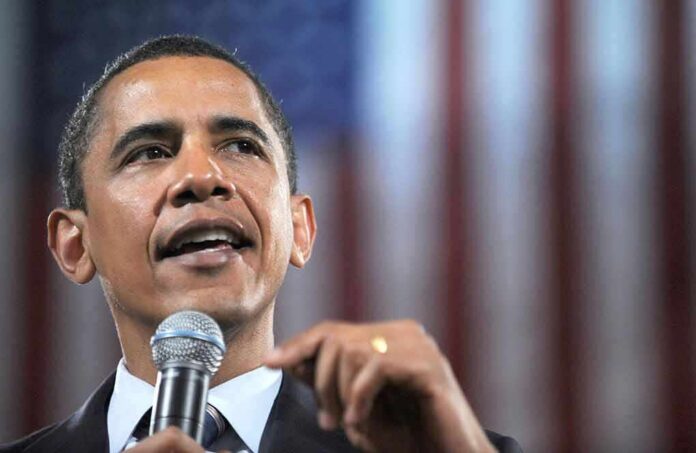
On October 18, 2026, Barack Obama said the Trump administration had brought “the full weight of the federal government” against Rep. Ilhan Omar because she had criticized the president, calling the conduct “appalling” and asserting a basic democratic principle: the government cannot selectively target people for their beliefs or speech. Obama’s statement followed visible investigative steps. Within the prior week, federal agents executed a judicially authorized search at Omar’s Washington, D.C., residence in connection with an ongoing criminal investigation, and relatives reportedly received subpoenas seeking records tied to her immigration history and family paperwork. The Justice Department confirmed that Homeland Security Investigations (HSI) carried out the warrant as part of an active federal inquiry.
From the White House podium and in press gaggles, the administration framed the matter as law enforcement following facts. President Trump said the decision belonged to the Justice Department and that he had “nothing to do” with the search, even as he said investigators were looking at Omar “very carefully”. The core dispute is thus crisply drawn: Obama characterized the same activity as intimidation for protected speech; the administration characterized it as ordinary enforcement.
The probe’s subject matter: derivative citizenship and paperwork scrutiny
Published accounts describe investigators probing whether Omar’s immigration and family records contain inconsistencies with legal consequences, including a question about whether she was 18 rather than 17 when her father naturalized—an age distinction that can bear on derivative citizenship under federal law. That line of inquiry plausibly intersects with a political narrative that has dogged Omar for years: attacks on her legitimacy as a citizen and an elected official. Agents also sought financial and related paperwork, according to reports, suggesting a broader documentary audit beyond a single statutory hinge point.
Two facts are uncontested in the record to date: agents executed a court-authorized search in the D.C. area as part of a criminal investigation, and federal authorities issued demands for records to people connected to the representative. Those steps, by themselves, do not resolve the government’s theory; they do, however, convert a rhetorical fight into a concrete one, with artifacts—warrant affidavits, subpoena returns, and investigative files—that will ultimately anchor any legal or congressional oversight.
The competing frames: intimidation claim versus law-and-order defense
Obama’s case rests on motive and precedent. He argued that punishing speech with process is incompatible with democratic norms and warned about the example it sets for future administrations. The administration’s case rests on institutional form: the Justice Department, not the White House, secured a judge’s authorization and is conducting a criminal investigation; therefore, the inference should be regular order, not retaliation. Both claims are intelligible to anyone who has watched the American presidency: motives can be political even when procedures are facially regular; procedures can be regular even when a target is politically salient.
Two additional public statements are part of the contemporaneous landscape. Vice President JD Vance said the administration tries to “let the law follow the facts rather than creating facts just to prosecute people we don’t like,” while acknowledging they would look into allegations against Omar. Trump himself mixed distance—“really up to the DOJ”—with antagonism, calling Omar “totally crooked” in separate remarks. That duality has been characteristic of modern presidential communications about ongoing cases and complicates clean narratives on both sides.
How we got here: the long friction between presidential power and prosecutorial independence
The American system aspires to a buffer between political leaders and prosecutors. Across two centuries, constitutional and institutional design have tried to insulate charging decisions from partisan command, yet scholars have shown that prosecutors operate within political environments that can bend priorities and resources in response to elected signals. In recent years, this friction has been unusually visible. Investigations and attempted investigations of political antagonists proliferated across Trump’s public and private exhortations; independent chronologies and analyses have cataloged specific instances where his demands coincided with federal pressure on rivals, while also noting cases where subjects’ conduct could reasonably attract scrutiny under neutral criteria.
That context does not decide the Omar dispute; it situates it. A search warrant signals a judge found probable cause—a low but legally significant threshold—based on a sworn affidavit. It does not answer the selective enforcement question, which in doctrine turns on whether similarly situated non-critics escape scrutiny while critics are pursued. Nor does it answer the policy question that Obama foregrounded: even if prosecutors can bring a case, should they, where the equities include voters’ representation and the chilling of political speech?
What to watch: the documents, the timing, and comparators
Three evidence sets will ultimately carry more weight than statements. First, the warrant affidavit and any related filings will show the government’s factual theory at the time of the search—what investigators knew, from whom, and why a home search, rather than less intrusive means, was necessary. Second, the subpoenas’ scope and accompanying correspondence will map the investigation’s breadth and whether it is tethered to neutral enforcement programs or steered ad hoc toward a single elected critic. Third, comparators matter: if immigration-document audits of public figures are routine and pursued regardless of politics, that weakens a selective-targeting claim; if they are rare and chiefly land on outspoken opponents, that strengthens it.
Timing analysis also matters. Investigations that crest immediately after high-profile criticism invite inferences of retaliation; those with a documented, preexisting investigative arc grounded in earlier referrals or audits point the other way. Public reporting already includes claims that the inquiry had been “underway for a while,” a factual point that, if borne out by records, bears on motive analysis without deciding it.
Why it matters beyond one member of Congress
The precedential stakes are larger than Omar, Obama, or Trump. A democracy tolerates robust political speech in part because it restricts how and when the state can deploy force—searches, subpoenas, indictments—against the speaker. The legal line is not that public officials are immune from investigation; it is that the government may not condition investigative zeal on the target’s viewpoint. The institutional line is equally important: presidents should not direct prosecutions, and prosecutors should not take the hint when those directions are implied. When either line blurs, public trust in neutral justice evaporates fastest among those who most need persuading.
The test ahead is therefore simple to state and exacting to meet. The administration must demonstrate, through case documents and consistent comparators, that the Omar probe is indistinguishable from how similar allegations are handled for others. Obama and those who share his concern must show why this case’s patterns—its timing, scope, and rhetoric—depart from regular order. The facts being developed in courthouses and case files, not the volume of political statements, will decide that argument.
Bottom line
Two things are true at once in this episode. Federal agents, with a judge’s authorization, searched a member of Congress’s home as part of an active criminal investigation into documentary and immigration issues. And a former president publicly charged that the sitting administration is using that machinery to punish an outspoken critic. How those truths reconcile will turn on records that exist—and on whether the system can still put law ahead of loyalty in resolving them.
Sources:
nbcnews.com, cnn.com, spokesman.com, bbc.co.uk, straitstimes.com, nytimes.com, mediaite.com, washingtonexaminer.com, abcnews.com, newsweek.com, politico.com, news3lv.com, justsecurity.org, digitalcommons.nyls.edu