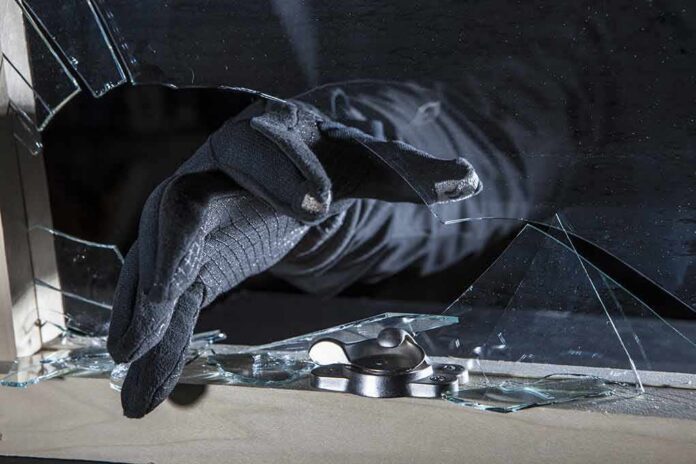
A failed break-in in Fort Lauderdale illustrates a simple truth with outsized consequences: laminated hurricane-impact windows don’t just ride out windborne debris; they turn many forced-entry attempts into noisy, time-consuming failures that send offenders fleeing and residents unharmed.
The Short Version
- Fort Lauderdale police say two masked suspects attempted to force entry into an occupied home, striking an impact-rated window with a handgun; the glass held and the pair fled.
- Attempted entries count in victimization statistics and carry serious legal exposure even when burglars never breach the home or steal property.
- Impact glazing resists shatter-and-enter tactics by remaining intact after fracture; breaking through requires sustained, conspicuous effort that many offenders will abandon.
- Most household burglaries do not involve violence; when residents are present, incidents with firearms remain a minority, though the risk is non-trivial.
What happened in Fort Lauderdale, and why it matters
According to Fort Lauderdale Police, two masked suspects targeted an occupied residence just after 6 p.m., with surveillance video capturing one assailant repeatedly striking a hurricane-rated window using a handgun as an improvised hammer. The laminated glass cracked but did not yield; the pair failed to gain entry and fled. Police are seeking the suspects, and the case has circulated publicly because the footage makes the mechanism of failure uncommonly clear: the window absorbed repeated blunt impacts that would have shattered standard residential glazing in seconds.
That detail matters beyond the viral clip. In legal terms, an attempted residential burglary is still a burglary victimization event; intent to unlawfully enter and the use of force against the structure bring it within standard burglary definitions used by federal victimization surveys, even if no property is taken and the home’s envelope is never breached. Practically, the homeowner’s choice of fenestration changed the outcome: forced entry did not occur, and confrontation inside the dwelling was avoided.
How impact windows blunt forced entry
Impact-rated windows are built as a laminated “sandwich”: two sheets of glass bonded to a resilient interlayer—typically polyvinyl butyral (PVB) or a tougher ionoplast—then seated in reinforced frames. When struck, the glass plies can crack, but the bonded interlayer holds fragments in place and keeps the panel within the frame. That is the same physics that prevents windshield blowouts. For an intruder, the result is maddening: the first hit makes noise and spiderwebs the pane; the second and fifth may enlarge the fracture pattern; but the opening does not appear without sustained, concentrated blows at the same point, often with a prying tool, producing time, noise, and visible risk—three enemies of opportunistic crime.
In hurricane engineering, maintaining the building envelope prevents internal pressurization that leads to catastrophic roof failure; in security, the same envelope buys time. Most residential burglars prefer speed and silence. Impact glazing breaks that script by forcing escalation—more strikes, bigger tools, or retreat. That is why many completed break-ins that defeat standard annealed glass in under half a minute stall out entirely at laminated panes.
Where this event sits in the broader burglary landscape
National victimization frameworks group unlawful or forcible entry and attempted entry into the same household-burglary category. A door kicked but still latched, a window cracked but intact—these are counted alongside completed entries because the event imposes risk, fear, and often property damage, whether or not theft occurs. For households, the meaningful distinction is not only “did they get in?” but “how close did violence come?”
Contrary to common perception, violence during household burglary is not the modal outcome. Bureau of Justice Statistics analyses have found that even when residents are present, offenders are unarmed in most violent burglaries; incidents involving firearms constitute a minority share—serious, but not dominant in frequency. The Fort Lauderdale episode, with a visible weapon used as a striking tool at the perimeter and no interior confrontation, fits the pattern of risk without escalation: intent and force were present, but impact glazing and time pressure truncated the event before entry and contact.
Mechanism meets law: why a failed entry is still a serious crime
Burglary statutes vary in elements, but three recurring questions determine charging: did the actor intend unlawful entry, was force used against a structure, and was a weapon involved? Surveillance capturing masked individuals striking a residential window with a handgun at an occupied home squares with core elements of attempted burglary; the presence of a firearm—real or imitation—can aggravate exposure even when no shot is fired. While arrests and prosecutions turn on local facts and identification, the category is clear: a thwarted attempt is not a “non-event” under either law or victimization science.
It also underscores a homeowner’s calculus. Security isn’t binary; it’s layered. Illumination, cameras, reinforced doors and frames, and laminated glazing each add friction. The point is not invincibility—there is no such thing in residential construction—but time and noise. Most would-be intruders will not persist through layers that force conspicuous, prolonged force at a single spot facing the street.
Practical takeaways for homeowners in storm country and beyond
First, understand what your windows are made of. Standard double-pane insulated glass does little against a determined strike; it shatters and yields an opening quickly. Laminated impact glass, by contrast, is explicitly engineered to crack without giving way, and when paired with robust frames and proper anchoring, it raises the bar substantially. The same assemblies specified for windborne debris carry over to security, not by accident but by material science.
Second, think in terms of chokepoints. A would-be intruder needs a breach wide enough and low enough to climb through; laminated glazing forces concentration of force at exactly those points—fixed lights near latches, doorlites, sliders. Add film only where the frame and hardware can keep up, or upgrade the whole unit rather than relying on cosmetics. In all cases, the goal is the same as it was on that Fort Lauderdale porch: make the first strike loud, the second unrewarding, and the fifth too costly to continue.
Bottom line
The Fort Lauderdale attempt failed for a reason. Laminated impact windows convert a burglar’s most comfortable tactic—fast, quiet glass failure—into a high-friction gamble that many will abandon. In the language of risk, they shift the distribution of outcomes away from entry and toward deterrence. In the language of everyday life, they keep people inside their homes, unhurt, while the would-be intruders run.
Sources:
nypost.com, publicapps.troopers.ny.gov, poncacitynow.com, wsvn.com