
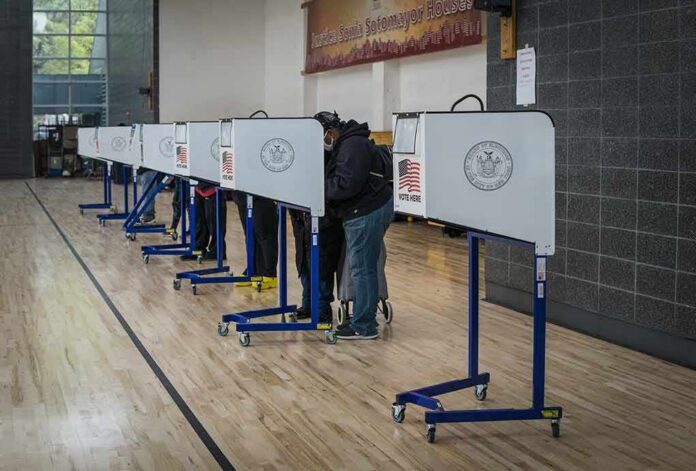
The real story in Texas is not whether any noncitizen voting occurred—it did, with seven people arrested or charged after a joint state–federal investigation—but what those rare cases actually tell us about election safeguards, data-matching pitfalls, and how a low base rate of misconduct becomes a high-octane political narrative.
The Short Version
- Texas officials, alongside federal partners, announced charges against seven noncitizens tied to voting in the 2024 election; those cases move forward through ordinary criminal process, not speculation.
- Independent reporting and prior studies consistently find verified noncitizen voting is exceedingly rare—orders of magnitude below levels that affect outcomes.
- Data-matching tools used to flag “potential noncitizens” make errors; some flagged voters prove to be citizens, underscoring the need for careful verification before public claims.
- Policy has tightened in Texas: illegal voting is now a second-degree felony, and the Attorney General’s office has built investigative infrastructure to pursue allegations.
What Happened: Specific charges, ordinary criminal process
Texas Attorney General Ken Paxton’s office said seven noncitizens were arrested or charged following a coordinated investigation with the U.S. Attorney’s Office for the Northern District of Texas and federal agencies, including the FBI and Homeland Security Investigations. The casework centers on illegal voting and related offenses in the 2024 general election. These are formal law-enforcement actions—complaints, indictments, arrests—that now proceed in court, where the government must prove each element beyond a reasonable doubt.
Texas has spent several years standing up a more muscular enforcement architecture around election law—referrals from the Secretary of State, special tip lines, and targeted probes of alleged unlawful registration efforts. The stated aim is deterrence and prosecution; the legal hook is clear: Texas upgraded illegal voting, including voting by a noncitizen, to a second-degree felony under House Bill 1243, increasing potential penalties and enforcement salience.
How the system flags cases: referrals, data, and error risk
Most noncitizen-voting investigations begin as data problems, not as eyewitness reports. Voter files are compared against immigration or licensing records; any mismatch can generate a “potential noncitizen” flag. That is a screening device—useful but blunt. In Texas, referrals to the Attorney General have included small batches (33 in one instance) and larger sweeps; yet follow-up frequently pares them down. In one cycle of referrals discussed by Texas media, officials sent 117 names for investigation while confirming that roughly 578 initially flagged voters were in fact U.S. citizens; the seven who were ultimately charged represent a sliver of the flagged universe.
Why do false flags occur? Databases capture citizenship at a moment in time; people naturalize; agencies use different identifiers; and the SAVE verification tool (a federal system election officials sometimes consult) has a documented error profile. Reporting showed SAVE-linked errors across dozens of counties, with more than 5% of people it identified as noncitizens later demonstrating citizenship—hardly an argument against enforcement, but a caution against counting flags as violations. Screening tools should trigger audits, not headlines; prosecutions should rest on documentary proof and admissions, not probabilistic matches.
Scale and significance: rare violations, outsized rhetoric
The critical analytic point is base rate. Even advocates of tighter enforcement concede that confirmed noncitizen voting is rare; independent research places verified incidence at fractions of a tenth of a percent, and often orders of magnitude smaller. The Brennan Center’s reviews, among others, indicate that even if one accepted all allegations at face value, the share of total ballots would be minuscule—far below anything that would swing ordinary races. That conclusion has held across multiple cycles and jurisdictions.
Texas coverage has echoed that picture. When the Secretary of State referred 33 “potential noncitizens,” reporters emphasized that this was a tiny fraction of the approximately 11.3 million ballots cast in the 2024 general election; later, when seven charges were announced, the same outlets stressed that seven is a minute share of the flagged population and an even smaller share of total voters. That framing is not a dismissal of the cases; it is a statistical description that keeps claims proportionate to evidence.
Law and policy: why rare still matters
Rarity does not make a crime irrelevant. Election offenses are integrity crimes; a handful can damage public confidence and, in razor-thin contests, even affect outcomes. States therefore criminalize both the act and its attempted variants—false claims of citizenship, fraudulent registrations—on the same logic that securities law punishes insider trades even when market impact is hard to quantify. Texas’s decision to elevate penalties under HB 1243 aligns with that deterrent posture; it also obliges prosecutors to use charging discretion responsibly and to separate inadvertent errors from knowing violations, a distinction both law and common sense require.
This is also where investigative design matters. If the front-end matching tools over-flag, the back-end must be disciplined: verify naturalization dates, confirm identity matches with multiple data points, and document intent where statutes require it. Public communications should reflect this pipeline: preliminary flags are not proof; proof is what survives in court after adversarial testing. Texas has, at times, announced broad inquiries into organizations or classes of voters; the most credible posture is to present numbers that map to verified casework, not to the width of the initial net.
What to watch: prosecutorial outcomes and process quality
Outcomes matter more than announcements. Track indictments to dispositions: convictions, dismissals, or pleas to lesser offenses reveal whether initial claims were tightly built or overbroad. Independent reporting in Texas has, in earlier periods, found far fewer prosecutions than initial rhetoric suggested; that does not negate current charges, but it does counsel patience before extrapolating from arrests to systemic conclusions. A measured assessment asks: how many cases end with adjudicated findings that the defendant was a noncitizen at the time of the vote and knew it? That metric—not referral counts—should anchor policy debate.
Process quality is the other through-line. Election administrators and law enforcement should publish clear protocols for cross-database checks, naturalization verification, and notice-and-cure procedures when citizenship is questioned. The point is not leniency; it is accuracy. In a low-incidence domain, a high false-positive rate erodes confidence faster than sporadic true positives can restore it. Texas’s experience—seven defendants charged after collaboration with federal partners—illustrates that the system can detect and prosecute. The same experience, paired with independent findings on error rates and scale, shows the system must also calibrate its instruments and its rhetoric.
NEW: Texas AG @KenPaxtonTX announces the arrests of seven noncitizens indicted on federal charges related to the 2024 general election.
Paxton’s office says the cases stem from its investigations and were brought in coordination with the U.S. Attorney’s Office for the Northern…
— Ali Bradley (@AliBradleyTV) September 15, 2026
Bottom line
Texas has real cases against specific individuals; those prosecutions should run their course on the facts. At the same time, the best evidence still points to noncitizen voting as a vanishingly rare phenomenon. The job for policymakers is straightforward and unglamorous: maintain serious penalties for deliberate violations, invest in better front-end data hygiene to minimize mistaken flags, and report results in terms of adjudicated outcomes rather than expansive screening totals. That combination—accountability without exaggeration—is how you protect both ballot integrity and public trust.
Sources:
redstate.com, texasattorneygeneral.gov, oag.state.tx.us, texastribune.org