When an F-15E Strike Eagle went down deep inside Iran and both crew punched out, the United States executed a textbook—yet exceptionally large—combat search and rescue, bringing both airmen home; the weapons systems officer, known publicly only by his call sign “Dude 44 Bravo,” then delivered the first on-the-record, richly detailed survival account of those 50 hours on the ground.
The Short Version
- An Iranian missile downed a two-seat U.S. F-15E; both aviators ejected, and each was recovered in separate extractions.
- The pilot was rescued within hours; Bravo evaded Iranian forces for roughly two days before elite pararescuers reached him, a moment captured on declassified video.
- Officials and major outlets describe the multi-day rescue as among the largest and most complex U.S. personnel-recovery operations in decades.
- Bravo’s 60 Minutes interview is his first public account, providing granular survival detail while operational specifics remain partially classified.
What Happened: A two-seat jet downed, two rescues, one mission
CBS reporting and aligned coverage describe the same spine of facts: an American F-15E was struck by an Iranian weapon over mountainous terrain; the crew ejected, separating in descent; U.S. forces recovered the pilot within hours and launched an expansive effort to find and extract the weapons systems officer, “Dude 44 Bravo,” who remained on the ground for about 48–50 hours before being pulled out at dawn on Easter Sunday. The New York Times framed the second recovery as a risky special operations mission “deep inside Iran,” with all commandos and the downed officer returning safely. Newly declassified footage released alongside the 60 Minutes package shows pararescuers physically grabbing Bravo and hauling him to a helicopter under austere conditions—strong visual corroboration of the final act of the operation.
Within that narrative, timelines are consistent across outlets: “hours” for the pilot, about two days for Bravo. CBS’s pre-broadcast materials place his extraction at roughly the 50-hour mark, capturing both the endurance required on the ground and the orchestration in the air and at command echelons to synchronize a clean pickup window. PBS independently reported the two-pronged nature of the rescues—one straightforward, one complicated by terrain, threat, and distance.
Mechanism: How a modern CSAR unfolds under fire
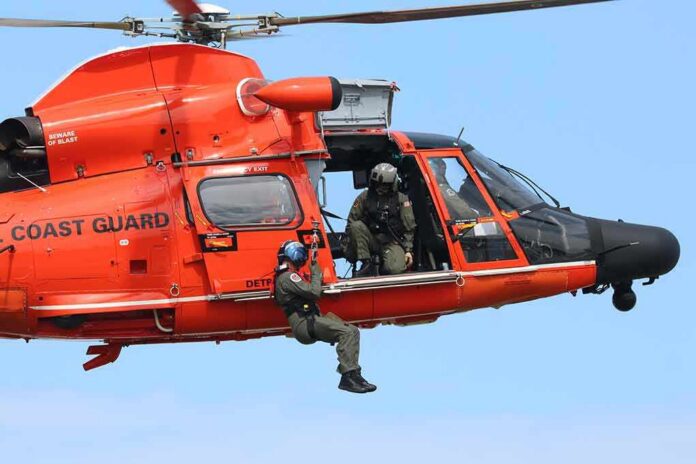
Personnel recovery is doctrine married to improvisation. In the U.S. lexicon, Combat Search and Rescue (CSAR) sequences around four imperatives: locate the survivor, secure the area (or suppress enemy capability enough to make extraction feasible), extract by air or ground, and exfiltrate everyone to safety. That logic tree—Locate → Secure/Suppress → Extract—maps to what credible reporting describes here. ISR platforms cue on the survivor’s signaling devices and terrain features; electronic warfare and strike aircraft reduce threat rings; helicopters and tiltrotors insert pararescuemen (“PJs”) to make the physical grab. A rescue commander balances speed against exposure: too soon risks flying into intact air defenses; too late risks capture. The Iran case added altitude, cold, injury, and a hunting adversary—every variable that lengthens the clock and increases risk for both survivor and rescuers.
Scale matters. Multiple accounts characterize this as among the largest, most complex recoveries in modern U.S. operations—dozens of aircraft, wide-area suppression, and dedicated special operations teams converging to a single exfil point. Large packages buy down risk for the extraction platform; they also advertise presence. The art is to create a moving umbrella of protection that arrives when the PJs do, then disappears before the enemy can mass a response. Declassified video of the terminal pickup is the last clip in a long film—one the public rarely sees in full.
The Airman’s Account: Injury, isolation, and two days of evasion
Bravo’s interview supplies the on-the-ground physics of survival that official communiqués rarely capture. He describes a violent ejection, a malfunctioning or compromised descent, and an impact at an estimated 70–100 miles per hour—injuries consistent with a hard landing in rough terrain. Alone and seriously hurt, he navigated at altitude with a pistol, a radio, and a beacon that is both lifeline and liability: it guides rescue aircraft but can cue hostile direction-finding. He moved, concealed, listened, and waited—standard evasion tradecraft, but in practice a series of minute-by-minute judgments about noise, silhouette, and cold. His recollection of the moment rescuers reached him—two pararescuers grabbing and hustling him to a helicopter—aligns precisely with the declassified footage.
For all the drama, the through-line in Bravo’s account is doctrinal: the expectation that, if alive and un-captured, he would be found and recovered. That confidence is not bluster; it reflects a culture and a resourced capability built since the 1990s, from Bosnia to Afghanistan and Syria. In this case, it held under the most demanding conditions the mission set contemplates.
Why This Operation Stands Out in the Record
Two features distinguish this rescue. First, geography: this was denied territory, deep into a capable adversary’s air-defense environment, not a contested border or partner-held zone. That forces more standoff support, more route planning, and more suppression to create an exfiltration corridor. Second, scale and simultaneity: airborne fires, surveillance, electronic warfare, and special operations had to mesh across days, not minutes—a level of orchestration that strains aircrew endurance, maintenance, and command decision cycles. CBS and PBS both characterize the package in superlative terms, and the Times’ reporting on the special operations penetration underscores why.
There is also the narrative architecture the public actually receives. As is typical for CSAR, some details remain classified—names withheld, routes unsaid, unit compositions unacknowledged—while key images and survivor testimony are released once risk recedes. That asymmetry is structural, not suspicious: it protects methods while validating outcomes. Here, the visible piece is unusually compelling: declassified pickup video, a survivor’s first-person account, and corroborating national outlets describing the same sequence and result.
Context: Doctrine, law, and precedent
American personnel-recovery doctrine expresses an unwritten contract with aircrew: if you survive, we come. That promise is more than ethos; it is embedded in training, equipment carriage, and the readiness of dedicated rescue forces. Strategically, these missions deter adversary exploitation of captured Americans and sustain morale in high-risk air operations. Legally, presidents have longstanding authority to use force to protect and rescue U.S. persons abroad—an authority analyzed across decades of practice and Office of Legal Counsel reasoning. Historically, hard lessons—most famously the 1980 failure at Desert One—drove the maturation of joint special operations capabilities that underpin today’s CSAR successes. The Iran extraction sits squarely in that lineage of capability gained and refined.
Comparisons are inevitable. Commentators have likened the scope and difficulty to the Bosnia rescue of Capt. Scott O’Grady in 1995—another case where survival tradecraft on the ground paired with a time-sensitive pickup under threat. The technical environment today is tougher: denser sensors, longer-reach missiles, and ubiquitous drones demand more elaborate deception and suppression to buy the minutes a helicopter needs to flare, land, and depart.
Downed U.S. Airman to Tell His 50-Hour Survival Story for the First Time
An American Air Force officer whose aircraft was shot down over Iran in April is speaking publicly for the first time about the extraordinary 50 hours he spent wounded and alone inside Iranian territory,…
— DEFENDERS OF ISRAEL (@Israeli_Sniper) September 9, 2026
What It Means Going Forward
Three consequences follow. First, capability validation: the United States demonstrated it can plan and execute a deep rescue against a state adversary with active air defenses and reactive ground forces. That elevates the confidence of aviators and complicates adversary calculus about the propaganda or intelligence value of downed Americans. Second, resource signal: “among the largest and most complex” is not routine language—senior leaders will use this mission to argue for sustaining specialized helicopters, pararescue pipelines, electronic warfare capacity, and ISR that make the promise credible. Third, narrative gravity: the images and Bravo’s account will become the canonical public memory of this operation, even as operational specifics remain in secure files. That is how CSAR stories live in the open: outcome-forward, method-shielded, and survivor-centered.