Diplomacy is written in symbols as much as statements; when a U.S. president goes to the airport to greet a foreign leader, that choreography signals a deliberate tilt toward engagement, not a casual flourish.
The Short Version
- President Trump welcomed China’s Xi Jinping at Joint Base Andrews before a White House state visit, an uncommon presidential gesture that set the tone for talks.
- The White House framed the visit as a formal state occasion hosted by President Trump and First Lady Melania Trump, with corresponding ceremonies and a state dinner.
- Substantive agenda items included trade, artificial intelligence, detained Americans, Russia’s war in Ukraine, Iran, Taiwan, and human rights.
- Protocol choices—especially a tarmac greeting—carry outsized symbolic weight in U.S.–China statecraft and are routinely read as signals of strategic intent.
What Happened: A Rare Presidential Airport Welcome, Then Full State-Visit Pageantry
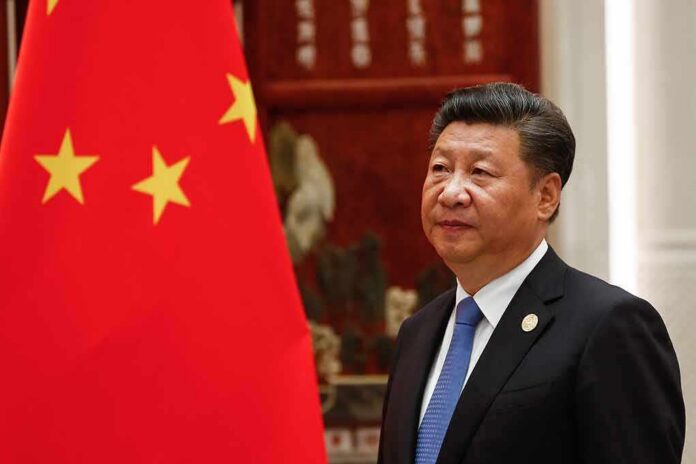
Multiple outlets reported that President Trump chose to personally greet Xi Jinping at Joint Base Andrews on arrival—meeting him planeside on the tarmac rather than waiting at the White House. That decision, described by contemporaneous reporting as a rare departure from standard protocol, prefaced the formalities that followed in Washington, including official ceremonies and a state dinner hosted by President Trump and First Lady Melania Trump. The White House publicly described the trip as an official state visit, naming both Xi and Peng Liyuan as guests of the President and First Lady and setting expectations for full ceremonial honors.
While the precise minute‑by‑minute sequence of the arrival ceremony varied across early reports—as is typical with high‑security movements—the core throughline was consistent: Trump at the airfield, Xi arriving to a planeside greeting, and a schedule centered on high‑level meetings and formal hospitality. Coverage placed notable emphasis on the departure from routine, with several outlets calling the airport welcome unusually personal by modern standards.
Why It Matters: Protocol as Policy Signaling
Protocol is the grammar of statecraft. In U.S. practice, visiting heads of state typically land at Joint Base Andrews and are received by the Chief of Protocol or a senior official; the president hosts the formal welcome at the White House. When a president travels to the airport, the gesture is read—by allies, rivals, and domestic audiences—as an intentional upgrade in status and warmth. That is why the Andrews greeting dominated early impressions of the visit: it telegraphed a willingness to invest personal capital in the relationship at the very start of the program.
Both governments understand the semiotics. China is particularly attentive to rank signals and ceremonial parity; an airport greeting serves as a visible assurance that Washington is prepared to manage competition without foreclosing engagement. The inverse is also true: had the White House withheld such courtesies, Beijing would have drawn its own conclusions about the tenor of the dialogue. In an era when strategic rivalry coexists with dense trade and technology interdependence, small-stagecraft gestures can amplify—or complicate—large-strategy objectives.
The Agenda Beneath the Pageantry: Where Substance Lives
Even highly choreographed visits are not hollow. Ahead of the summit, reporting consistently flagged the worklist: trade frictions and supply-chain security; export controls and safeguards around artificial intelligence; Americans detained in China; coordination and deconfliction related to Russia’s war in Ukraine; Iran’s activities and sanctions; Taiwan; and human rights. The conversation set was comprehensive because U.S.–China relations are now an all‑domain contest—economic, technological, military, and normative—all at once.
On technology, artificial intelligence sits at the intersection of commerce and security. Washington’s push for guardrails—whether export controls, track‑and‑trace regimes on advanced chips, or dialogue mechanisms to prevent AI‑enabled escalation—collides with Beijing’s ambition to achieve self‑reliance and global competitiveness. Trade talks, once dominated by tariffs and market access, now run through this tech lens. Add crisis‑management threads—Taiwan Strait military movements, hotlines, military‑to‑military contacts—and you get a summit portfolio that justifies the full ceremonial weight of a state visit.
How We Got Here: A Century of Evolving Welcome Rituals
American arrival choreography has evolved with security constraints and traffic realities. Modern protocol routes most visiting leaders through Andrews with a high‑level greeter, then on to the White House for the official welcome on the South Lawn or State Floor. Against that baseline, presidential airport appearances are uncommon enough to earn “rare” labeling in coverage; presidents more often reserve such trips for popes or exceptional cases. That rarity is why the planeside meet at Andrews was treated as a diplomatic signal in its own right, not merely a scheduling quirk.
That history also explains the media reflex: because U.S. presidents typically express warmth at the White House rather than on the tarmac, deviations from the norm are interpreted as purposeful. The White House’s own framing of the event as an official state visit, complete with a state dinner hosted by the President and First Lady, reinforced that this was not a casual drive‑by at the airfield but a considered piece of stagecraft attached to a weighty agenda.
Competing Readings, Same Fact Pattern
Observers will argue over the wisdom of lavish ceremony amid strategic rivalry. Some will emphasize the optics risk—appearing to reward coercive economic practices or military assertiveness—while others will stress the utility of personal rapport to open space for real concessions. These are judgments about strategy, not disputes about what occurred. The core facts stand: the White House declared an official state visit; President Trump met Xi at the airport; and the agenda was anchored in the hardest problems in the relationship.
One practical caveat belongs here and only once: early reporting sometimes differs on granular ceremony details in fast‑moving diplomatic programs. That does not change the central events or their significance; it is the nature of tightly managed, high‑security visits that schedules are fluid at the edges while the headline choreography remains fixed.
President Donald Trump, first lady Melania Trump, China’s President Xi Jinping and his wife Peng Liyuan walk in the Cross Hall to a State Dinner in the East Room at the White House, Thursday, Sept. 24, 2026, in Washington. (AP Photo/Alex Brandon) … https://t.co/Vt0DgadhLH pic.twitter.com/CR7iP9JG4c
— ABC Columbia (@abc_columbia) September 25, 2026
What Endures After the Motorcades
Airport greetings do not, by themselves, settle trade disputes or produce verification regimes for advanced chips. What they can do is create a permissive environment for progress, or at least for candid confrontation without theatrical rupture. In U.S.–China relations—where mistrust is structural, competitions are interlocking, and escalation ladders are short—those marginal gains matter. A president’s decision to meet a counterpart on the tarmac is a choice to begin with personal engagement, then test whether substance can follow ceremony. The Andrews welcome, the South Lawn reviews, the state dinner—they are instruments, not outcomes. Their success is measured in the months after the toasts.
Sources:
youtube.com, apnews.com, abcnews.com, yahoo.com, scmp.com, en.wikipedia.org, ndtvprofit.com