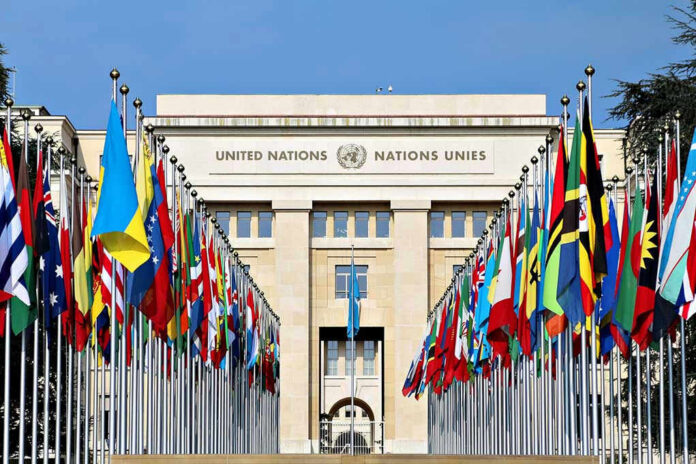
The United Nations General Assembly’s annual cycle begins quietly, with a gavel and a mandate, long before motorcades and podium lines; that procedural opening fixes the calendar, the theme, and the leadership that will shape how 193 member states try to turn a year of crises into an agenda of work.
At a Glance
- The 81st UN General Assembly session opened at Headquarters in New York on 8 September 2026, launching the organization’s annual diplomatic cycle.
- Bangladesh’s Khalilur Rahman presides as President of the 81st session, chairing proceedings from the first gavel through the year’s endgame.
- Theme for the session: “Restoring trust, managing transformation: A United Nations that delivers for all,” a frame meant to channel debate and priorities.
- The marquee General Debate runs 22–28 September 2026, when heads of state and government deliver national statements during High-level Week.
What formally opened — and why that matters
On 8 September 2026, the General Assembly convened its first plenary meeting, marking the official opening of the 81st session. That meeting, recorded in UN press and webcast archives, is the legal and procedural start to a full year of Assembly activity — committees, elections, budget decisions, and resolutions — not simply a prelude to speeches later in the month. The opening sets the institutional tempo: it confirms the presidency, recognizes the session theme, and activates the rules, agendas, and documentation that move the Assembly from page to practice. The distinction is more than ceremonial. Without the session’s opening, the high-profile set pieces that follow have no procedural anchor.
Khalilur Rahman of Bangladesh took the dais as President of the 81st session, a role that blends referee, convener, and agenda-framer. The president’s authority is bounded by the member states, but the office influences which issues get oxygen and how far the Assembly can move from set-piece statement to negotiated text. UN coverage of the opening captured the moment’s backdrop — war, humanitarian distress, and accelerating climate impacts — underscoring why member states will push hard this session for visible delivery against accumulated mandates.
Theme and timetable: how High-level Week fits into the year
The presidency’s chosen theme — “Restoring trust, managing transformation: A United Nations that delivers for all” — is both diagnosis and directive. Trust is the UN’s hardest currency; transformation describes the technology, finance, and security shifts remaking the operating environment; “delivers for all” signals pressure to translate rhetoric into outcomes that register beyond diplomatic circles. Themes do not legislate, but they discipline attention. Throughout the year, they inform which dialogues are elevated, which coalitions are courted, and how draft resolutions frame ambition and accountability.
Crucially, the opening date is not the same as the General Debate. According to the UN’s official schedule, the debate — the stage for heads of state and government — runs 22–28 September 2026 within High-level Week, when the campus densifies with summits, bilateral meetings, and ministerials. That is when cameras fix on the rostrum and leaders set national markers on conflicts, climate, development finance, and reform. The procedural opening gives that week legal and institutional footing; the debate gives it political temperature.
Mechanics of the opening: what gets locked in
Two mechanics at the first plenary deserve attention. First, the presidency and vice-presidencies are recognized, alongside committee leaderships and the credentials machinery that ensures each delegation is seated properly for the year. Second, the session’s work plan and agenda architecture move from draft to operational. The UN’s meeting and press records log the 1st plenary and its outputs; while they do not convert instantly into negotiated breakthroughs, they toggle the Assembly from intersessional planning to active business. The result is a year-long runway for the plenary, six main committees, and dozens of mandated processes that culminate in resolutions, elections, and the budget cycle.
Participation at this stage is system-wide. All 193 member states are represented in New York across their permanent missions; while not every capital dispatches principals in the opening days, the Assembly’s design ensures universal membership and voice throughout the session. The General Debate later concentrates head-of-state participation, but the institution’s representational floor is already fully in effect once the session opens.
Context: why the opening lands heavier in a crisis-saturated year
UN News framed the 81st session’s start against a layered crisis set: active wars, humanitarian need at scale, and intensifying climate impacts. In such conditions, a session opening takes on added weight because it determines how the Assembly sequences attention: emergency responses, sanctions compliance, human rights reporting, climate follow-through, and financing for development all compete for early agenda space. The presidency’s first moves — consultations, convenings, and tone-setting statements — can accelerate or stall coalitions that will matter when texts enter negotiation later in the fall.
This rhythm also explains a recurrent confusion outside Turtle Bay: the media and public often conflate the procedural opening with High-level Week. The UN’s own materials separate them clearly, with an official timeline that starts the session on 8 September and schedules the General Debate for 22–28 September; understanding that sequence helps observers track when to expect speeches, when to expect drafting, and when to look for votes or adoptions.
Prime Minister Muhammad Shehbaz Sharif arrives in New York to attend the 81st session of United Nations General Assembly. New York, 21 September, 2026. pic.twitter.com/kdEV4BqZAp
— ذوالفقار علی صوابی وال (@ZulfiqarAliSWA) September 22, 2026
From speeches to substance: what the session structure enables
The General Debate serves a signaling function: capitals declare priorities and red lines; emerging alignments become legible; and the presidency can use convergences to justify convening tracks on issues where momentum is plausibly bankable. After the debate, committees and working groups do the slower work of text refinement, mandates review, and budget alignment. For observers conditioned to expect breakthroughs in a speech week, this can feel anticlimactic. But in the Assembly’s logic, the opening establishes legitimacy, the debate surfaces politics, and the committees manufacture outcomes — often incremental, occasionally historic.
What to watch as the 81st session unfolds
Three dynamics will determine whether the theme translates into delivery. First, trust: member states will test the Assembly’s capacity to manage divisive files without procedural brinkmanship; the presidency’s handling of agenda disputes and speaking order controversies will matter. Second, transformation: technology governance, climate transition finance, and global health readiness will require bridging North–South divides on resourcing and rules. Third, delivery: resolutions will be judged less by rhetorical altitude than by implementable mechanisms, funding hooks, and measurable follow-up — the currency of credibility with publics that increasingly discount declaratory diplomacy.
Sources:
unric.org, webtv.un.org, un.org, news.un.org, ua.news