
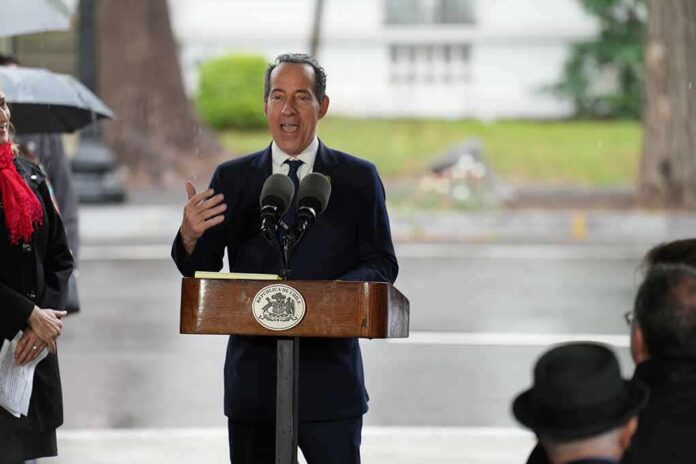
Congress is poised to test the outer boundary of oversight over private actors: not just what a White House did, but how the nation’s most powerful law firms responded to presidential pressure—and whether those responses themselves have policy and rule-of-law consequences worth legislating.
The Short Version
- House Democrats have identified a concrete target set: law firms that entered early-2025 agreements with the Trump White House to deliver large pro bono commitments on administration-aligned causes.
- Investigators signaled subpoenas after initial letters to marquee firms drew little cooperation, setting up disputes over scope, privilege, and separation of powers.
- The reported universe includes nine firms and about $940 million in pledged services; the requests seek agreements, communications, and descriptions of work categories.
- No adjudication has established that the arrangements were unlawful; the inquiry’s legitimacy will turn on careful tailoring to legislative purposes and respect for attorney-client protections.
What Democrats say they are investigating—and why it matters
The clearest on-ramp for this probe is not a vague allegation but a discrete set of deals. Reporting indicates nine prominent firms reached understandings with the administration in early 2025, collectively pledging roughly $940 million in free legal services on “shared causes” with the White House; several firms reportedly asserted they would retain final say on matters within Trump-defined categories. Committee requests have targeted the written terms, any White House-originated pro bono requests, communications about how the deals were shaped, and exchanges about threatened executive orders. The theory of the case is legislative: if executive pressure on private counsel distorted the market for legal services or chilled disfavored advocacy, Congress has a basis to examine it and, if warranted, craft guardrails.
That is not a minor question for the legal system. A president can lawfully advocate policy priorities and speak out against institutions. It is another matter if firms believed access to federal work or regulatory forbearance turned on making concessions about who they represent and what pro bono they accept. Even the perception of such quid-pro-quo dynamics can redirect resources away from unpopular clients and toward government-preferred causes, with downstream effects on civil-rights, immigration, and corporate accountability dockets. The committee’s interest, if bounded to fact-finding for legislation, fits within well-established oversight practice.
What is actually known versus what remains unproven
The evidence base, as publicly described, supports several concrete points. First, Democrats have announced intent to compel information from firms that made early-2025 arrangements; that is not rumor but an on-record investigative plan following initial correspondence that reportedly included specific firms such as Kirkland & Ellis, Skadden, Paul, Weiss, A&O Shearman, Cadwalader, Latham & Watkins, and Simpson Thacher. Second, the volume and structure of those asks—agreements, communications, and descriptions of work—suggest a targeted document program rather than an unfocused fishing expedition. Third, lawmakers have telegraphed escalation in response to minimal cooperation, raising the prospect of formal subpoenas and, if necessary, enforcement steps.
What is not established is equally important. There is no court finding or inspector-general report now in the public record that deems the arrangements unlawful or corrupt. Noncooperation with informal letters does not equal culpability; firms routinely raise confidentiality, privilege, and relevance objections when Congress seeks practice records, and those issues are not mere pretexts in the attorney-client context. Whether alleged coercion occurred, and if so who orchestrated it and to what effect, is a factual question this process is designed to test—not an answer the current record provides.
The legal mechanics Congress must navigate
Congress’s oversight power is broad but not unbounded. The Supreme Court has recognized that each chamber’s committees may pursue information needed for legislation; a properly authorized subpoena imposes a legal duty to comply unless a valid privilege or other legal justification applies. Committees therefore must tie requests to a legitimate legislative end—here, potential reforms around government interactions with law firms, federal contracting conditions, or protections for independent pro bono work. Overbreadth, personal score-settling, or a record that reads as pure political retaliation risks judicial skepticism, as modern separation-of-powers cases have warned.
Because the targets are law firms, privilege and confidentiality loom large. Client communications are protected; billing data, matter descriptions, and client identities can be contextually sensitive as well. Yet not everything a committee might seek is privileged. Aggregate commitments, formal agreement terms, and government-originated communications often are not. A disciplined approach—narrowly framed requests, accommodation processes, privilege logs, and potential in camera review—can surface the core facts without compromising clients or work product. That is the standard playbook when Congress seeks non-public professional records in aid of legislation.
The allegations of pressure—and how they should be tested
Public reporting has described a climate in which the administration criticized or threatened firms over certain clients and causes, followed by agreements that channeled substantial pro bono effort into White House-aligned categories, while firms insisted they maintained final discretion. Critics label this “capitulation”; defenders would characterize it as structured collaboration on uncontested priorities. Both framings are rhetoric until documents and testimony fill in the chronology and the leverage, if any, used to secure concessions. The right evidentiary path is clear: obtain the agreements; compare them with contemporaneous White House communications; depose those who negotiated the terms; and examine how firms’ matter intake actually shifted before and after the deals. If coercion occurred, the record should show threat signals, internal deliberation about risk, and concrete changes in practice mix linked to those signals.
Equally, if the agreements merely codified voluntary initiatives without retaliatory strings, that too should become evident. Congress does not need illegality to legislate; it needs a reliable picture of how government influence operated in the market for legal services. Legislating in the dark—on headlines alone—would be a mistake, and courts will be attentive to whether subpoenas are calibrated to that fact-finding task.
🚨 RASKIN WARNS CORPORATIONS AND LAW FIRMS WORKING WITH TRUMP THEY COULD FACE CONGRESSIONAL SUBPOENAS
Maryland Democratic Rep. Jamie Raskin is preparing to use his party’s newly won congressional majority to investigate private companies and law firms he accuses of collaborating…
— MDBayNews (@MDBayNews) November 6, 2026
Risks of overreach—and how to avoid them
Two criticisms merit sober attention. First, timing: announcing sweeping corporate scrutiny immediately after a partisan power shift invites the charge of payback. That optic does not void the legitimacy of the core law-firm inquiry, but it does place a premium on procedural rigor—clear authorizations, tailored scopes, and transparent accommodation efforts—to demonstrate legislative purpose rather than partisan theater. Second, sprawl: reports of an expansive, multi-industry target list raise the danger that a defensible, documentable investigation into a defined episode gets diluted by an omnibus crusade against disfavored sectors. Investigations that try to do everything seldom do the hard parts well.
The prudent course is sequential and disciplined. Start with the nine-firm universe; secure the agreements and government communications; protect privilege while insisting on non-privileged facts; and publish findings that connect to specific legislative options—such as rules around conditioning federal contracts on changes to pro bono or client selection, disclosure norms for executive-branch “ask lists,” or standards governing government outreach to private counsel. If those findings reveal comparable patterns beyond Big Law, Congress can widen the aperture on the strength of an evidentiary record, not a wish list.
What to watch next
The milestones are predictable. First, issuance of subpoenas that specify custodians, date ranges, and document categories—not slogans. Second, engagement on privilege: logs, negotiated redactions, and potential third-party review. Third, testimony from firm leaders and former administration officials that clarifies who proposed what, when, and with what leverage. Finally, a staff report that ties facts to legislative proposals. If the process hews to those steps, the country gains clarity about a consequential question: how a modern presidency can shape the supply of legal help—and how Congress should respond.
Sources:
huffpost.com, ground.news, news.bloomberglaw.com, newrepublic.com, levernews.com, freespeechforpeople.org