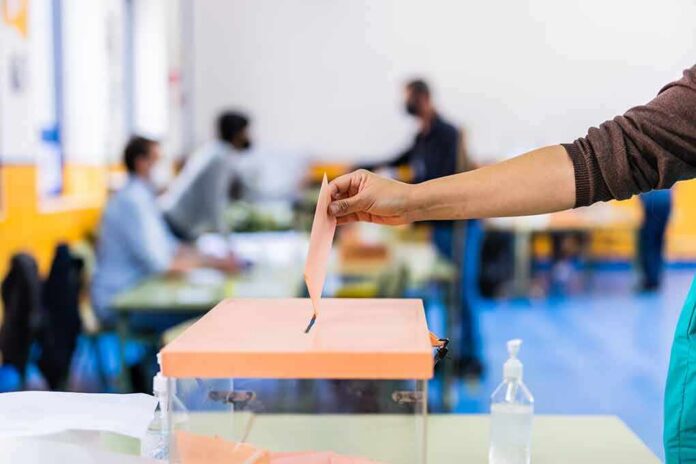
The hard problem at the center of the Los Angeles fight over alleged noncitizen voters is not rhetoric about “fraud” or “suppression”; it is evidentiary control. When eligibility hinges on citizenship—a legal status maintained in federal systems that counties do not directly control—local election officials cannot, on demand, independently validate every registrant’s citizenship before ballots are counted. That structural gap is what the Department of Justice tried to force open, and what California officials insist cannot be remedied by last-minute, unvetted lists.
The Short Version
- DOJ flagged more than 20,000 California registrants as likely noncitizens and asked Los Angeles County to segregate related ballots until citizenship could be verified, delivering names on a secure drive and filing suit when county officials balked.
- County and state officials said they lacked the underlying method, proof, or jurisdictional precision to act—and argued that ballots cannot be withheld on unverified matches or county-agnostic lists.
- Federal prosecutors charged 28 defendants with registration and voting offenses, proving the category exists but not its scale relative to the 20,000-person estimate.
- The core tension is administrative, not just political: counties rely on sworn attestation and limited data-sharing; federal systems hold status data but, as presented here, did not disclose methodology or error rates sufficient for rapid, confident adjudication.
What the federal case actually asserted—and why the remedy mattered
The Justice Department’s intervention was operational, not merely rhetorical. It delivered a password-protected thumb drive to the Los Angeles County Registrar containing names, birth dates, and addresses of people identified as likely noncitizens, then sought a court order to segregate—explicitly, not cancel—ballots associated with those voters pending verification. The relief aimed to pause counting, not purge rolls, to give officials time to confirm citizenship before certification. The federal posture framed a narrow, time-bound remedy for a high-stakes attribute (citizenship) that counties are poorly positioned to validate at speed.
This approach acknowledged a practical bottleneck. If an external authority surfaces a substantial list of suspected ineligible voters just before an election, a jurisdiction that verifies eligibility mainly through sworn attestation and standard maintenance workflows lacks an immediate, independent adjudication pathway. Segregation, in DOJ’s telling, was the least intrusive stopgap to avoid counting ballots later deemed unlawful. The logic is straightforward; the execution requirements are exacting.
Why Los Angeles and California refused: method, scope, and law
Los Angeles County Registrar Dean Logan publicly said the DOJ list was not confined to county registrants, undermining both the practicality and legality of county-specific action. He further stated the department had not provided the evidentiary basis or methodology behind its designations and that his office could not withhold or refuse to count ballots on unverified allegations. Those are not mere process quibbles; without transparent matching rules, confidence thresholds, and status-date context (for example, naturalization after a database snapshot), even well-intentioned data flags can misidentify eligible citizens. California’s Secretary of State added that an earlier federal estimate of roughly 190,000 suspected noncitizens was unsubstantiated—raising credibility questions about the pipeline that ultimately produced the 20,000-name subset.
The county’s cybersecurity stance—declining to open a federal thumb drive—shifted attention to chain-of-custody and format rather than the names themselves. But that choice reflects a real constraint: election IT environments are locked down for good reasons. The immediate result, however, was stalemate. No independent review of the actual records occurred inside county systems, leaving the list—and any false positives—unadjudicated.
What the 28 prosecutions prove—and what they do not
Federal prosecutors subsequently announced charges against 28 individuals for unlawful registration, false claims of citizenship, or illegal voting. The charges demonstrate the category exists; they do not validate the scale or jurisdictional specificity of the broader 20,000-person figure, nor do they show that all flagged individuals voted or that any election outcome hinged on such votes. In election administration, individual cases can be real and still statistically rare across tens of millions of ballots—a critical distinction when designing statewide remedies or emergency orders.
That distinction is not academic. Adjudicating citizenship at scale by matching voter files to federal immigration databases is prone to timing errors (people naturalize after a snapshot), name collisions, and incomplete status fields. False positives have serious consequences when the remedy is to set aside ballots from eligible citizens. The record here contains forceful claims and urgent timing, but not a disclosed methodology or error rate that would let a court or county quantify the risk of wrongfully segregating lawful votes.
The mechanism problem: who holds the proof of citizenship?
Citizenship is a federal status; voter eligibility is administered locally under state law. That split jurisdiction means counties mostly rely on applicant attestation under penalty of perjury, routine list maintenance, and targeted removals when verifiable evidence surfaces. Some states supplement with database checks, but the quality of those matches hinges on data freshness, field compatibility, and clear rules for resolving conflicts. When the federal government arrives with a large list and a short clock, counties are being asked to make eligibility determinations quickly using data they cannot independently audit—an inversion of ordinary process with asymmetric risk.
In this dispute, DOJ’s ask—segregate now, confirm later—runs into both legal and administrative guardrails. State law cabins list maintenance close to elections; courts are wary of late procedural changes that might burden lawful voters. Administratively, any county-level hold must target the right voters in the right jurisdiction and be grounded in verifiable facts, not placeholders awaiting method disclosure. That is the crux of Los Angeles’s refusal.
NEW: Los Angeles County election officials told a federal court they have no independent way to verify voters’ citizenship beyond voter attestations. https://t.co/IZIbfUJNlS
— Matthew Seedorff (@MattSeedorff) October 20, 2026
A path out of stalemate: transparency, adjudication, and measured safeguards
There is a workable approach that respects both integrity and enfranchisement. First, disclose the federal matching methodology to competent state officials under protective order: source databases, snapshot dates, fields used, confidence thresholds, and duplicate-resolution rules. Second, perform a record-by-record adjudication with authoritative status sources—USCIS naturalization records, passport issuance, and court files—documenting outcomes and error rates. Third, tailor any ballot-handling remedy to findings: where citizenship is confirmed, count immediately; where noncitizenship is verified with high confidence, act under existing removal and prosecution authorities; where unresolved, consider provisional handling with prompt post-election resolution and robust notice to the voter. This is slower than a lawsuit, but it is the only route to decisions that can withstand judicial and public scrutiny.
What this episode teaches administrators and lawmakers
For election officials, the lesson is preparedness. Build standing, legally authorized data-sharing pipelines with federal status systems; establish agreed match protocols; and predefine segregation and curing procedures that can be triggered without improvisation. For lawmakers, clarity on pre-election timelines matters: compressing verification into the final weeks elevates the chance of both missed ineligible votes and wrongful burdens on eligible citizens. And for the public, two truths can coexist: some noncitizen registrations and votes happen and should be deterred and prosecuted; broad claims derived from opaque matching, especially on the eve of an election, do not prove systemic failure and can misfire against lawful voters.
Bottom line
Los Angeles County did not “admit it cannot verify citizenship” so much as it insisted that it could not, on the basis of an unvetted, county-agnostic list and without disclosed methodology, summarily withhold ballots. The Justice Department, for its part, surfaced a real vulnerability: local systems lack rapid, independent access to federal citizenship proof when disputes arise. Durable solutions will come from transparent data methods, joint adjudication frameworks, and remedies proportionate to verified facts—not from last-minute demands or categorical dismissals. That is how you protect both ballot integrity and eligible voters’ rights.
Sources:
twitchy.com, dailynews.com, usatoday.com, latimes.com, democracydocket.com, mynewsla.com, straitstimes.com, hawaiitribune-herald.com, justfacts.com