At the center of the latest fight over law enforcement and the ballot box is not a viral quip but a collision of authorities: a new California statute that draws a bright 200‑foot line around polling places on Election Day, and longstanding federal limits on armed federal presence at the polls, set against a federal insistence that targeted arrests for active threats or warrants must remain possible. Understanding where those lines actually sit—and how they would be enforced—matters far more than the sound bite.
The Short Version
- California’s Protect Our Polls Act (SB 884) bans arrests within 200 feet of a polling place on Election Day, with narrow exceptions for disruptions and crimes against persons or property.
- The law builds an enforcement playbook: required reporting to the Secretary of State and Attorney General, and authority to extend polling hours if prohibited activity interferes with voting.
- Federal law separately restricts bringing or keeping “troops or armed men” at polling sites, a reading many election-law experts say encompasses federal civilian agencies like ICE.
- Federal officials say there are no plans for broad ICE patrols at polling places, but reserve the option for targeted warrant service or responses to threats—creating a narrow but real clash zone with state law.
What California’s 200‑Foot Rule Actually Does
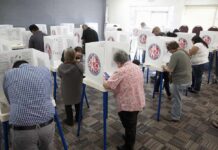
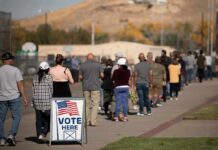
SB 884, signed in September 2026 and effective for the general election that year, makes a straightforward move: it prohibits law enforcement from making arrests within 200 feet of a polling place on Election Day. The statute carves out tight exceptions for arrests tied to crimes that disrupt polling operations or crimes against persons or property. Mechanically, that creates a presumptive buffer around the polling place door and its immediate approaches; only conduct that squarely fits the exceptions reopens that zone to arrests. The law is not mere symbolism. It forces incidents into an administrative channel—elections officials must report suspected, planned, or actual violations to the Secretary of State and Attorney General—and it empowers officials to extend polling hours to remediate interference. In other words, the rule blends a hard perimeter with after‑the‑fact curative tools so voters do not lose access if police activity crosses the line.
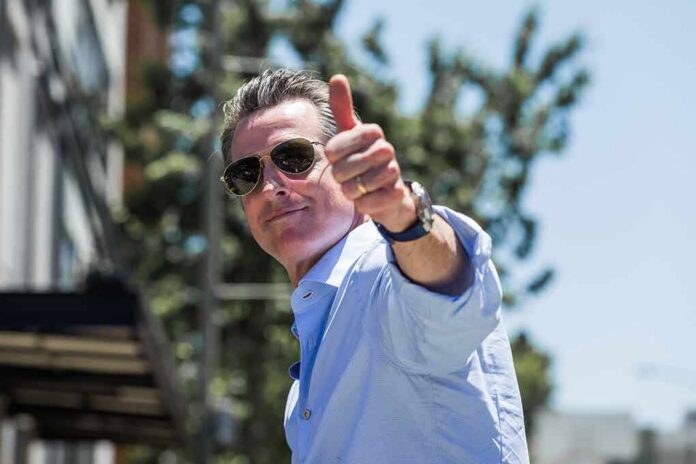
Governor Gavin Newsom then layered on a rhetorical deterrent: if federal agents appeared inside that buffer without lawful cause, “we will track you down, arrest you, and prosecute you.” The phrasing grabbed headlines because it inverted the familiar “we will find you” trope and pointed it at federal personnel—but the statute’s practical teeth lie in the reporting and remediation requirements and the narrowness of the exceptions, not the press‑conference cadence.
How Federal Law Constrains Armed Presence at the Polls
California’s 200‑foot perimeter lives beside, not instead of, federal law. Since the Civil War, Congress has sharply restricted armed federal presence at elections. The core statute—18 U.S.C. § 592—makes it a crime for federal officials to order, bring, or keep “troops or armed men” where an election is held, with only narrow allowances, historically to repel armed enemies. Modern enforcement notices from state attorneys general have read that language to include federal civilian agencies, not only the military, and to prohibit routine deployment of armed federal officers at polling locations. In late October 2026, New York’s Attorney General Letitia James put it succinctly: armed federal officers, including ICE and CBP, cannot be stationed at poll sites, and official interference with a federal election is unlawful. Election‑law practitioners have said the same thing more prosaically: the “armed men” clause does not stop at uniforms with rank insignia; it reaches federal civilian law enforcement whose presence could chill voting.
Legally, this means two distinct gates must be cleared for any armed federal presence at a polling place: the federal troops‑at‑polls prohibition and any state‑level restrictions like California’s SB 884. Neither operates as an open invitation to deploy agents in the name of general integrity patrols. Both elevate the extraordinary over the routine.
Where the Real Disagreement Lives: Targeted Enforcement vs. Poll Protection
Federal officials have emphasized a narrow remit. The administration said ICE would not patrol or broadly monitor polling places; Homeland Security officials described two scenarios in which federal officers might appear: serving a specific warrant on a person already being tracked, or responding to an active threat to the polling location. As one summary put it, “ICE isn’t there to patrol the polling places”—but it could act on a warrant or acute threat, including at or near a poll site, if necessary.
This is where the friction with SB 884 is most likely. California’s statute turns on proximity, timing, and the nature of the conduct precipitating an arrest. A targeted warrant for a nonviolent immigration violation executed 50 feet from a gym serving as a polling station could be barred by SB 884 because it is neither a disruption of the polling operation nor a crime against persons or property. A credible bomb threat or an assault in the same space would fit the exceptions. The dispute is thus not philosophical but fact‑intensive: what is the predicate for the action, and does it fall within a narrow exception? If it does not, the state law’s prohibition is triggered—even if federal officers assert they “will be where [they] need to be” to serve a warrant.
Enforcement Architecture: Who Would Do What, and When
California built an enforcement ladder that starts with elections administrators. If an arrest occurs within the buffer without fitting an exception, officials must notify statewide authorities; they may extend hours to cure any chilling effect; and the Attorney General can assess legal remedies. Practically, that means disputes would likely be documented and escalated rather than left to on‑scene brinkmanship. Crucially, the record to date contained no documented instances of ICE staging general polling‑place operations in California or a completed state prosecution for such conduct; federal officials publicly said no broad patrols were planned. The flashpoint, if it comes, will look like a single, targeted encounter, not a line of agents at an entrance.
Could California arrest a federal agent? That question typically turns on the Supremacy Clause and the narrow doctrine of intergovernmental immunity. If a federal officer acts lawfully under federal authority, state prosecution is generally preempted; if the conduct violates neutral, non‑discriminatory state law and falls outside the officer’s federal remit, states have more room to move. SB 884 deliberately narrows that aperture by exempting arrests tied to threats or crimes against people or property—areas where federal interests are strong—while constraining arrests tied to unrelated enforcement goals at the polls, where the state’s election‑protection interest is at its zenith. That tailoring is why advocates consider it more defensible than a blanket ban.
What Counts as Intimidation, and Why This Architecture Exists
For all the legal text, the policy concern is human: even brief, conspicuous police action at a polling place can deter voters, particularly in communities with fraught law‑enforcement relationships. Research on prior elections has linked visible policing near polls to depressed turnout among Black voters, which is why election law treats the polling place as a zone where the government’s coercive power should be kept at a distance from citizens casting ballots. The federal ban on “troops or armed men” emerged from post‑Civil War abuses for precisely this reason; today’s statutory architecture inherits that skepticism of armed presence at the threshold of the franchise.
That does not mean public safety is suspended on Election Day. It means the default posture is distance, broken only by truly exigent or predicate criminal circumstances that fit narrow exceptions. California’s measure enforces that default spatially (200 feet) and temporally (Election Day), with documented processes to fix harm if lines are crossed. Federal policy statements achieve a similar end from the other side: no general patrols, only targeted action for a warrant or threat. The remaining terrain is small but contentious.
California Democratic Gov. Gavin Newsom said Tuesday that if Immigration and Customs Enforcement (ICE) agents come to the polls, he would arrest and prosecute them. ICE put out a warning on X warning against voting illegally on Election Day.https://t.co/JnnI4dvEf9
— FOX26 News (@KMPHFOX26) November 3, 2026
How to Read Future Flashpoints
If a controversy arises in a future election, the dispositive questions will be concrete. Was the action inside 200 feet of a polling place during its Election Day operations? Was there a documented disruption to polling, or a crime against persons or property, that fits SB 884’s exceptions? Was the federal action anchored in a specific warrant or credible threat, or did it look like general monitoring? Were hours extended and reports filed as the statute requires? Answers to those questions—not the heat of a podium line—will determine whether California’s law or federal justifications prevail in a given case.
Sources:
twitchy.com, sd34.senate.ca.gov, fox17.com, lohud.com, ag.ny.gov, kqed.org, mediaite.com, issueone.org, dailynews.com, ap.org, wral.com, tandfonline.com