When missiles fly anywhere near the Strait of Hormuz, oil does not wait for pipelines to be cut; prices jump on the risk alone, and fall just as quickly when the risk abates. The latest U.S. strikes on Iran fit that pattern precisely: credible threats to transit through the world’s most important oil chokepoint imposed a visible risk premium, then eased when signals of de-escalation appeared.
At a Glance
- U.S. Central Command conducted multiple rounds of strikes on Iranian targets, explicitly tied to protecting commercial shipping in the Strait of Hormuz.
- Crude prices climbed on renewed hostilities and threats to vessel movements; several sessions saw gains of 2–5% or more on escalation headlines.
- When Washington paused its campaign, prices fell sharply as traders marked down disruption odds.
- This is textbook Hormuz risk pricing: markets move first on probability of disruption, not only on proven, sustained loss of flows.
What Happened: Strikes, Shipping Risk, and a Rapidly Priced Premium
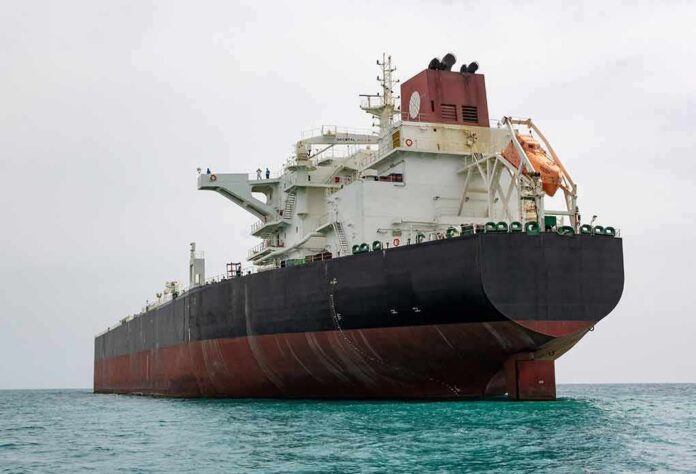
U.S. Central Command reported completing a third round of strikes against Iran on July 11, stating that U.S. forces hit roughly 140 Iranian military targets that week and more than 300 across three nights. CENTCOM framed the campaign as holding Iranian forces accountable for attacks on commercial shipping and degrading Iran’s capacity to threaten vessels transiting the Strait of Hormuz. That mission description matters for markets: price discovery in crude futures is exquisitely sensitive to any credible threat to Hormuz, the conduit for a large share of seaborne oil and significant volumes of LNG.
Futures reacted immediately to escalation signposts. On sessions where Washington announced new strikes or signaled more to come, Brent and WTI rallied meaningfully—moves of roughly 3–5% were not uncommon, with Brent printing multi-week highs when rhetoric or targeting suggested hazards to transit might spread or persist. Conversely, when the U.S. paused strikes, traders cut the probability of near-term shipping disruption, and prices fell hard, giving back a chunk of the premium that had accumulated during the salvos. The round-trip price action is exactly what you would expect when markets are pricing probability-weighted supply risk rather than a documented, durable loss of barrels.
How Oil Prices Internalize Hormuz Risk
Energy markets distinguish between three states: actual, measured loss of supply; imminent, credible risk to flows; and headline noise without operational consequence. Hormuz headlines usually live in the middle bucket. Tanker owners adjust routing and insurance, some vessels delay or go dark, charterers add war-risk premia, and refiners and traders secure additional cover. Those micro-behaviors transmit instantly into futures via higher convenience yields and implied scarcity, even if aggregate exports have not yet fallen materially. Analysts described precisely that mechanism across this sequence: prices rose “on market concerns” about vessel traffic through Hormuz following U.S.-Iran exchanges, with spikes amplified when threats expanded to mining or closing sea lanes.
Importantly, the premium is elastic. When participants judge risks as contained—naval escorts working, rules of engagement clarifying, signals of de-escalation emerging—implied disruption probability compresses, and prices retrace, sometimes sharply. After Washington’s pause, Brent slumped to its lowest in over a week, underscoring how quickly probability mass can move when the policy path shifts. A day or two of reduced strike activity can unwind a week’s worth of risk pricing if it convinces traders that a closure scenario is less likely in the near term.
Evidence of the Premium: Numbers That Moved
Across the summer’s flare-ups, escalation sessions produced consistent upside: Brent settling up more than 3% to six-week highs after fresh strike announcements; crude jumping nearly 5% on threats that vessel movements through Hormuz could halt; benchmarks pushing above $90 as attacks intensified; and front-month prices surging after renewed U.S. strikes reversed a prior downtrend toward pre-war levels. On some days, sentiment swung intraday—early spikes above notable round numbers, then partial giveback as desks assessed whether the operational picture warranted a lasting bid.
De-escalation signals reversed the tape just as decisively. When the U.S. suspended its campaign, hopes for diplomacy and resumption of normal traffic pulled prices down more than 5% in a single session, the lowest close in over a week. Reports that Iran tamped down retaliatory actions during a lull reinforced that shift in probabilities. The through-line is not mystery; it is the market’s probabilistic calculus at work, repriced in real time as military posture and shipping behavior evolve.
Why Hormuz Matters Mechanically
Hormuz concentrates risk because it concentrates flows. When a chokepoint handles a dominant share of seaborne crude and key LNG cargoes, even a modest perceived increase in transit hazard has disproportionate effects on term structure and flat price. Traders demand compensation for the chance that, tomorrow or next week, loadings or transits are delayed, insured at significantly higher cost, or interdicted outright. That compensation is the risk premium. Research and sell-side estimates during earlier phases of this conflict put that premium in the low double-digits per barrel at times; directionally, the current episode behaved the same way—pricing in the chance of disruption first, verifying physical loss later if at all.
The historical record is clear on persistence: absent sustained, measurable flow loss and absent structural constraints on spare capacity or strategic stock releases, geopolitical risk premia fade. If disruption endures, or if belligerents extend the fight into energy infrastructure or mines that materially impede transits, the premium can harden and compound. The market toggled between those states over the course of these strikes, rewarding concrete evidence of containment and punishing signs of widening threat.
What Could Sustain or Erase the Premium from Here
Four levers determine whether today’s premium becomes tomorrow’s base case. First, duration: repeated strike–counterstrike cycles keep probability mass elevated; a sustained pause collapses it, as we just saw. Second, verifiable impact on flows: if AIS dark activity, reroutes, or insurance frictions translate into measurable declines at load ports or arrivals at discharge hubs, the premium persists. Third, spare capacity and substitution: if producers with headroom lean in, and if strategic stocks can bridge, the market prices a ceiling on disruption. Fourth, policy signaling: credible naval protection and clear redlines compress the tail risk of closure; conversely, threats to mine or close the strait expand it.
None of these levers operate in isolation; they interact. A hawkish signal paired with effective convoying may net to a smaller premium than a tepid signal alongside ambiguous rules of engagement. Over this episode, Washington’s stated objective—protecting shipping—helped frame risk as containable, but the size and cadence of strikes, and Iran’s retaliatory posture, still pushed prices around the range traders now reflexively associate with Hormuz flare-ups.
US OIL TOPS $90 AS US-IRAN STRIKES LIFT SUPPLY FEARS
WTI CRUDE CLOSED ABOVE $90/BBL AT $90.22, WHILE BRENT SURGED TO $94.65.
FRESH US STRIKES ON IRANIAN TARGETS NEAR THE STRAIT OF HORMUZ REIGNITED SUPPLY DISRUPTION FEARS.
TWO OIL SUPERTANKERS WERE REPORTEDLY STRUCK WHILE…
— NARAYANI SENA BHARAT नारायणी सेना भारत (@AnashuKris18347) September 2, 2026
Bottom Line
The causal chain in this cycle is straightforward. U.S. strikes—ordered with the stated aim of safeguarding maritime commerce—raised the market-implied probability of disruption in the Strait of Hormuz and, with it, crude prices. When that probability fell on signs of a pause and potential diplomacy, so did prices. This is how oil markets are supposed to work: they price risk first. For investors and executives, the operational question is not whether risk exists—CENTCOM’s own releases confirm the precipitating events—but how durable the premium will be. History’s answer is disciplined: it lasts only as long as the threat to flows does, no longer, no shorter.
Sources:
feedpress.me, reuters.com, theguardian.com, aljazeera.com, cnbc.com