
The fight over Todd Blanche’s confirmation has become a case study in how a single procedural demand—meeting Epstein survivors and producing written guarantees on a controversial DOJ fund—can put a president’s nominee on hold despite unified party control of the Senate.
Key Points
- Senators Thom Tillis and John Cornyn made their support for Blanche contingent on two things: a direct meeting with Jeffrey Epstein survivors and a binding written fix to a disputed DOJ “anti-weaponization” fund tied to Trump’s IRS settlement.
- Blanche did meet survivors at the Department of Justice, but many emerged calling the encounter dismissive, “gaslighting,” and performative, leaving their opposition intact and Tillis’s condition only partially satisfied.
- On the fund, Cornyn in particular insisted on a formal document permanently terminating or narrowing the settlement; Blanche and DOJ offered assurances and draft language but no publicly released binding instrument.
- Because one Republican “no” on the Judiciary Committee can stall a nomination, Trump has openly suggested pausing Blanche’s confirmation and potentially resubmitting it later rather than forcing an immediate showdown.
- The episode reveals how high-profile abuse survivors and intra-party legal objections can reshape a confirmation battle from a question of résumé to a test of institutional trust and accountability.
How Blanche’s Nomination Ran Into GOP Resistance
From the outset, Todd Blanche’s bid to move from acting attorney general to permanent chief of the Department of Justice was less about his formal qualifications than about two specific flashpoints: DOJ’s handling of the Epstein files and the structure of a $1.8 billion settlement fund related to President Trump’s tax dispute with the IRS. Senators in Blanche’s own party, notably Thom Tillis of North Carolina and John Cornyn of Texas, chose those issues as leverage points and made clear they were not prepared to vote yes without concrete concessions.
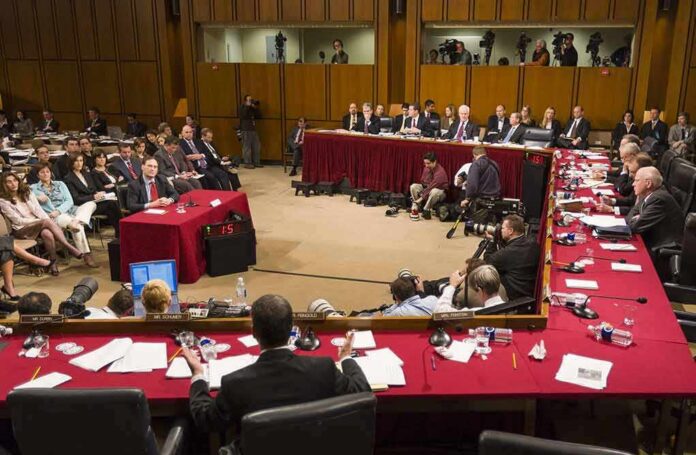
The procedural reality gave those concerns outsized weight. Judiciary Committee coverage repeatedly underscored that a single Republican “no” could bottle up Blanche’s nomination in committee and prevent it from reaching the full Senate. In other words, Trump did not merely need a majority on the floor; he first had to manage a fragile coalition inside his own party’s committee lineup, where Tillis and Cornyn sat between him and a clean path forward.
The Condition: Meet Epstein Survivors Face to Face
The first demand was unusually personal: Tillis announced he would not vote to advance Blanche unless the acting attorney general met directly with survivors of Jeffrey Epstein’s abuse who had traveled to Washington to testify about DOJ’s handling of the case. During the hearings, Blanche initially suggested he could not meet survivors “legally” if they were represented by counsel and indicated staff could stand in for him; under scrutiny, he corrected himself, acknowledging that as acting attorney general he could, in fact, meet them.
Tillis, who said he had a “positive predisposition” toward Blanche but was “trying to get to yes,” framed the meeting as “a very important part of getting to yes” and insisted it happen before any committee vote. That demand transformed survivors from background witnesses into central actors in the confirmation drama, giving their experience with DOJ real power over the nominee’s fate.
The Meeting: Productive to DOJ, “Gaslighting” to Survivors
Under that pressure, Blanche scheduled a meeting at DOJ headquarters for the afternoon of July 16, 2026. DOJ’s own description was bureaucratically upbeat: a spokesperson called it a “productive, initial discussion” attended by Blanche, survivors, senior DOJ officials, FBI agents, and victim services staff, and said Blanche answered questions and walked through investigative steps while urging victims to meet with FBI investigators next.
Survivors gave a starkly different account. Multiple participants and advocates described Blanche’s tone as “abrasive” and “condescending,” and one survivor said they were “gaslit” during the meeting. Others have called it “not productive,” “performative,” and a mere “box-checking exercise” to satisfy senators rather than a serious effort to repair DOJ’s record. A subsequent survivor statement accused Blanche of misrepresenting their interactions under oath, insisting he had not met with “any of us” when he claimed before another Senate panel to have met survivors and their lawyers.
This divergence matters because the condition was never just physical presence; it was an implied test of Blanche’s willingness to engage and take responsibility for DOJ’s mishandling of the Epstein files. In the survivors’ telling, he failed that test. In DOJ’s telling, he passed it procedurally. Tillis, caught between those narratives, retained leverage but no longer had a straightforward “he refused to meet” argument he could deploy.
The Anti-Weaponization Fund: Written Guarantees Versus Assurances
The second obstacle was more technical but no less consequential: a contested “anti-weaponization” fund embedded in the settlement ending Trump’s lawsuit against the IRS. Critics, including Cornyn, worried the structure could function as de facto immunity or special protection for Trump’s tax history, insulating him from future enforcement and weaponizing taxpayer dollars.
Cornyn made clear that verbal assurances from Blanche or DOJ would not suffice. Reporting shows he canceled planned meetings when he did not receive a written proposal he considered adequate, and stated he was “not prepared to vote yes” without binding language that would formally kill the fund and narrow the settlement terms. Tillis echoed the need for resolution of the fund issue before moving the nomination but focused less on the specific legal mechanics and more on the political optics of DOJ neutrality.
Blanche’s stance, according to contemporary accounts, was that a written declaration was immaterial because Trump did not control the fund and DOJ already had appropriate guardrails. DOJ reportedly offered draft legislative or technical language to address Cornyn’s concerns, but the available record does not show a publicly released, signed amendment or rescission that permanently terminates the fund. That absence is the heart of Cornyn’s resistance: his demand is for a document, not a promise, and nothing in the public file yet meets that standard.
Why Trump Floated Pausing the Confirmation
Given these dynamics—an emotionally charged meeting that did not soften survivor opposition and a fund dispute that remained stuck at the level of draft language—Trump has reason to see Blanche’s path as blocked in the near term. With committee math such that a single Republican “no” can stall the nomination, the White House faces a choice between forcing an immediate confrontation or recalibrating its timing.
That is the backdrop for Trump’s suggestion that he may temporarily pause Blanche’s confirmation. In procedural terms, a pause-and-resubmit strategy is entirely plausible: the president can withdraw a nomination, continue negotiations over DOJ’s settlement language and survivor engagement, and later send the same or a modified nominee back to the Senate once internal disputes are addressed. For a president intent on avoiding a high-profile intra-party defeat, this kind of tactical retreat can be less damaging than watching his own senators sink a nominee in committee.
Symbolic Concessions and the Line Between Substance and Performance
The Blanche episode fits a broader pattern in modern confirmations: senators extract symbolic concessions—private meetings, written assurances, delayed votes—not only to vet nominees, but to signal seriousness to voters and interest groups. These gestures are then litigated in public as either meaningful accountability or cynical box-checking.
Here, Tillis’s condition turned a survivors’ meeting into the focal point of the entire process. Blanche met them, DOJ logged it, and Judiciary Committee documents acknowledge the July 16 session. Yet survivors insist nothing substantive changed, describing the encounter as condescending and manipulative, and continue to lobby senators to vote Blanche down. The question for wary Republicans is whether satisfying the form of the demand—“have the meeting”—is enough, or whether they must also credit the survivors’ judgment that Blanche’s DOJ remains fundamentally untrustworthy.
Coalition Management Inside a Majority Party
It is tempting to read this as an ideological split—Trump loyalists versus institutionalists—but the evidence points more to coalition management inside a majority party. Blanche had previously been confirmed as deputy attorney general in 2025, and several Republicans, including Tillis, spoke favorably about his professional competence. Yet by the time his attorney general nomination reached Judiciary, he confronted not a unified caucus but a handful of members using targeted objections to extract changes in DOJ conduct and in a settlement touching Trump personally.
Because the structural rule is “one Republican no can stall,” the leverage for those objections is immense compared with their numbers. That distorts incentives: senators can raise narrow legal or procedural concerns and, without ever framing them as a broad indictment of the nominee, still bring the White House back to the table to renegotiate underlying policy. Trump’s suggestion of a pause is thus not an admission that Blanche is unfit; it is an acknowledgment that the coalition he needs has not yet coalesced around the assurances Blanche and DOJ have offered.
𝗠𝗼𝗿𝗻𝗶𝗻𝗴 𝗡𝗲𝘄𝘀
Here's what's developing right now across our top stories 🧵
━━━━━━━━━━
🔥 𝗧𝗿𝘂𝗺𝗽'𝘀 𝗔𝗚 𝗡𝗼𝗺𝗶𝗻𝗲𝗲 𝗧𝗼𝗱𝗱 𝗕𝗹𝗮𝗻𝗰𝗵𝗲 𝗙𝗮𝗰𝗲𝘀 𝗣𝗼𝘀𝘀𝗶𝗯𝗹𝗲 𝗥𝗲𝗽𝘂𝗯𝗹𝗶𝗰𝗮𝗻 𝗥𝗼𝗮𝗱𝗯𝗹𝗼𝗰𝗸
President Donald Trump has nominated Todd…
— OvertheFenceNews.com (@OvertheFencePub) July 30, 2026
What Would It Take to Restart Blanche’s Confirmation?
If Trump does pause Blanche’s nomination, the next phase will turn less on rhetoric and more on paperwork. A publicly released, signed DOJ instrument permanently terminating or reshaping the anti-weaponization fund would directly address Cornyn’s core demand and provide skeptical senators something concrete to point to when explaining a shift to yes. Likewise, a more detailed, mutually corroborated record of Blanche’s commitments to Epstein survivors—either through additional meetings, written pledges on investigative priorities, or sworn testimony—could help bridge the gap between DOJ’s “productive discussion” narrative and survivors’ sense of being dismissed.
Absent those steps, Blanche’s nomination remains vulnerable to the same critiques that stalled it: that DOJ has not provided binding guarantees on a settlement touching Trump’s taxes, and that its engagement with the survivors of one of the most notorious abuse cases in modern history remains more performative than restorative. In that environment, a pause is less a reset than a holding pattern—and whether Blanche ever clears Judiciary will depend on whether those underlying documents and relationships change, not simply on the calendar.
Sources:
cbsnews.com, cnn.com, youtube.com, abcnews.com, cnbc.com, c-span.org, yahoo.com, pbs.org, nytimes.com, theguardian.com, politico.com, instagram.com