
When a blockbuster video game leaks, the fastest-moving part of the story is rarely consumer demand; it is the legal machinery companies deploy to trace identities and contain infringement—because that is where immediate leverage lives, and where the evidence trail is clearest.
The Short Version
- Take-Two treated the GTA VI leaks primarily as an IP-enforcement and identity-unmasking problem, not as a signal of lasting commercial damage.
- The company’s investigation has been described in court-adjacent reporting as “rapidly evolving,” with targeted subpoenas and tactical withdrawals as facts changed.
- Rockstar and Take-Two kept to the public 2025 release window and pursued routine takedowns rather than revising guidance or telegraphing demand erosion.
- Market chatter about stock swings exists, but attributing durable franchise harm to leak cycles is far weaker than the documented legal response.
What companies actually control on Day 1 of a leak
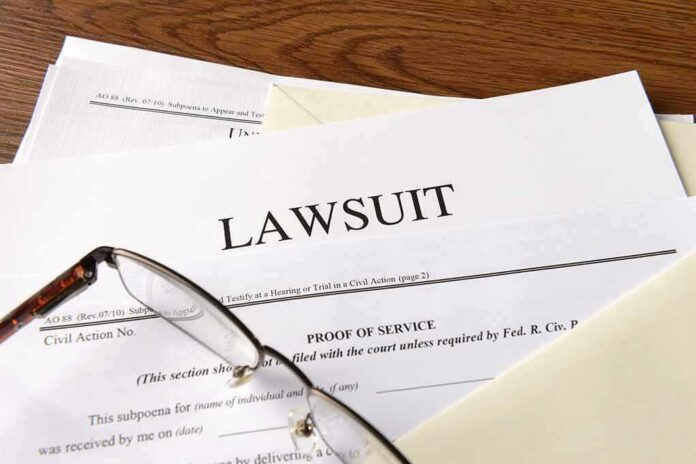
Publishers cannot reset the internet after a breach. They can, however, assert their intellectual property rights, force platforms to preserve and produce records, and narrow the aperture on the people moving stolen assets around. That is exactly what Take-Two did after GTA VI material surfaced: it sought federal subpoenas aimed at Microsoft and Discord, supported by a sworn showing that the information would be used “to obtain the identity of an alleged infringer or infringers” and solely “for the purpose of protecting Take-Two’s rights.” This is not crisis marketing; it is rights enforcement anchored in identity tracing—the durable first move because it holds up in court and creates real-world consequences.
Operationally, firms also lean on DMCA takedowns to slow dissemination and preserve value in the official reveal cycle. Coverage of Rockstar’s actions fits that pattern: continuous copyright notices, legal positioning, and no theatrics about scrapping schedules or rewriting the business model midstream. That is not indifference; it is discipline.
“Rapidly evolving” investigations are about facts, not theater
Good investigations iterate. Reporting on Take-Two’s filings describes the company’s probe as “evolving rapidly as new information becomes available,” including withdrawing a subpoena request once it no longer needed a specific data set. That is a tell: counsel narrowed scope as facts firmed up, which is how you keep judicial goodwill and avoid fishing expeditions. It also signals management attention to the concrete—who did what, through which accounts—rather than performative messaging about hypothetical commercial devastation.
Discord publicly indicated it would assess the validity and scope of requests before responding, a standard platform posture that underscores why publishers document necessity and proportionality in the first place. The net effect is a paper trail: identities, timestamps, transmission vectors—evidence that can support civil claims or bolster referrals to law enforcement.
Commercial impact: what the evidence shows—and what it doesn’t
Rockstar reaffirmed a 2025 window for Grand Theft Auto VI and directed investors to the company’s ordinary SEC risk disclosures rather than issuing leak-specific revenue warnings. For a franchise of this scale, that choice is meaningful; if management believed the leak had materially impaired long-range demand or timing, securities law and common sense both push toward updating guidance. They did not. That does not prove zero impact, but it aligns with an industry reality: partial, debug-state footage usually dents narrative control more than it depresses eventual sell-through.
By contrast, market-commentary claims tying multibillion-dollar swings in Take-Two’s capitalization directly to the leak are, at best, inferential. One finance blog asserted a roughly $2.83 billion value hit; Barron’s framed the issue as a debate and cited an analyst who was unconvinced leaks were the driver. Equity prices fold macro factors, rate moves, and positioning into every print; attributing durable franchise harm to a transient tape move without isolating confounders is speculation, not evidence.
Why publishers separate IP enforcement from demand forecasting
In the leak’s first weeks, the only quantifiable levers are legal and technical: subpoenas, platform cooperation, and content removals. Demand signals—wishlists, preorders, sentiment lift from official trailers—arrive later and are noisy until marketing ramps. That is why companies treat leaks first as infringement-and-identity matters. It preserves future options: you cannot unring the bell, but you can reduce the echo by constraining distribution and seeding a deterrence narrative for would-be copycats. Industry playbooks reflect this sequencing because it is repeatable across titles and jurisdictions, even when the eventual commercial arc differs by game and audience.
There is also a fundamental asymmetry: an unfinished slice of a living build can look rough by design. Modern pipelines front-load systems and tooling before polish. Experienced studios know that raw captures are a poor proxy for final reception, while high-fidelity official trailers, platform showcases, and hands-on previews carry disproportionate weight with mainstream buyers. The prudent posture is to harden security, continue production, and let the marketing cadence do its work.
The protest narrative and the economics of attention
Leak actors have tried to recast themselves as consumer advocates, demanding no digital preorders, new offline guarantees, and public apologies—threatening continued disclosures to force concessions. That rhetoric is built to travel on social platforms, but the incentives are plainer: a phased release of assets extends relevance and can monetize attention through derivative content, tokens, and ad placement, according to a security analysis of the campaign. In other words, the leak machinery profits from the spectacle itself, irrespective of whether it changes eventual unit sales of the game.
Rockstar, for its part, acknowledged the human reality: leaks are demoralizing for teams who expect to unveil work on their terms. But that admission about process is not a concession of commercial collapse. It is a reminder that creative control has intrinsic value even when the market outcome remains intact.
🚨 GTA VI LEAK UPDATE:
Take-Two says its investigation into the recent GTA VI leaks is “rapidly evolving.”
The company is now seeking more targeted information about Discord users and has asked for a new subpoena request to be sealed to avoid tipping off alleged leakers.
This…
— OPXP (@OPXPio) September 2, 2026
Separating signal from noise going forward
The strongest evidence on the public record centers on enforcement posture: targeted subpoenas to unmask alleged infringers; routine takedowns; an investigation that adapts as new facts surface. The weaker evidence—stock-chart post hoc stories and manifesto theatrics—does not credibly quantify durable damage to GTA VI’s demand curve. The middle ground, which only time will fill, is measurable commercial data: preorders, wishlist velocity after official beats, conversion at launch, and engagement in the first sustained content season.
Sources:
zerohedge.com, bbc.com, mashable.com, nbcnews.com, take2games.com, videogameschronicle.com, facebook.com, finance.yahoo.com, reddit.com, youtube.com, bleap.finance, tomshardware.com, barrons.com, xda-developers.com