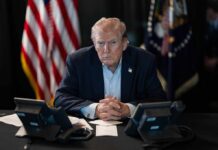
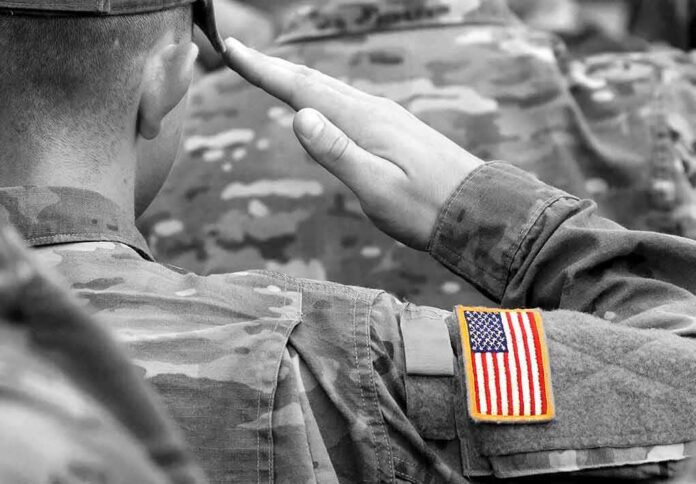
When commanders put time on the schedule, people get things done; by ordering a one-day force-wide stand-down so every service member can register, request a ballot, or cast one, the Pentagon is applying that simple operational truth to the most basic obligation of citizenship.
At a Glance
- Defense Secretary Pete Hegseth directed a one-day, department-wide voting stand-down in October, to be completed no later than Oct. 15, with the policy recurring in even-numbered election years.
- The order’s stated aim is access, not advocacy: troops get time and help to vote by mail or in person; no one is told how to vote.
- The move targets a documented failure point for military voters: missed state deadlines and ballot transit delays that disproportionately void UOCAVA ballots.
- Mechanically, units pause routine activity, engage voting assistance officers, and process Federal Post Card Applications and ballots during the duty day.
What the stand-down is, and why the Pentagon is doing it
Defense Secretary Pete Hegseth has ordered every command to set aside a single duty day in October so service members can complete voting tasks—registering in their home state, requesting an absentee ballot via the Federal Post Card Application (FPCA), mailing a completed ballot, or voting in person where eligible. The directive must be executed no later than Oct. 15 and, by design, will repeat in every even-numbered year. In public remarks announcing the policy, Hegseth emphasized that the stand-down’s purpose is access, not persuasion: time and help to vote, no guidance on who to support.
In military terms, this is a readiness adjustment to address a persistent friction point. Uniformed and Overseas Citizens Absentee Voting Act (UOCAVA) voters—active-duty personnel and families voting from away stations—face structural obstacles: complex, state-specific rules; compressed timelines; and the simple physics of ballot transit across distance. Those barriers, documented repeatedly by the Federal Voting Assistance Program (FVAP), Pew, and the Caltech/MIT Voting Technology Project, tend to produce a common failure mode: ballots that arrive too late to count. A stand-down pushes these tasks into the workday and onto the training schedule, the two places in the military where important things reliably happen.
The mechanics: how a voting stand-down works at unit level
Commanders already run periodic administrative stand-downs—safety days, suicide prevention training, legal readiness checks—so the form is familiar. For voting, the content centers on execution: every troop identifies their voting residence, consults state-specific rules, and completes the FPCA if absentee voting is required; those with ballots in hand package and mail them with appropriate postage, tracking timelines against their state’s receipt deadline.
Voting Assistance Officers (VAOs) and unit S1/admin shops serve as the help desk. Their job is not to sell participation but to remove avoidable errors: incorrect jurisdictions, missing signatures, or misread deadlines that can doom a ballot. That administrative friction matters; FVAP’s qualitative research has long flagged uncertainty about where and how to register as a prime barrier for mobile service members, a gap that often persists absent a specific trigger—an appointment, a form, a deadline—prompting the voter to act. The stand-down creates that trigger.
The problem it targets: time, distance, and fragmented rules
Military and overseas voting is governed by UOCAVA, updated by the 2009 MOVE Act to standardize key processes and push ballots out earlier. Those reforms improved the pipeline but did not eliminate the core challenge of synchronizing 50 sets of state rules with the military’s rhythm of deployments, training cycles, and frequent moves. When timelines compress—because a unit is in the field, a ship is underway, or orders cut unexpectedly—the weak link is ballot return.
The data are unsentimental on that point. Analyses by Caltech/MIT and nonpartisan voter-support organizations have found that the single most common reason UOCAVA ballots are rejected is late arrival; in one reviewed tranche of rejections, roughly a third were tossed for missing state deadlines. No amount of voter intent can beat the postmark if the statute requires receipt by close of polls. A day of command-sanctioned time in early October—before training ramps, leaves tighten, and mail cycles elongate—directly attacks that failure mode.
Nonpartisan by design: access without command influence
Every effective military voting program has to solve a dual equation: maximize lawful access while scrupulously avoiding the appearance or reality of command influence. The Pentagon’s approach threads that needle by focusing on process, not preference. The directive’s purpose is to ensure service members know their state’s rules, can request and return ballots on time, and have administrative support to do so; it does not tell anyone how to vote, and leadership’s role is limited to scheduling the day, resourcing VAOs, and verifying completion.
That distinction matters culturally. Troops live in a chain of command where leaders’ suggestions can feel like orders; the safest institutional posture is to keep voting assistance strictly informational and procedural. The stand-down’s framing—as time to act, with neutral help—aligns with longstanding UOCAVA guidance and with the way the force handles other rights-bearing processes, like legal assistance and tax preparation: commanders create conditions, specialists provide information, individuals make private choices.
Precedent and continuity: not a novelty, a normalization
Stand-downs are a known tool at the Defense Department. In 2021, the Secretary directed a one-day extremism stand-down; safety and sexual-assault prevention stand-downs are periodic fixtures. Applying the concept to voting formalizes what many commands already do informally—VAO briefings, admin days ahead of mail cutoffs—and sets a predictable cadence for even-numbered years. Predictability is the point: when sailors know October brings a voting admin day, they can plan FPCA requests earlier; when commanders know the suspense date is mid-month, they can avoid scheduling conflicts that strand ballots on the pier.
Institutionally, the order also clarifies responsibility. Voting access for service members sits at the junction of federal protections and state control over election administration. The Pentagon cannot change state deadlines, but it can change how the force manages its own time and information. This stand-down lives squarely in that lane.
What this means for the voter in uniform
For the individual airman, Marine, soldier, sailor, Guardian, or Coast Guardsman, the change is concrete: a day on the training schedule to get it done. You identify your legal voting residence. You and your VAO look up your state’s registration and ballot timelines. If you need an absentee ballot, you submit the FPCA—ideally electronically where states allow it—so your local election office can send your ballot with enough runway for return. If you already have the ballot, you complete and mail it immediately, building in transit time. That last step, done days earlier than it otherwise might have been, is what saves votes from the late-arrival bin.
For units, success looks like clean process metrics: near-100% contact with VAOs, FPCA submissions aligned to state lead-times, and a drop in ballots returned after the statutory deadline. Those are measurable outcomes that a brigade or wing can track. They also scale: once the workflow is embedded, repeating it every cycle costs less effort and yields more ballots counted.
Hegseth orders Pentagon voting stand-down ahead of midterm elections https://t.co/Bhr0KoiaG5
— Steve Williams (@HISteveWilliams) October 2, 2026
The bottom line: scheduling solves what speeches can’t
Military life is structured by calendars, orders, and checklists. Voting from the field fails most often not because troops don’t care, but because time and distance beat intention. A one-day stand-down, ordered early enough to matter and repeated on a reliable cadence, converts civic intention into counted votes by forcing the necessary paperwork and mailing into the only container that truly governs the force—the duty day. It is a nonpartisan fix for a documented problem, executed in the idiom the military understands best: plan the work, work the plan.
Sources:
feedpress.me, stripes.com, washingtonpost.com, thehill.com, yahoo.com, x.com, ground.news, democracydocket.com, thedailybeast.com, washingtonsun.com