
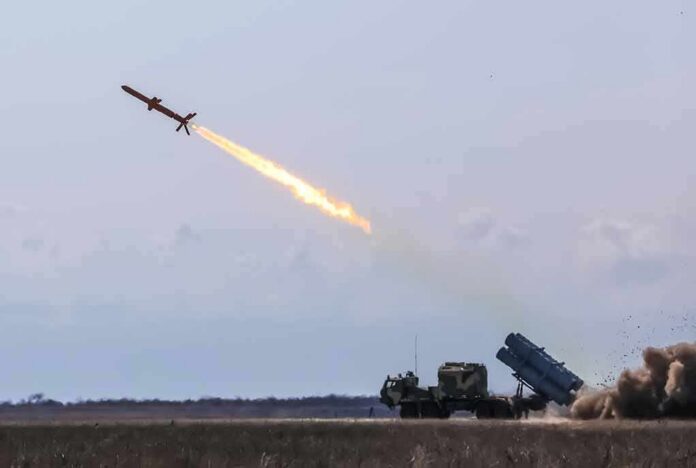
Ukraine’s deep-strike campaign matters because it changes the geography of war: instead of meeting Russia only at the front, Kyiv is now reaching into the industrial, energy, and logistical system that keeps the Russian war machine running. What the evidence does not support is the stronger claim that these strikes have already forced a Kremlin reversal; the real story is sustained pressure, real disruption, and an unresolved test of whether disruption can become coercion.
Intro Header
- Ukraine has moved from episodic retaliation to a sustained deep-strike campaign against Russian oil, logistics, air defense, and military-industrial sites.
- The campaign appears to be imposing measurable costs on refinery output, fuel availability, and rear-area security, even if those costs are uneven and often reversible.
- The strongest counter-argument is not that the strikes are fake or irrelevant, but that the public record does not yet show a decisive change in Putin’s strategic behavior.
- The most important analytical question is whether these strikes are merely disruptive harassment or the beginning of genuine economic attrition.
How Ukraine Is Using Deep Strikes as Economic Warfare
The campaign is best understood as a form of economic warfare with military purpose. Its targets are not limited to battlefield concentrations; they include oil refineries, fuel depots, military-industrial facilities, logistics hubs, air bases, and supporting infrastructure inside Russia’s strategic rear. That target set matters because oil is not just an export commodity for Russia; it is a revenue stream, a fuel source for its armed forces, and a pillar of the state’s fiscal resilience. The logic is straightforward: if Ukraine can repeatedly damage the infrastructure that processes, moves, and monetizes energy, it can raise the cost of sustaining the war even without breaking the front line.
Several sources describe that logic in explicitly strategic terms. The Modern War Institute frames the campaign as an effort to reduce Russia’s ability to generate income through oil sales, while the Economist says the observed impact appears significant, citing lower refinery production, fuel-export limits, and fossil-fuel revenues falling short of what oil prices alone would predict. That is the central mechanism: not instant paralysis, but cumulative friction. A refinery outage, a depot fire, or a logistics hit does not end a war; repeated disruptions across a vast industrial system can, over time, narrow operating margins and force harder tradeoffs.
The campaign has also expanded geographically. Reporting based on ACLED and Economist analysis says strikes more than 100 kilometers from the border more than doubled over the past year and could approach 800 by year-end if the pace continues. Another source says Ukraine carried out 658 such strikes in 2025. Even allowing for methodological caution, the trend line is clear enough: Ukraine has built a long-range strike apparatus that is no longer symbolic or sporadic. It has become a standing feature of the war.
The Real Effect: Pressure on Refineries, Logistics, and Air Defense
The strongest evidence of consequence is not rhetorical; it is operational. The Economist reported declining Russian oil refinery production and limits on fuel exports, which is exactly the sort of effect one would expect if repeated strikes are forcing shutdowns, emergency repairs, rerouting, and defensive dispersal. Reuters-linked material in the source set goes further, saying Ukrainian strikes reduced Russian refinery capacity by about 700,000 barrels per day, roughly a quarter of total capacity. That figure should be treated as an estimate rather than an audited state statistic, but it points in the same direction as the broader reporting: the campaign is affecting throughput, not merely producing dramatic footage.
Just as important, the campaign appears to be forcing Russia to spend resources on defense that it would rather devote elsewhere. The BISI report says recurrent strikes in Russia’s strategic rear are pushing Moscow to redeploy air-defense and security assets, straining logistics and exposing gaps in territorial defense. In war, that matters even when the hit itself is not spectacular. A state that must harden Moscow, protect fuel sites, and widen its internal security posture is a state paying a tax on its own rear areas. That tax may be bearable; it is not free.
There is also evidence of logistical and social disruption inside Russia. Ukrainian and allied reporting describes attacks on warehouses and supply hubs, including Wildberries, plus fuel shortages, gas-station lines, and canceled public events. Those effects are not proof of strategic collapse, but they do show how a deep-strike campaign can leak from military infrastructure into civilian inconvenience. That matters politically because wars are sustained not only by factories and budgets, but by populations willing to absorb friction. When ordinary logistics become visibly unreliable, the psychological boundary between “the war over there” and “the war at home” starts to erode.
Why the Campaign Has Not Yet Produced a Strategic Reversal
The strongest counter-case is not that Ukraine’s strikes are ineffectual. It is that effectiveness is not the same as decisiveness. Meduza’s analysis says the number of verified strikes rose sharply from mid-2025 but did not surge in 2026; it reports a stable pace of more than 30 verified attacks per month and says Russia’s refineries “keep bouncing back”. That is an important corrective. A refinery that restarts after repair, or a fuel system that absorbs shocks through redundancy and adaptation, can still be under pressure without being broken. In other words, the campaign can be costly and still fall short of strategic coercion.
That distinction is where the debate really lives. Supportive analysis, including CSIS and the Atlantic Council event framing, argues that the strikes are creating “cracks in the Kremlin” and may be aimed at fracturing elite support for the war. But the public record provided here does not show a policy reversal, a negotiated opening, or an observable change in Putin’s strategic course attributable to the strikes. The Kyiv Independent summary is blunt on that point: despite the campaign’s visibility and intensity, Russia’s official stance remained unchanged and the war continued. That does not invalidate the campaign; it defines its current limit.
There is also an important asymmetry in the evidence base. Many of the most striking claims come from analytical outlets, transcript summaries, or advocacy-adjacent reporting, which are useful for identifying patterns but weaker on facility-level verification. The result is a plausible but not fully auditable picture of cumulative damage. You can see the pressure clearly. You cannot yet quantify, with the precision a wartime strategist would want, how much of Russia’s war economy has been degraded permanently versus delayed, repaired, rerouted, or normalized.
Diesel is now on the cards in Moscow too
Deep-strike campaign targets Russian fuel supply: Ukrainian long-range drones struck the Orsknefteorgsintez oil refinery in Orsk (Orenburg region)—over 1,500 km from Ukraine's border. OSINT reports confirm a massive fire damaging the… pic.twitter.com/cfWrhUrPKL
— Jarl Finland (@jalle51) August 11, 2026
What This Means for the War Ahead
The larger lesson is that deep strikes are turning the war into a contest over depth itself. Russia once benefited from strategic distance: factories, depots, airfields, and energy assets sat far enough behind the front to feel insulated. Ukraine’s campaign attacks that assumption. Even when a strike does not destroy a site outright, it forces air-defense redeployment, emergency repairs, rerouting, and inventory buffering. Those are not trivial burdens in a long war. They accumulate, and accumulation is the grammar of attrition.
Still, the available evidence supports a disciplined conclusion rather than a triumphalist one. Ukraine has created a serious, persistent, and increasingly sophisticated pressure campaign against Russia’s rear. It has probably damaged refinery output, constrained fuel exports, complicated logistics, and forced defensive adaptation. What it has not yet demonstrated is decisive coercion: no verified reversal in Kremlin policy, no clear forcing of negotiations, no public proof that the campaign alone is enough to bend Russian strategy. The right reading is therefore neither dismissal nor overstated victory. It is that Ukraine has found a real way to impose costs far beyond the battlefield, and the open question is whether those costs can eventually become strategically decisive.
Sources:
youtube.com, themoscowtimes.com, bisi.org.uk, ukraine-war-analytics.com, nationalinterest.org, economist.com, defenceukraine.com, united24media.com, azernews.az, wavellroom.com