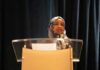

The important fact is not merely that Hunter Biden spoke about his father’s illness; it is that he gave a public, emotional account of a cancer already known to be metastatic and said it had spread “into his bones and further,” while describing his father’s condition as painful and debilitating.
Key Points
- Hunter Biden said in a BBC Newsnight interview that Joe Biden’s prostate cancer has spread further, using the phrase that it had metastasized “into his bones and further.”
- He described the illness as “very painful” and “very debilitating,” framing it as an ongoing, symptomatic condition rather than a past diagnosis.
- The update fits an earlier public disclosure from May 2025 that Joe Biden had an aggressive prostate cancer already spread to bone.
- The main limitation is not whether Biden has cancer; it is that Hunter Biden’s remarks do not include medical records, imaging, or a clinician’s confirmation of any new site of spread.
What Hunter Biden Actually Said
Hunter Biden’s comments landed with force because they were plain, personal, and specific. In the BBC interview, he said the cancer had “metastasized into his bones and further,” and he added that it was “very painful and very debilitating in many respects.” He also said, “I wish he would complain more, because it’s not good,” a line that gives the statement a present-tense, lived-in quality rather than the feel of a retrospective family anecdote.
That wording matters. “Metastasized” is not a vague synonym for worsening; it means malignant cells have spread from the original site to other parts of the body. The phrase “and further,” however, is clinically imprecise, and the reporting provided here does not identify any specific additional organ or tissue. So the public can take the statement seriously without pretending it is a full medical briefing.
The Medical Baseline Behind the Story
The reason this update traveled so quickly is that it fits the baseline already disclosed in May 2025: Joe Biden had been diagnosed with an aggressive form of prostate cancer that had already spread to his bones. Once that fact is in the record, later reports that the cancer has “spread” can mean two different things. They may reflect a genuine new progression beyond the earlier disclosure, or they may simply restate the known metastatic diagnosis in more dramatic language.
That distinction is where careful reading matters. Reuters’ reporting, as summarized in the material provided, says Biden’s office had already disclosed bone metastasis, and later coverage notes that a Biden spokesman declined to comment on Hunter Biden’s remarks. In practical terms, that means the family statement was publicly available and widely repeated, but not medically elaborated by the people closest to the treatment file. The core fact is therefore sturdy; the finer clinical meaning is not publicly unpacked.
Why the Interview Mattered Politically
This was never going to be treated as an ordinary family health update. Joe Biden’s health has been politicized for years, especially after the 2024 debate and his withdrawal from the presidential race, so any fresh mention of his condition is immediately pulled into a larger argument about decline, disclosure, and responsibility. That does not make Hunter Biden’s remarks less meaningful; it makes them more combustible.
Hunter Biden was speaking as a son, not as a physician, and that gives the statement a particular kind of evidentiary weight. It is firsthand testimony about suffering, not a diagnostic report. He is close enough to observe pain, fatigue, and debility, but not positioned to substitute for an oncology note, a staging summary, or a radiology report. That is why the quote is credible as a family account and insufficient as a clinical record.
The broader media reaction also reveals how modern political health news works. Once a dramatic line is spoken on camera, it is rapidly syndicated across outlets, social clips, and headline rewrites. Repetition makes the claim feel confirmed, even when the underlying source remains one interview. In this case, the quote was carried by multiple major outlets, but they were all reporting the same underlying statement rather than independently verifying new medical facts.
Hunter Biden says Joe Biden’s cancer has spread https://t.co/WbBdEvRexD pic.twitter.com/rYZvFSGvP2
— Meet the Press (@MeetThePress) August 9, 2026
What Is Confirmed, What Is Not
Confirmed: Hunter Biden publicly said his father’s cancer had spread further, that it had metastasized into his bones and beyond, and that the condition was painful and debilitating. Also confirmed: Joe Biden had already disclosed an aggressive prostate cancer with bone metastasis in 2025, which makes any later discussion of spread medically plausible within the existing public record.
Not confirmed in the material provided: a new scan, a treating oncologist’s statement, an updated pathology report, or any precise explanation of what “further” spread means. Those are not minor omissions; they are the boundary between a family disclosure and a medical update. The public story is real, but its exact clinical contours remain private, and the reporting does not pretend otherwise.
How to Read the Story a Year From Now
The durable lesson here is that serious illness disclosures involving political figures are rarely just medical events. They are also narrative events, because family members, reporters, partisans, and readers all bring their own assumptions to the same sentence. A single phrase — “the cancer has spread” — can function as a compassionate update, a political weapon, or both at once, depending on who is hearing it.
What should survive the churn is the distinction between firsthand testimony and clinical verification. Hunter Biden’s remarks strongly indicate that Joe Biden remains seriously ill and that the disease is affecting him visibly and painfully. They do not, by themselves, provide a full map of disease progression. That is the sober reading, and it is the one the evidence supports.
Sources:
cbsnews.com, washingtonpost.com, cnbc.com, nytimes.com, news.meaww.com, foxnews.com, yahoo.com, instagram.com