The important fact is not that Colombia’s earthquake toll moved; it is that the count climbed rapidly because rescue crews, hospitals, local governments, and national authorities were all tallying a mass-casualty event at different speeds. In that setting, a headline figure of 240 is best understood as a live disaster ledger, not a static final reckoning.
At a Glance
- The quake was a major seismic event: magnitude 7.4, centered in western Colombia near San José del Palmar in Chocó.
- Initial official figures were far lower than later regional totals, which is normal in the first hours of a major collapse disaster.
- Local authorities later reported 240 fatalities, while other outlets still showed intermediate totals such as 169, 181, and 224 as rescue work continued.
- The damage profile—collapsed buildings, damaged hospitals, injured civilians, and missing persons—supports a severe mass-casualty emergency rather than a contained incident.
Why the Death Toll Kept Moving
Earthquake accounting is rarely immediate, and it is least reliable in the first day after the shaking stops. The reason is structural, not rhetorical: local officials count bodies, hospitals count admissions, civil-defense teams count damage, and national authorities try to reconcile those streams while roads are cut, communications fail, and trapped victims are still being pulled from rubble. Reuters reported that President Abelardo de la Espriella’s early briefing put the toll at 111 dead, while later outlets cited much higher totals from local or regional authorities. The New York Times, NBC, and ABC all showed the same pattern of upward revision as reporting widened beyond the first emergency snapshot.
That progression matters because it explains why a figure like 240 should not be read as headline inflation so much as cumulative exposure to the disaster. Reuters noted that local media cited 132 deaths but also said the origin of that figure was unclear, which is exactly the sort of intermediate number that appears when municipal tallies outrun national confirmation. By the time local authorities were reporting 240 fatalities, the available record still described active rescue operations, continued searches in collapsed structures, and unresolved missing-person counts. In other words, the death toll was still being assembled from partial evidence, which is what one would expect in the immediate aftermath of a broad urban-rural disaster.
What the Seismic Event Did to Colombia’s Built Environment
The magnitude and location anchor the scale of the human loss. Reuters, the New York Times, DW, and other major outlets consistently placed the quake at magnitude 7.4 and near San José del Palmar in western Colombia. The epicentral region and the affected corridor included cities such as Cali, Pereira, Manizales, and communities across Risaralda, Valle del Cauca, Chocó, and Antioquia. That geographic spread is important: it shows the event was not a single-city emergency but a regional structural failure, with casualties accumulating across multiple jurisdictions rather than one localized blast zone.
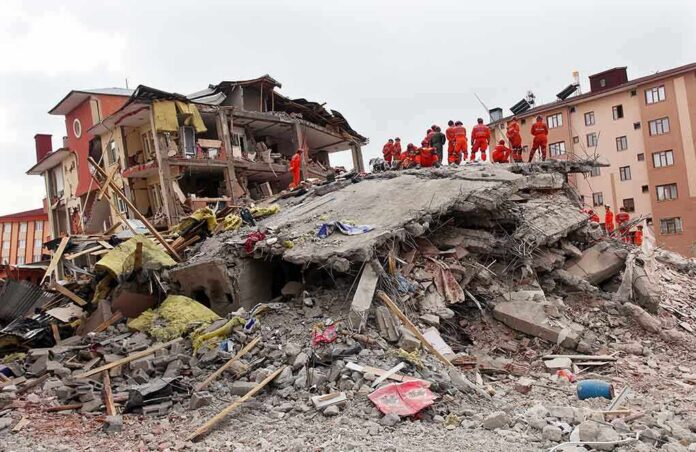
DW’s report is especially useful because it ties the human toll to the physical damage profile. President de la Espriella said there were 111 dead and 87 injured, along with 1,575 homes damaged, 37 destroyed, 61 buildings collapsed, and damage to 18 health centers and 52 schools. Those figures fit the logic of earthquake mortality: deaths rise where buildings fail catastrophically, where medical facilities are impaired, and where rescue access is delayed. When hospitals and transport corridors are compromised, the first count is almost always incomplete; the later count is usually harsher because more collapses are discovered, more trapped people are reached, and more deaths are registered after the initial emergency response.
Why 240 Is Credible Even Though Earlier Figures Were Lower
The strongest argument for taking the 240 figure seriously is that it sits inside a documented upward sequence, not in isolation. Reuters reported 111 dead from the president’s first briefing, NBC later cited 169, the New York Times reported 181 confirmed dead by the next morning, ABC reported 224, and local authorities in the supplied research were then reporting 240. That kind of progression is not a sign of fabrication; it is the normal result of rescue teams reaching collapsed structures and officials reconciling separate regional counts. The fact that the numbers rose across multiple independent outlets strengthens, rather than weakens, the likelihood that the final toll was substantially higher than the first official snapshot.
There is, however, a real evidentiary distinction between “officially confirmed in the moment” and “final verified accounting.” Side B in the research package is strongest on process, not contradiction. It correctly notes that the president’s first briefing was provisional and that the reported numbers were assembled from partial local reports. But it does not provide a superior casualty ledger, morgue reconciliation, or forensic audit that replaces the later totals. So the honest reading is straightforward: 111 was an early emergency count, 132 was an intermediate and partially opaque figure, 169 and 181 reflected broader aggregation, and 224 to 240 represented the same disaster as it was progressively counted. The dispute is about timing and methodology, not about whether a severe mass-casualty event occurred.
The Broader Reporting Pattern Behind the Discrepancy
Mass-casualty earthquakes often generate what looks like contradiction but is really layered reporting. Hospitals report who has arrived alive; morgues report the dead; municipal offices report local losses; national ministries attempt to reconcile all of it. In Colombia’s case, the supplied reporting shows that process in real time. The New York Times described deaths spread across Risaralda, Valle del Cauca, Chocó, Manizales, and Antioquia, while NBC and ABC later cited still higher regional and national totals as search and rescue continued. That spread is important because it means the toll was being built from multiple partial registries, not from a single master list.
The missing-person numbers reinforce the same point. ABC reported more than 2,700 missing alongside the 224-fatality figure, and LiveNOW’s transcript summary described 2,700 missing on a citizen-run missing-person website. That may ultimately prove useful as an emergency coordination tool, but it is not the same thing as a civil registry or forensic count. The scale of the missing list, together with the reports of collapsed hospitals, damaged schools, and trapped people under rubble, indicates why early mortality figures were destined to rise. This is the central mechanism behind the story: when communications fail and structures cave in, death tolls do not arrive fully formed. They accrete.
A 7.4 magnitude earthquake has struck western Colombia, resulting in at least 132 deaths and over 2,700 people reported missing. Rescuers are urgently searching for survivors as the situation develops. #ColombiaEarthquake #RescueEfforts
— News Edition (@NewsEdition_1) August 11, 2026
What Matters After the First 72 Hours
The practical question after a disaster like this is not whether the first number was “wrong,” but which records will eventually settle the ledger. Reuters’ note that the origin of the 132 figure was unclear is a reminder that the information environment in the first hours can be noisy, even when the underlying disaster is real and severe. What eventually matters are reconciled municipal and national casualty lists, morgue receipts, hospital fatality logs, and civil-defense incident reports. Those records are what convert a live emergency count into a durable public fact.
In the meantime, the 240 figure should be read as a serious regional toll supported by the overall pattern of reporting, not as a final forensic total immune from later revision. The available sources show a catastrophe of large geographic reach, major structural collapse, continuing rescue work, and a death count that rose exactly as disaster accountants would expect. The scale is already clear. The final ledger is what remains to be completed.
Sources:
theamericanconservative.com, bbc.com, nytimes.com, dw.com, reuters.com, abc.net.au, cnbc.com, en.wikipedia.org