
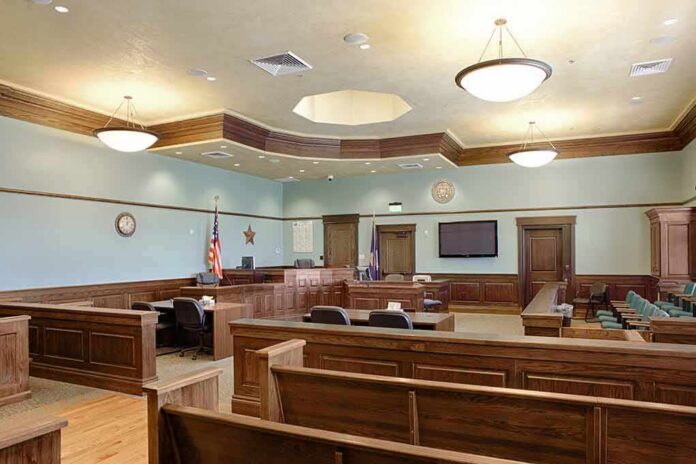
When a judge steps down from the bench and acts like a jailer, the Constitution—not judicial custom—governs. That is the lasting lesson of the Eighth Circuit’s rulings in Rockett ex rel. K.R. v. Eighmy: physically locking two children in courthouse holding cells for “refusing to follow directions” was an unreasonable seizure lacking probable cause, and qualified immunity does not shield it.
At a Glance
- The Eighth Circuit held the children were “seized” within the Fourth Amendment and that the seizure was unreasonable because there was no probable cause they had committed an offense.
- The court rejected qualified immunity and affirmed damages and attorney’s fees, concluding the rights at issue were clearly established.
- Earlier, the Eighth Circuit drew a bright line: issuing a custody pick-up order can be a protected judicial act, but personally escorting and confining children is not and is outside absolute judicial immunity.
- The case clarifies the boundary between adjudication and custodial execution: courtroom authority is broad, but physical detention triggers Fourth Amendment limits.
What the Eighth Circuit Actually Decided
The appellate panel addressed a stark fact pattern: after a custody hearing, the children declined to leave with their mother. Courthouse officers, with the judge’s involvement, placed them in holding cells. The Eighth Circuit framed the issue with precision: did the judge “seize” the children, and if so, was that seizure reasonable under the Fourth Amendment? The court answered yes to the first and no to the second. It emphasized that the judge lacked probable cause to believe the children had committed any offense that would justify jailing them, and that the constitutional violation was clearly established—foreclosing qualified immunity. That holding carried consequences beyond liability theory; the panel affirmed damages and attorney’s fees as part of the remedial outcome.
Two doctrinal strands intersect here. First, the court treated the confinement as a direct physical seizure, not as a mere byproduct of a case-management decision, which placed the conduct squarely within the Fourth Amendment’s reasonableness framework. Second, on immunity, the panel evaluated the judge’s actions under qualified immunity rather than absolute judicial immunity because the relevant conduct was custodial execution—conduct akin to a police or jail function—rather than an adjudicative act.
The Line Between Judicial Acts and Jailhouse Acts
The Eighth Circuit did not draw this line for the first time in 2026. In a 2023 opinion in the same litigation, the court had already separated what judges are absolutely immune to do from what they are not. Issuing a pick-up order tied to a custody dispute was deemed within the court’s jurisdiction and thus protected by absolute judicial immunity. But the judge’s personal escorting of the children to the jail area, overseeing their processing, and later returning to release them were not “functions normally performed by a judge.” Those operational, physical-custody steps fell outside absolute immunity.
That earlier ruling preserved a workable boundary that matters well beyond this case: authority to adjudicate and issue orders is one thing; execution that looks like law enforcement is another. When judges take on the latter, they face the same constitutional constraints—and potential civil liability—police officers do. The 2026 panel’s denial of qualified immunity cements that boundary by applying the Fourth Amendment directly to the physical confinement at issue.
Mechanism: Why the Fourth Amendment Governs Here
The Fourth Amendment regulates governmental seizures of persons, a term that covers any restraint of liberty by physical force or show of authority. The key inquiry is reasonableness, which in the arrest context typically turns on probable cause—facts and circumstances sufficient to warrant a prudent belief that the person committed a criminal offense. The Eighth Circuit concluded that jailing two minors for refusing to comply with a judge’s direction to leave with a parent after a custody hearing did not rest on probable cause of any offense, let alone one justifying confinement in holding cells.
That analysis does not trivialize courtroom control. Judges possess inherent authority to manage proceedings, ensure safety, and vindicate their orders. But the doctrine distinguishes between maintaining order within the courtroom and authorizing what amounts to a custodial arrest. The former is policed by contempt and other adjudicative tools; the latter implicates the Fourth Amendment’s familiar requirements. The court held the episode firmly in the second category, where the absence of an offense defeated reasonableness.
Immunity Doctrines, Sequenced and Applied
Two immunity shields were implicated: absolute judicial immunity and qualified immunity. Absolute immunity protects judges from damages for acts taken in a judicial capacity within jurisdiction, even if erroneous. The 2023 decision affirmed that protection for issuing a custody-related pick-up order, but withheld it from the judge’s personal custodial conduct, which the court characterized as nonjudicial execution rather than adjudication.
Qualified immunity, by contrast, protects officials performing discretionary functions unless they violate clearly established rights. In 2026, the panel held the rights here were clearly established: physically jailing children without probable cause was an unreasonable seizure; no reasonable official could think otherwise. As a result, the judge could not invoke qualified immunity for that conduct. The court also affirmed the related damages and fee awards, indicating the plaintiffs’ success reached all the way through remedies.
Attribution, Intent, and the Record
The district court record contained evidence from which a reasonable juror could infer that confinement functioned as punishment, a framing more commonly analyzed under substantive due process than the Fourth Amendment. While the Eighth Circuit’s final analysis centered on seizure and probable cause, that record supplied context: the judge’s actions looked less like transitory courtroom control and more like retribution enforced via a cell door. The 2026 appellate posture also involved courthouse officers who physically locked the children in cells; the opinions distinguish between immune issuance of orders and nonimmune execution, but the detailed apportionment of responsibility among actors is a matter of trial proof and remedial allocation, not a retreat from the central constitutional holding.
One procedural footnote is worth keeping straight for readers who track doctrine closely: in 2026, the court dismissed the judge’s renewed judicial-immunity appeal as unreviewable on procedural grounds, while squarely rejecting qualified immunity on the merits. That combination can be misread as a global defeat on absolute immunity; in fact, the earlier 2023 opinion already fixed the scope of absolute immunity in this case—protected for issuing the pick-up order, unprotected for acting as a jailer.
BENCH SLAPPED
Missouri judge loses immunity after locking kids in holding cells for refusing to leave with mom.
Judge Eric Eighmy took the children to the juvenile area, had them remove socks and shoes, and stood by while they were locked in separate cells. The Eighth Circuit… pic.twitter.com/wXxlXOhUCY
— Keith Ainsworth (@AinsworthKeith) October 14, 2026
Why This Boundary Matters Going Forward
Courtrooms depend on robust judicial authority; communities depend on constitutional limits when government officials restrain liberty. Rockett harmonizes those imperatives by reinforcing a bright-line rule. Judges remain insulated when they judge. When they leave the bench—literally or functionally—and perform custodial tasks, they must meet the same constitutional standards that bind police and jailers. That is not a dilution of judicial power; it is a clarification of role. And for litigants, lawyers, and court administrators, the practical guidance is candid: separate adjudication from execution. Use bailiffs and law enforcement within the law’s confines. If custody is necessary, root it in lawful authority—probable cause, valid contempt procedures, or statutory juvenile processes—not frustration with litigants’ defiance.
Sources:
reason.com, us8thcircuitcourtofappealsopinions.justia.com, lawreview.missouri.edu, ecf.ca8.uscourts.gov, govinfo.gov