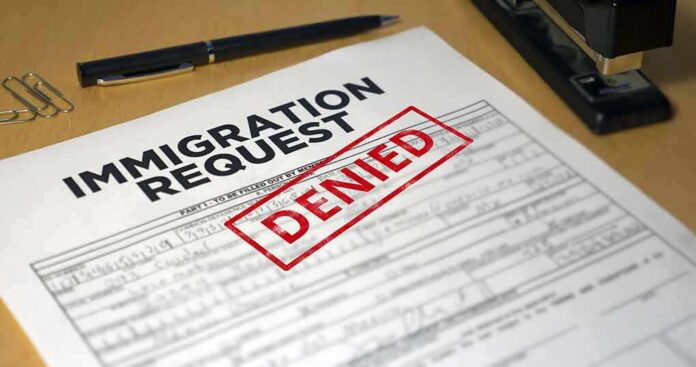
The core dispute here isn’t whether an asylum file contains a provocative line; it’s how to weigh a singled‑out inconsistency against the legal record of a removal case and the editorial focus of a broadcast about third‑country deportations.
The Short Version
- DHS says it found first‑person statements in Moussa Diawara’s asylum file describing same‑sex attraction, and faults 60 Minutes for omitting that detail from its segment.
- 60 Minutes centered its report on third‑country removals and a 2012 ruling that barred Diawara’s deportation to Mali, not on the contents of his original asylum basis.
- The public record shows no adjudicated finding of fraud in Diawara’s case; DHS’s allegation remains an agency claim.
- Conflicting accounts over travel documents and destination (Ghana versus Mali) complicate DHS’s credibility while not directly resolving the asylum‑file dispute.
What the evidence actually shows
Start with the documentary spine. CBS’s reporting and transcript describe a 2012 immigration‑judge decision permitting Diawara’s deportation but forbidding removal to Mali because of persecution concerns; the program built its segment around what happens when the United States sends someone instead to a “third country,” and whether those transfers still result in the person ending up in the very place a judge deemed too dangerous. DHS later criticized that coverage, with General Counsel James Percival saying he personally reviewed Diawara’s immigration file and found a prior asylum claim premised on homosexuality—at odds, DHS argued, with the program’s portrait of a married father of two.
Media accounts cite asylum‑application excerpts in first‑person language: descriptions of “female behaviors and feelings,” greater comfort with “intimate” relationships with boys than girls, and the assertion that in the United States he could express feelings toward men without embarrassment. Those lines, if authentic, make the existence of a sexual‑orientation claim clear. What they do not do is carry the legal burden of proving fraud; there is no public record of a formal finding that the statements were knowingly false or material misrepresentations that would have disqualified him from relief.
How third‑country removals and “withholding” intersect
When an immigration judge grants “withholding of removal,” the ruling bars deportation to a country where the person is more likely than not to face persecution, but it does not create lawful status in the United States. The government can still remove the person to another country willing to accept them. That legal architecture is the premise of 60 Minutes’ segment: the U.S. says it deported Diawara to Ghana, which had offered assurances; the question is whether those assurances failed when, according to Diawara, he was pushed onward to Mali, the forbidden destination. The asylum‑file excerpts, however newsworthy, are orthogonal to the show’s central policy inquiry: do third‑country transfers honor the spirit of non‑refoulement in practice, and what happens when paperwork and promises collide with on‑the‑ground realities?
Here DHS’s own narrative has friction. CBS displayed bag tags and a medical form bearing “Mali”; DHS has waved those away as contractor or clerical errors and maintained the destination was Ghana. This inconsistency does not answer the asylum‑basis question, but it does mean DHS is asking audiences to trust its account selectively—accepting the agency’s read of an asylum file while overlooking unresolved discrepancies in travel documentation.
Is omission the same as distortion?
DHS’s charge is not merely that the asylum file contained sexual‑orientation claims; it’s that 60 Minutes “left this absurd bit of fraud” out of the broadcast. Two things can be true. First, the sexual‑orientation basis is facially relevant to any full biographical telling of an asylum journey, particularly when persecution fears revolve around return to Mali, where LGBTQ+ people face risk. Second, editorial focus is not total biography. The CBS piece anchored itself to third‑country removal mechanics and a prior judicial bar on removal to Mali—an institutional, not personal, story. In the absence of proof that producers had and knowingly suppressed the specific asylum excerpts, “they omitted a relevant fact” is a fair criticism of emphasis, not an evidentiary demonstration of deception.
Moreover, marriage and children do not independently rebut a claim of same‑sex attraction or bisexuality. Adjudicators and the public routinely err by equating family structure with heterosexual identity; that inference short‑circuits the nuanced reality of sexual orientation and cultural pressures. Even if one finds the juxtaposition jarring, the proper lane for “fraud” is adjudication: a finding that a statement was knowingly false and material. On the record available, that finding doesn’t exist.
What would resolve the dispute
There are straightforward ways to replace inference with record. The cleanest path is sunlight on the file: the complete asylum application, supporting declarations, translations, and any subsequent amendments; the 2012 immigration‑judge decision and administrative record, including credibility findings; and, if relevant, Board of Immigration Appeals materials. Those documents would show whether the sexual‑orientation narrative was central, ancillary, later recanted, or contradicted under oath, and how—if at all—it factored into the withholding ruling. Parallel transparency would help on the removal pathway: ICE travel orders, contractor logs for luggage‑tag generation, airline manifests, and Ghanaian transfer records could settle whether Mali was a clerical artifact or an intended waypoint that undermined the assurances framework.
If DHS transmitted the asylum excerpts to CBS pre‑broadcast, a paper trail—press‑office emails, interview correspondence, or Percival’s communications—would undercut any claim that producers never had the material. If not, the omission critique loses its rhetorical edge. Either way, the cure is documentary, not performative.
The larger frame: allegations of “fake” LGBTQ asylum claims
Accusations that applicants invent sexual‑orientation narratives to obtain protection surface regularly in immigration politics. Serious analysis cautions against over‑generalization: in comparable British data, sexual‑orientation claims represent a small share of total asylum cases, and there is no credible evidence of systemic fabrication; decision‑makers also risk relying on stereotypes about how LGBTQ+ lives ought to look, which distorts credibility assessments. This context doesn’t vindicate any individual file, but it does warn against using one contested case—with incomplete public records—as a proxy fight over a much bigger cultural argument.
Judgment, calibrated to the record
On the strength of what is public, two conclusions hold. First, the sexual‑orientation excerpts attributed to Diawara’s application exist in media reproductions and, according to DHS’s general counsel, in the underlying file; that supports the claim that such a narrative was at some point advanced. Second, neither the CBS segment nor DHS’s criticism resolves whether those statements were false, material, or adjudicated as fraud, nor whether their omission from a policy‑focused broadcast transformed the segment into misinformation. Until the file and the travel chain are fully documented, certainty belongs to partisans; prudence belongs to readers willing to separate what’s proven from what’s inferred.
Sources:
nypost.com, cbsnews.com, thebeltwayreport.com, yahoo.com, washingtontimes.com