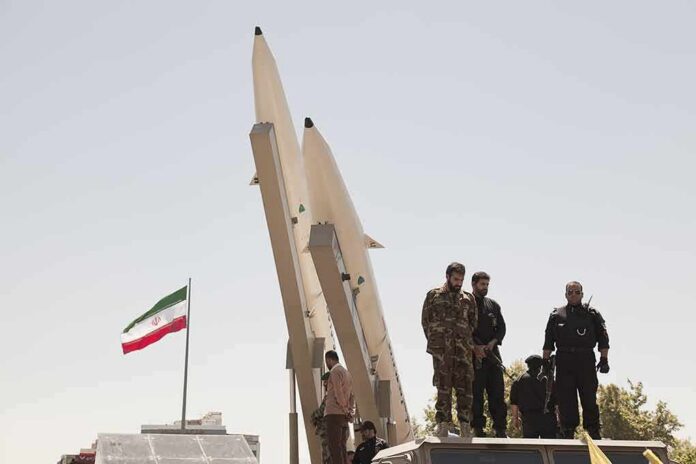
In Tehran’s current debate, the most consequential shift is not a secret centrifuge cascade but a public one: influential hardliners are saying out loud that a nuclear weapon—long disavowed on religious and doctrinal grounds—should be on the table to deter the United States and Israel. Whether Iran ultimately crosses that threshold will hinge on the interaction between this new rhetoric, Iran’s technical latency, and the countervailing force of law, theology, and international inspection.
The Short Version
- A growing bloc of Iranian lawmakers and security figures now argue a bomb is necessary for deterrence against the U.S. and Israel.
- Iran’s official doctrine still rejects nuclear weapons as unlawful and unnecessary; leaders cite the Supreme Leader’s religious ban and IAEA findings.
- The tension reflects a classic “security dilemma”: threats raise proliferation incentives; visible nuclear progress invites preventive pressure.
- Iran’s most plausible near-term path is hedging—sustaining a rapid “breakout” option—unless domestic politics or external shock forces a doctrinal decision.
What has actually changed: from strategic wink to explicit advocacy
For years, Iran’s nuclear posture lived in studied ambiguity: expand enrichment capacity and shorten timelines, but deny any intent to weaponize. That dance has frayed. Prominent MPs and figures tied to national-security committees have begun linking nuclear weapons directly to regime survival and deterrence. One senior parliamentarian urged authorities to authorize “deterrent weapons, including nuclear weapons,” if attacked by the United States. Others argue a possible U.S. strike on nuclear facilities would justify “changing the country’s nuclear doctrine”—shorthand in Tehran’s discourse for allowing weaponization under extreme threat. Analysts tracking factional media and the ultra-hardline Paydari network see a pattern: after years of absorbing costs without the bargaining leverage a declared deterrent might confer, parts of the elite now want the perceived benefits of an overt or at least deliberate “nuclear option”.
This rhetorical shift matters. Public advocacy by sitting lawmakers is not mere academic chatter; it signals to domestic audiences and foreign adversaries that political cover for a doctrinal pivot is being prepared. Some even frame the succession from the late Supreme Leader to Mojtaba Khamenei as a moment when the religious prohibition could be reinterpreted, narrowing the gap between capability and decision.
The countervailing case: law, theology, and inspection still anchor policy
Set against those hardline calls is the official Iranian position, reiterated across ministries, religious authority, and international filings: nuclear weapons have no place in Iran’s defense doctrine; the program is peaceful under the Nuclear Non-Proliferation Treaty (NPT) and IAEA safeguards. The late Supreme Leader’s fatwa brands the production, stockpiling, and use of nuclear weapons as sinful and therefore prohibited. His office has framed such arms as fundamentally unlawful and strategically unwise—bringing “needless trouble” rather than security.
Those claims are not merely rhetorical. The IAEA’s formal reporting has stated it has not seen a “structured” Iranian program to manufacture nuclear weapons and has found no evidence of diversion of declared nuclear material to military ends—a carefully parsed formulation that matters in Vienna’s cautious language. Iran’s Atomic Energy chief has publicly highlighted those findings to argue continuity of a peaceful track, even as inspectors flag other compliance disputes unrelated to a weapons decision. Taken together, the religious ban, doctrinal statements, and inspection record form a coherent, state-level stance that remains in force today.
Mechanism of deterrence and the “nuclear latency” play
The strategic logic behind the hardliners’ push is orthodox realism. Nuclear weapons deter invasion and large-scale coercion by raising the costs beyond any reasonable benefit. In a region where Israel’s opaque arsenal is widely assumed and where U.S. forces operate nearby, hawks in Tehran see a bomb as insurance. Yet there is a middle path that many states have taken and Iran has long practiced: nuclear latency. Latency means building the industrial and scientific base to produce a weapon quickly without crossing the legal and political line of assembling one. In practice, enrichment capacity, advanced centrifuges, and ambiguous timelines become bargaining chips. This helps explain why public calls to revisit “doctrine” often surface in tandem with pressure to expand enrichment or reduce cooperation with inspectors: the signal, not only the metal, is the message.
Latency cuts both ways. It sustains deterrence by uncertainty, but it also triggers preventive instincts in adversaries. Strategy scholarship describes a self-reinforcing cycle: as perceived external danger rises, so do incentives to proliferate; as visible capability grows, so does the risk of preemptive or preventive strikes meant to arrest the trend. That is the core instability in Iran’s current trajectory—hedging that becomes so convincing it invites the very attacks it is meant to deter.
Where the real disagreement lies: intent versus decision
The public record supports two simultaneous truths. First, a meaningful slice of Iran’s political class now endorses a potential shift from prohibition to permission under extreme threat; they are prepared to argue, if necessary, that doctrine should adapt to reality. Second, the state’s formal doctrine—anchored in a religious ban and reiterated in international fora—rejects nuclear weapons and, to date, is not contradicted by IAEA evidence of a structured weapons program or diversion. Bridging these truths is the unresolved question of decision. Rhetoric can soften the ground; it does not equal an order to weaponize. Conversely, inspections can attest to the absence of a structured program today; they cannot preclude a rapid move tomorrow if political authority flips the switch.
This is why close readers of Iran’s system watch authority, not headlines. A decisive shift would require at least tacit blessing from the Supreme Leader’s office and coordinated direction to the security bureaucracy. Until then, expect a calibrated dance: louder talk of deterrence, careful preservation of breakout capability, and periodic flirtations with NPT withdrawal to raise leverage—short of an irrevocable leap.
Implications for the United States, Israel, and regional stability
For Washington and Jerusalem, the danger is miscalculation at the edge of latency. Military action can damage facilities, but it cannot erase knowledge or industrial networks; if the lesson Tehran internalizes is that restraint invites attack while weaponization deters it, outside pressure can backfire. Conversely, acquiescence to steady technical gains without credible limits risks normalizing a de facto threshold state with crisis-time breakout potential. The only strategies that have durably slowed programs of this kind have mixed verifiable constraints with economic and political inducements, backed by the possibility—but not the routine use—of force.
For Iran, the choice is not binary between vulnerability and the bomb. A durable hedge, coupled with diplomatic off-ramps, can preserve regime security without incurring the open-ended isolation, sanctions snapback, and heightened risk of preventive strikes that a declared weapon would bring. But that equilibrium is narrow and unstable; it depends on discipline across factions and consistent signaling to inspectors and adversaries alike.
🇮🇷 🇺🇸 🇮🇱 🇾🇪
Iranian parliamentary committee chair Mohammad Saleh Jokar urged authorization to use nuclear weapons and suspend NPT cooperation if the US attacks Iran. His comments to ICANA are a legislator’s advocacy, not adopted policy or evidence Iran possesses nuclear weapons.…— Nuclear-ID (@NuclearID68) October 23, 2026
What to watch next: the doctrinal hinge
Three indicators will reveal whether rhetoric is hardening into doctrine. First, any formal move to curtail cooperation under the NPT and Comprehensive Safeguards Agreement—especially expulsions or sustained denial of access beyond tactical spats—would mark a qualitative shift from bargaining to concealment. Second, explicit, on-the-record reinterpretation of the nuclear fatwa by the Supreme Leader’s office—rather than speculation by legislators—would remove the system’s chief theological brake. Third, industrial steps that narrow breakout time while hardening sites against attack—paired with declarations linking those steps to deterrence—would signal a hedging strategy calcifying into a decision pathway. Until those appear together, the most accurate description of Iran’s trajectory is contested intent and preserved option, not an imminent bomb.
Sources:
zerohedge.com, iranintl.com, eurasiareview.com, understandingwar.org, iaea.org, en.khamenei.ir, en.mfa.gov.ir