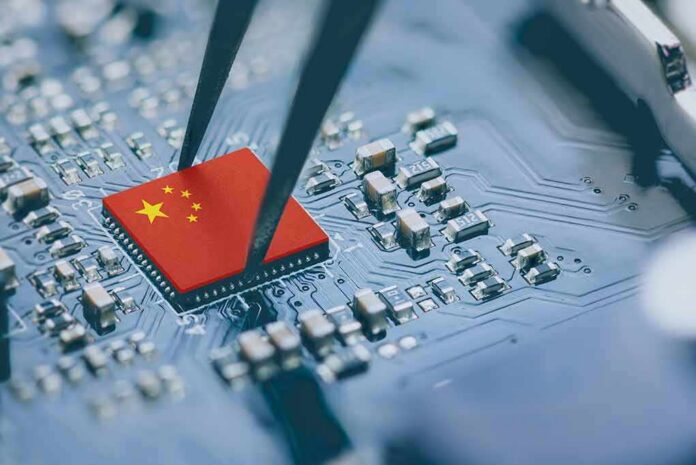
The core risk in the Nvidia-Alice Huang affair is not salacious; it is structural: high-value technologists live at the fault line where export controls, corporate governance, and foreign intelligence tradecraft intersect—long before anyone proves a secret changed hands.
The Short Version
- U.S. authorities reportedly assessed that Alice Huang cultivated ties to Jensen Huang while acting as a Chinese intelligence asset; that attribution triggered real‑world actions, including a board‑level probe at Nvidia and congressional engagement.
- There is no public proof that Nvidia trade secrets or classified information were compromised; Nvidia’s board has said it sees no evidence of such compromise.
- Inside the U.S. intelligence community, analysts are divided about whether Alice Huang knowingly acted for Beijing; some officials consider the “spy” label overstated.
- Megaspeed, the company linked to Alice Huang, faces a separate U.S. investigation into alleged chip smuggling that, regardless of espionage findings, underscores export‑control risk in AI supply chains.
What triggered the investigation and why that matters
When a board of a systemically important technology firm launches an independent investigation citing national security concerns, it signals something more consequential than gossip. Nvidia confirmed such a probe after reporting from major outlets described U.S. assessments that Alice Huang had ties to Chinese intelligence and a personal relationship with Jensen Huang, creating at least theoretical access to one of the most strategically sensitive companies in the world. A House Select Committee on China went further, labeling her a “publicly reported” intelligence asset and requesting Jensen Huang’s participation in a classified national‑security briefing—a public step Congress tends to reserve for risks it views as plausible and material.
None of this proves espionage occurred. It does demonstrate that, as a matter of institutional response, the allegation cleared multiple thresholds: executive‑branch concern, corporate governance action, and legislative scrutiny. In risk management terms, those thresholds redefine what directors, compliance leaders, and investors must consider sufficient cause for inquiry—especially in an AI market where Nvidia’s processors sit at the heart of model training capacity and export controls are now a core instrument of statecraft.
What is known, what is alleged, and what remains unproven
On the record, two facts can coexist: U.S. officials have been reported as assessing Alice Huang as an intelligence asset, and Nvidia asserts there is no evidence that company secrets or national‑security information were compromised. Both are true according to the available reporting. The first is an assessment—actionable for counterintelligence posture but inherently probabilistic outside courtroom standards. The second is the current finding of an internal review, which covers what Nvidia can see in its own logs and processes.
Inside the intelligence community there is no consensus that Alice Huang knowingly funneled information to Beijing. CNN’s sourcing describes ODNI and CIA officials who view the “spy” characterization as overstated and the existing intercepts and related intelligence as insufficient to prove intent; Representative Jim Himes, after a classified briefing, said he remained unsure if she was a recruited asset or an unwitting conduit. Reuters likewise reported the allegation but emphasized it could not independently verify the intelligence attribution and noted China’s denial. This is precisely the ambiguity zone counterintelligence professionals inhabit: access, proximity, and tradecraft indicators without a hand‑to‑handed secret.
Megaspeed and export controls: the parallel track that stands on its own
Separate from the personal‑relationship narrative sits a concrete, verifiable risk vector: export enforcement. Megaspeed—linked to Alice Huang in press accounts—has said it will cooperate with U.S. authorities amid a criminal investigation into alleged smuggling of American chips into China in violation of export controls. Even if the espionage hypothesis proves unfounded, this line of inquiry underscores why any channel partner handling high‑end accelerators now lives under a microscope. The Commerce Department’s tightening rules have turned end‑use and end‑user verification into table stakes; any circumvention scheme, whether through third‑country routing or opaque reseller networks, can trigger severe penalties and ripple through supply chains.
The practical takeaway for boards is unambiguous: partner due diligence is a national‑security function masquerading as procurement hygiene. Where the products in question are general‑purpose AI accelerators, the marginal buyer can be a state actor’s proxy, and seemingly routine sales can be retroactively reclassified as violations if intent or diversion evidence surfaces.
How modern recruitment risk looks inside a frontier tech company
In the last decade, U.S. counterintelligence has documented a shift toward “non‑traditional collectors”—business associates, researchers, and intermediaries who sit close to valuable technology but outside classified compartments. Access is constructed socially before it is exploited technically. Relationships, legitimate joint ventures, and customer engagements become targeting surfaces; the initial ask often concerns high‑level roadmaps, export‑control interpretations, or influence on policy rather than source code. That pattern fits why an allegation of cultivated proximity to Nvidia’s chief executive would, on its face, alarm investigators even absent evidence of exfiltration.
This is also why a clear‑eyed reading of the record must separate three distinct questions: Did Alice Huang have proximity that could plausibly provide insight into Nvidia’s strategies? Did any information subject to protection regimes (classified, export‑controlled technical data, or corporate trade secrets) actually move? And did she act with direction or tasking from a foreign service? The first is plausible given reported relationships; the latter two, as of this writing, lack public proof and remain contested inside the intelligence community.
The governance playbook: containment without theatrics
For companies operating in dual‑use technologies, the most resilient posture treats allegations like this as a worked example for governance under uncertainty. The toolkit is established: ring‑fence sensitive information on a strict need‑to‑know basis; log and audit executive access with the same rigor applied to engineers; implement continuous monitoring for anomalous data egress; and harden third‑party risk management with transaction‑level export‑control attestations, serial‑number tracing, and independent end‑use verification. Nvidia’s statement that it sees no evidence of compromise is meaningful—but it must be underwritten by demonstrable controls tested by external counsel or auditors who can brief regulators and, if necessary, Congress.
Director oversight should assume investigations will straddle multiple jurisdictions and standards (corporate, criminal, export‑control). That argues for early engagement with counsel experienced in export law and counterintelligence interaction, rapid preservation of communications and access logs, and clear conflict‑of‑interest procedures for any executive entangled in the facts. The aim is not optics; it is to preserve evidentiary integrity and decision authority if regulators or law enforcement escalate.
Jensen Huang’s abrupt exit and hotter inflation data leave growth stocks and digital assets on the defensive heading into the weekend, with Nvidia earnings on November 17 the clearest near-term catalyst. https://t.co/i6tSpCaxRc
— That Guy Tchigo ⌬ (@The_ChemicalDev) November 14, 2026
How policy and markets will translate the ambiguity
Markets convert uncertainty into a discount, and policymakers often convert it into leverage. The Nvidia episode is already being used to argue for tighter export restrictions and more aggressive supply‑chain policing, regardless of where the espionage assessment ultimately lands. Meanwhile, China’s categorical denial and the lack of publicly released intelligence ensure the debate will be fought through narratives rather than documents. In practice, that means compliance burdens will rise for everyone shipping advanced compute, and relationships that once seemed routine will now be evaluated for counterintelligence externalities.
Bottom line
The strongest publicly reported claims—that U.S. officials assessed Alice Huang as an intelligence asset and that Nvidia’s board responded with a formal probe—are real and material to risk management. The strongest counterclaims—that U.S. intelligence is divided and has not established intentional espionage—are also well sourced and narrow the zone of warranted conclusion. Between them sits the operating truth for frontier‑tech governance: you do not need a proven theft to have a national‑security problem. Proximity, access pathways, and export‑control exposure are sufficient to demand disciplined controls—and they are now part of the cost of building the future of AI.
Sources:
pjmedia.com, us.cnn.com, cnbc.com, nbcnews.com, apnews.com, reuters.com, bbc.com, mbiz.heraldcorp.com