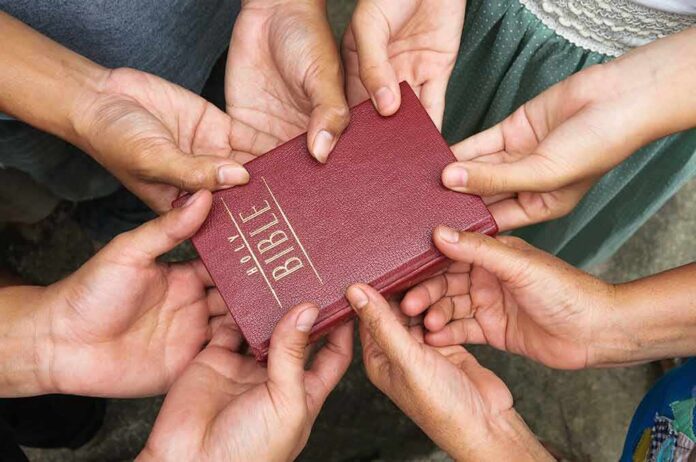
In American government, the oath binds every officeholder to the Constitution alone; the book in their hand—Bible, Quran, or nothing at all—is personal symbolism layered onto that civic commitment.
At a Glance
- Article VI requires an oath or affirmation to support the Constitution and forbids any religious test for office.
- Senator-elect Abdul El-Sayed said he would likely use a Quran for his ceremonial swearing-in, while emphasizing his allegiance is to the Constitution.
- Congressional precedent exists: other Muslim lawmakers have used Qurans at ceremonial reenactments without affecting the legal oath.
- Critics frame the Quran choice as a statement about sharia; the available record does not show an intent to substitute religious law for U.S. law.
What the Oath Does—and What the Book Means
The U.S. Constitution is unambiguous about two points that matter here. First, every federal officer “shall be bound by Oath or Affirmation, to support this Constitution.” Second, “no religious Test shall ever be required” as a qualification for office. Those provisions do two things simultaneously: they create a uniform legal obligation—to the Constitution, not to a creed—while protecting officials’ freedom of conscience about how they mark the moment of commitment, including with a secular affirmation or a religious text if they choose.
In modern congressional practice, the official oath is administered on the chamber floor, with no requirement to hold any text. Most members then participate in a separate, optional ceremonial photograph or reenactment, where they may pose with a Bible, Quran, family heirloom, or empty hand. That distinction—binding oath versus symbolic ceremony—explains why individual choices about objects neither alter the legal promise nor impose any creed on the office.
El-Sayed’s Stated Plan and Rationale
Abdul El-Sayed, poised to become the first Muslim elected to the U.S. Senate, said in an interview that he would likely use a Quran for his swearing-in and was considering specific historic volumes. He immediately paired that announcement with a reminder of what is binding: “It’s not the book that you swear on. It’s the book you swear allegiance to,” naming the Constitution as the object of his oath. The phrasing captures an important boundary—religious symbolism can honor identity without supplanting civic duty.
That approach is consistent with how other Muslim officials have navigated Congress. Keith Ellison used Thomas Jefferson’s Quran for his 2007 ceremonial House swearing-in, and Representatives Ilhan Omar and Rashida Tlaib later chose Qurans in their ceremonies as well. None of those choices modified the official oath; each marked a personal heritage within the constitutional framework common to all members.
Why This Keeps Becoming a Flashpoint
Two currents collide around moments like this: constitutional design and cultural politics. The framers bound officeholders to a secular charter while rejecting religious tests, precisely to make public service open to people of all faiths and none. Yet in a media environment that treats images as arguments, a hand on a Quran (or any sacred text) is easily recast as a policy statement rather than a personal emblem. That dynamic pushes a private choice into a proxy debate over national identity and law.
We saw this in 2007 with Ellison and again with subsequent Muslim lawmakers; the rhetoric often migrates from ceremony to insinuations about divided loyalty. Empirically, however, the oath’s content does not change. The legal commitment is identical whether a member holds scripture, a family Bible, a pocket Constitution, or nothing at all; Article VI and the oath statute set that floor and ceiling.
The Critique and What the Record Supports
Some advocacy voices argue that choosing a Quran signals deference to sharia rather than the Constitution, presenting the ceremony as a referendum on legal sovereignty. That interpretive leap is not supported by the operative facts in this case. El-Sayed explicitly separated the symbol from the obligation and affirmed the Constitution as the object of fidelity. Assertions that a ceremonial book choice substitutes religious law for civil law rest on inference rather than any alteration of the oath or statement of intent.
It is also worth distinguishing theological observance from governance. Many religious traditions articulate personal obligations their adherents strive to meet. The constitutional question for officeholders is whether they propose to “write their faith laws into the laws of our country.” On that point, the public record quoted by critics themselves includes a statement from El-Sayed’s spokeswoman rejecting efforts by any religious community to legislate its faith as civil law—an affirmation that aligns with Article VI’s basic settlement.
Michigan Senator-elect Abdul El-Sayed, the first Muslim elected to the U.S. Senate has stated that he will take his oath of office on a Quran when he is sworn in during January.
Seeya later USA…. you guys are cooked.
— TheBlackRaven (@DanishDayle) November 13, 2026
Precedent, Procedure, and Historical Memory
Thomas Jefferson’s own Quran has long served as a touchstone in these conversations, not because it supplied law but because it symbolizes a founding-era curiosity about and engagement with the wider world. Ellison’s decision to use that volume highlighted an American tradition in which religious diversity and constitutional fidelity coexist without tension. El-Sayed’s stated consideration of a historic Quran continues that thread—historic Americana refracted through a minority faith’s presence in public life—while leaving the oath’s legal content untouched.
What to Watch—and What Not to Overread
Two things matter going forward. First, the distinction between the official oath and any ceremonial reenactment will continue to carry real legal weight even as culture-war framing persists. Journalists and citizens who hold that line will better evaluate future controversies on their merits. Second, the normalization effect is real: each cycle in which a member uses a personal or religious object without incident reinforces a civic norm that allegiance is measured by conduct in office, not by the keepsake in a photograph.
Sources:
lifesitenews.com, wionews.com, detroitnews.com, nrsc.org, 1010wcsi.com, apnews.com