In dense cities, the line between an old building standing safely and the ground giving way beneath it is often just a few feet of soil and the rigor of a contractor’s shoring plan; when that interface fails, consequences arrive in seconds.
At a Glance
- A three-story mixed-use building at 1321 Flatbush Avenue in Brooklyn collapsed alongside an active excavation, killing eight and injuring at least 17.
- City records show recent stop-work orders and fines at the neighboring site and a pre-construction survey noting facade cracks on the collapsed building’s excavation-facing wall.
- A two-year-old child survived with only scratches, as interior video captured the sudden structural failure.
- New York City’s Department of Buildings (DOB) launched a full investigation into whether excavation or other factors triggered the collapse.
What happened: a collapse beside an active excavation
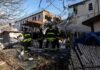
The building at 1321 Flatbush Avenue, a 96-year-old mixed-use structure with a storefront at street level and apartments above, failed catastrophically as crews worked next door on a larger development that included deep excavation. Officials confirmed the collapse killed eight people and injured at least 17 others; some reports list 18 injuries as counts evolved with hospitalizations and rescues. Rescue video shows FDNY teams digging through debris and tunneling for survivors as the exposed interior of the building hung over an apparent excavation void. A family’s interior cell-phone footage, shared with local television, captured the moment rooms disintegrated; remarkably, a two-year-old seen in the video escaped with only scratches, while his mother and nine-year-old brother were hospitalized.
City agencies swiftly cordoned off the area and opened a joint inquiry led by DOB, focusing on the structural interface between the old building’s foundations and the adjacent work—specifically, excavation, shoring, and any underpinning or retaining systems that should have preserved lateral soil support. Investigators also began reviewing the preexisting condition of the building and the compliance history of the neighboring project.
The risk at the core: old shallow foundations and new deep holes
Most low-rise masonry buildings of this vintage sit on shallow spread footings bearing on compacted soil. Their stability depends not just on the footing itself but on the undisturbed earth around and beneath it—what engineers call lateral confinement and bearing capacity. Excavate next door below the level of those footings without a robust, properly sequenced retaining system, and the soil can move: voids open, bearing capacity drops, and walls can translate or rotate. Any of several mechanisms can start the failure—soil loss under the footing heel, groundwater migration, vibration-induced settlement, inadequate underpinning—and once enough support disappears, collapse is not progressive over hours; it’s instantaneous over seconds. That is precisely why New York City treats excavation and shoring as distinct high-hazard work and requires notification and protective measures before digging beside occupied structures.
In Flatbush, the neighboring lot was being excavated to a permitted depth reportedly on the order of 14 feet, preparing for a mixed-use development. Public records and on-scene officials described active work at the time, placing the excavation in immediate proximity to the building that fell. This physical context—an aging, shallow-founded building next to a deepening pit—is the classic interface where small judgment errors, poor sequencing, or missing components can have outsized, irreversible effects.
The record before the collapse: violations next door, cracks on the collapsed wall
DOB enforcement records tied to the adjacent site show a stop-work order issued in March after demolition proceeded without adequate overhead protection for neighboring properties, followed by an April observation that work had resumed despite the order. The city levied penalties of $2,500 and $10,000 in those episodes, according to published reports drawing on DOB files. While those specific violations concern site safety and compliance rather than foundation support per se, they establish a documented pattern of lax control on the job—relevant context when assessing how carefully shoring and excavation were managed.
Separately, a pre-construction survey—standard practice before heavy work near existing buildings—reported cracks and masonry misalignments on the north facade of 1321 Flatbush Avenue, the side facing the dig. Such conditions do not prove causation; old masonry often carries cosmetic and non-structural cracking. But in the forensic sequence, they matter: baseline defects can concentrate stress when soil support changes, and their orientation can illuminate how movement unfolded. Investigators will map these cracks against any measured settlement, photos, instrument data, and debris geometry to reconstruct the failure path.
What investigators will scrutinize
Forensic structural work after an excavation-adjacent collapse follows a predictable spine. First, document the excavation support system: drawings for sheeting, soldier piles, lagging, tie-backs, or secant walls; underpinning details for the neighbor’s footings; and the intended sequencing and monitoring plan. Second, compare the plans to the field reality through daily reports, inspector logs, deliveries, and site photos. Third, interrogate soil behavior: geotechnical borings, groundwater control (dewatering or lack thereof), rainfall and stormwater management, and any measured lateral movement. Finally, correlate all of it with the building’s specific distress—crack patterns, wall bows, footing exposure in the debris, and the timing evident on video and witness accounts. The aim is not just to decide if the excavation contributed, but to identify the initiating mechanism and its proximate procedural failure—design, construction, supervision, or an unforeseeable defect.
Two additional strands will run in parallel. Investigators will trace accountability—owner, general contractor, excavation and demolition subs, supervising engineer—and reconcile permit scopes with actual work performed. And they will validate casualty figures and emergency response timelines through FDNY and medical examiner records; early tallies during mass-casualty events often shift as patients distribute across hospitals, which explains the 17-versus-18 injury counts in early reporting.
NYC Mayor Mamdani Orders Inspections at 100 Sites After Deadly Building Collapse in Brooklyn https://t.co/fvkMnqiQNH
— Democracy Now! (@democracynow) November 13, 2026
Why this case resonates beyond one block
Brooklyn alone logs hundreds of construction incidents and scores of injuries in a typical year; excavation and shoring consistently appear among the city’s high-risk categories in DOB safety reporting. That base rate matters: it underscores that the hazard is known, regulated, and—when procedures are followed—manageable. In this light, the Flatbush collapse is not a mystery genre; it is a technical failure with a finite menu of plausible mechanisms.
The policy consequence is equally plain. When older, occupied buildings sit feet from active pits, three controls determine outcomes: rigorous design tailored to site soils; disciplined field execution and supervision; and real-time monitoring (including telltales, inclinometers, or settlement points) with the authority to halt work at the first sign of movement. City enforcement history at the adjacent site—stop-work orders, resumed activity, and fines—will be weighed against that standard, as will any evidence that protective measures for the neighbor were incomplete or out of sequence.
A final word on the human scale
The numbers are stark: eight people gone, many more injured. Yet within the video’s terrifying seconds sits a narrower miracle—a toddler lifted from the dust with only scratches—offering a shard of relief amid devastation. The work ahead is technical, methodical, and unglamorous: peel back each procedural layer until the initiating failure is unambiguous. That is how cities like New York translate grief into prevention—by turning a collapsible edge between old foundations and new excavations into a stable boundary guarded by engineering, enforcement, and the discipline to stop when the ground starts to move.
Sources:
lifesitenews.com, cbsnews.com, patch.com, brooklyn.news12.com, citylimits.org, abc7ny.com, apnews.com, ny1.com