What turns a festive student gathering into a mass-casualty scene is not mystery but mechanics: when a deck fails, it is almost always a predictable breakdown of connections and capacity long before it is “too many people at a party.”
The Short Version
- A back-porch deck at an off-campus home near William & Mary collapsed around 10 p.m., injuring at least 28 people; 13 were transported by EMS and 15 sought care on their own.
- Officials described injuries as non-life-threatening; multiple agencies responded and stabilized the scene.
- The address cluster points to the 200 block of Matoaka Court in Williamsburg, near campus.
- The cause was not immediately identified; codes staff began evaluating the site while the university supported affected students.
What happened and what is firmly established
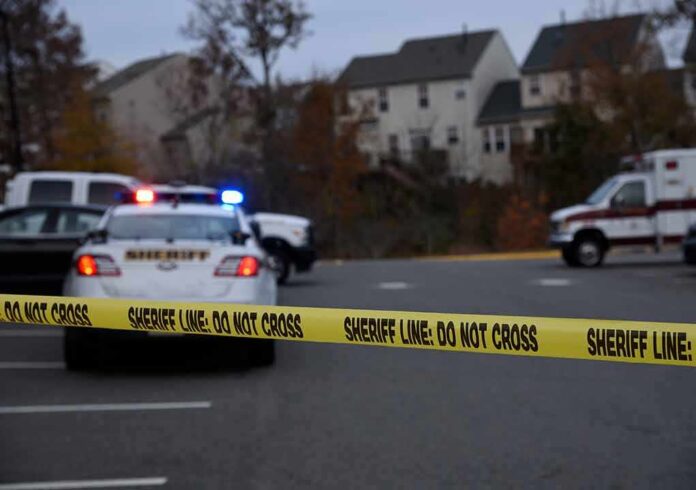
Shortly after 10:00 p.m., emergency dispatchers in Williamsburg received a report of a structure collapse at an off-campus residence. Responders from the Williamsburg Fire Department, James City County Fire Department, and Williamsburg Police Department arrived to find a failed back porch and numerous injured people. At least 28 individuals sought medical evaluation; 13 were transported by emergency services and 15 traveled independently to hospitals, according to university and local reporting. Officials emphasized that injuries were non-life-threatening, and the university mobilized student support and follow-up services.
The location is described consistently in contemporaneous coverage as the 200 block of Matoaka Court—roughly a half-mile from the William & Mary campus—with one outlet naming 207 Matoaka Court specifically. Early numbers carried the correct caveat: “at least 28” is the right frame, since self-transports can be confirmed only after hospitals reconcile tallies with incident logs.
Why decks fail: beyond the headline
Engineers rarely treat deck collapses as simple crowding events. Occupant load contributes, of course, but the decisive failure is typically a weak link in the load path—the chain of members and connectors that carry weight from the deck boards through joists and ledgers down to footings and soil. The most common point of catastrophic failure in residential decks is the house-to-deck ledger connection, especially when it has been attached with nails rather than bolts or structural screws; nail-only ledgers can withdraw under combined vertical and lateral loads, allowing the deck to peel away from the house like a hinge. An industry synthesis cited by code specialists has long flagged ledger failures, guard-post pullouts, corrosion, and deterioration as recurrent culprits.
Why this recurring pattern? Many older decks predate modern prescriptive requirements for lateral load connectors, corrosion-resistant fasteners, and specific attachment schedules. Exposure accelerates decay; guard systems rely on robust, through-bolted connections that are easy to get wrong; and homeowner alterations can defeat drainage or trap moisture against critical members. In that context, an enthusiastic crowd is a stress test that reveals hidden defects rather than the sole cause of collapse.
How investigators determine cause
Determining why a particular deck failed is forensic work, not conjecture. Inspectors and structural engineers begin with the debris field: where the deck rotated or dropped, which connections tore, whether the ledger pulled free or the posts punched through footings, and whether fasteners show uniform shear, tension withdrawal, or progressive corrosion. They trace the load path, member by member, examining the ledger-board fastening pattern, the presence and placement of flashing (which prevents rot at the ledger), the species and condition of framing lumber, hanger types and nailing, post-to-beam connectors, and footing dimensions. They also reconstruct occupancy from witness statements, photos, and time-stamped posts to estimate live load at the moment of failure; a typical residential deck is not designed as an assembly platform, but a code-compliant ledger and support system should still tolerate short-duration party loads with margin.
Code references and industry guidance give investigators a benchmark. Prescriptive tables in modern codes specify fastener spacing and diameter; when a failure surface reveals a sparse nail pattern where bolts should be, the diagnosis becomes straightforward. Published technical reviews have cataloged that reality for years, including the outsized role of ledger separation and deficient guard systems in collapses. That corpus does not assign cause in Williamsburg; it explains why the conclusion will rest on metal, wood, and physics rather than rumor.
The emergency response and the numbers that matter
Mass-injury incidents on residential property are rare enough that the public fixates on the scene’s chaos. Professionals focus on triage, transport, and accountability. The multi-agency response to the Matoaka Court collapse—fire, EMS, and police—is exactly what one would expect for a structural failure with dozens of potential patients. The injury profile here is merciful: university officials said none were life-threatening, and that the institution was coordinating follow-up care and support for affected students. The transport split—13 by EMS, 15 self-transports—matches standard patterns at events near hospitals where some victims have minor injuries and personal transportation.
Why do reports hedge with “at least 28”? Because the count is a composite. EMS knows how many it transported. Hospitals later reconcile arrival logs, and incident commanders update totals. The university’s framing—acknowledging that additional students might later seek care—was responsible communication, not uncertainty theater.
A deck collapsed during a party in Williamsburg, leaving 28 people reportedly injured, including William & Mary students. Emergency crews took 13 to hospitals; officials were checking reports that 15 others went on their own.
The back porch gave way at a home in the 200 block of… pic.twitter.com/fcxbvxuFNA
— HeyDay News (@heyday_news) October 25, 2026
Responsibility, liability, and the limits of institutional control
Structural cause and legal responsibility are separate questions. The inspection file will speak to cause; records of ownership, permits, and maintenance inform liability. In landlord-tenant contexts, courts often evaluate whether an owner knew or should have known of a hazardous condition; negligence presumptions tied to housing statutes can be tempered by the owner’s lack of notice, depending on jurisdiction and facts. Off-campus gatherings during homecoming weekend are university-adjacent by culture, not necessarily by legal control. Absent “substantial control” over the property and context, a university’s direct legal exposure is typically limited, even as it mobilizes support for its students.
The practical takeaway for owners and managers is uncomplicated: decks are structural systems, not outdoor furniture. They require code-compliant attachment to the primary structure, corrosion-resistant fasteners suited to modern treated lumber, proper flashing, adequate footings, and periodic inspection. When a deck serves as an assembly space—even informally—design assumptions should reflect that reality. The cost of getting the ledger wrong is a collapse; the cost of getting the details right is a line item.
What to watch for as findings emerge
The City of Williamsburg’s codes staff began evaluating the site, an essential first step toward a technical determination. Expect a cause pinned to a specific connection or support element rather than a generic “too many people” conclusion; that is how these cases resolve when engineers examine the remains with care. If past patterns hold, attention will center on ledger attachment, guard and post connections, or deterioration at moisture traps—all well-documented failure modes in the deck-safety literature.
On the human side, the most important fact is already settled: injuries were non-life-threatening, and the system worked the way it should when things go wrong—rapid multi-agency response, coordinated transports, and institutional support for those affected. As the structural story comes into focus, it will likely read as so many do in this niche corner of building science: a chain of small decisions at design, construction, or maintenance that added up to a single loud failure.
Sources:
foxnews.com, people.com, rollingout.com, wtvr.com, dailypress.com, wahoodecks.com, nadra.org, supremecourt.ohio.gov, tncourts.gov, courtlistener.com