Houston’s new offense-based threshold for contacting ICE is not a retreat from public safety; it is a recalibration that aligns city policing with constitutional limits on detention and decades of evidence about how immigration entanglement chills community cooperation.
The Short Version
- Houston set a clear trigger for ICE contact: a new jailable offense plus an ICE administrative warrant, not mere immigration suspicion.
- The order bars prolonging stops or custody for civil immigration reasons alone, narrowing legal risk and resource drain.
- HPD leadership endorsed the policy and issued operational guidance, indicating it is meant to function, not posture.
- Critics warn of officer jeopardy and state-law conflict; funding threats under Texas SB4 remain real and unresolved.
What Houston actually changed—and why that operational line matters
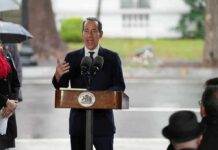
Mayor John Whitmire’s executive order draws a bright line: immigration status alone is not a reason for HPD to contact ICE, extend a detention, or hold someone in custody. Contact is authorized when the individual is being arrested for a jailable offense and there is an administrative ICE warrant—an offense-based threshold, not a status-based dragnet. This is not semantics; it recasts immigration cooperation as a byproduct of criminal arrest rather than a parallel track triggered by civil suspicion during routine encounters. The order’s text is explicit on all three points—no ICE-driven holds, no prolonged detention, no standalone status queries as an enforcement basis.
Reporting from Houston Public Media and the Texas Tribune converges on that same operative rule: HPD will notify ICE when a person with a civil immigration warrant is being booked on a jailable offense; otherwise, officers are not to initiate ICE contact over minor infractions or purely civil status issues. This architecture fits a broader pattern of “sanctuary” or anti-detainer practices: local police focus on crimes within their remit and decline to use local custody to facilitate civil immigration enforcement unless criminal thresholds are met.
Mechanism: from traffic stop to jail intake, where the threshold bites
In everyday terms, the order changes three field decisions. First, traffic stops and low-level encounters are bounded by their underlying purposes; officers are not to extend a stop simply to wait for ICE. Houston’s City Council already moved in this direction months earlier by eliminating the “30-minute wait” practice that invited prolonged roadside detentions for civil warrants; the executive order locks that logic into city policy. Second, supervisors and jail intake staff gain a clear checklist: if the person is being booked on a jailable local offense and there is an ICE administrative warrant, notify; otherwise, do not. Third, records and dispatch protocols shift accordingly—no ICE pings for non-jailable events, which cuts down on back-end processing built on civil status alone.
HPD’s leadership publicly backed the shift and issued a circular to line officers; that matters because many city hall proclamations die on contact with roll call. Chief J. Noe Diaz affirmed the standard—no ICE notification solely for an immigration warrant absent a jailable offense—and described implementation as operationally feasible. When the top cop signs the execution memo and aligns the booking gate with the rule, the change tends to stick where it counts: in the patrol car and at the jail door.
Legal footing and the state preemption squeeze
Houston’s rule aims to minimize constitutional exposure from civil holds while threading Texas’s 2017 SB4, which restricts local policies that “materially limit” immigration cooperation. Cities across the country have taken similar steps after courts recognized that ICE detainers and administrative requests do not, on their own, create legal authority to prolong a person’s detention; 8 C.F.R. § 287.7 is a request, not a mandate, and localities incur risk if they hold someone longer than otherwise lawful based on a detainer alone.
That legal prudence meets a hard political constraint. Gov. Greg Abbott has previously threatened to claw back more than $100 million in public-safety funding over Houston’s earlier limits, arguing city policies violate SB4; the Associated Press placed similar threats near $200 million when citing multiple cities. Those levers—lawsuits, preemption claims, grant conditions—are durable, regardless of the city’s rationale or police leadership’s buy-in. Put plainly: the city’s constitutional caution does not immunize it from state enforcement or fiscal pressure.
Public-safety claims: what the data suggest, and what remains unproven
Supporters argue the policy reduces fear, increases reporting, and helps police separate dangerous offenders from residents going about ordinary life. The peer-reviewed research base does support a directional claim: local entanglement with immigration enforcement depresses reporting and trust among immigrants, particularly for sensitive crimes like domestic violence, whereas “sanctuary”-style limits have not been associated with overall crime spikes and have, in some studies, correlated with reductions in aggravated assault. Those are population-level findings, not a bespoke evaluation of Houston’s two-page order.
What is not yet in evidence is a Houston-specific outcome: no measured change in calls for service, clearance rates, or victim cooperation linked to this policy’s implementation has been published in the reporting record. The city’s case rests on plausible mechanism and external literature but not on local before-and-after data. A rigorous test would audit body-camera timestamps and CAD logs to verify that detentions are no longer extended for civil ICE reasons, then examine reporting behavior and clearance rates in immigrant-dense beats over the next 12–24 months, controlling for crime trends and enforcement shifts. Until then, the safety dividend is an informed expectation, not a proven result.
Counter-arguments: officer jeopardy, national security, and federal cooperation
Critics—state officials, federal voices, and the Houston Police Officers’ Union—frame the order as handcuffing cops and hindering national security. They argue that limiting local-ICE cooperation obscures lines of responsibility, injects uncertainty at the curb, and could let threats slip through by cutting a channel of information-sharing. The union’s charge that a prior policy was “clear and working,” and that the change puts officers in jeopardy, is not trivial; ambiguity in the field gets officers hurt. DHS spokespeople add the broader claim that local buy-in is essential to identifying and arresting individuals they classify as public-safety risks.
Those critiques, however, largely speak to potential risks rather than document realized harms under offense-threshold regimes. They also run into the constitutional ceiling on civil detention and the fact pattern that Houston still notifies ICE when the person is being jailed for a new offense and has an ICE warrant—the city did not abolish cooperation; it prioritized it. The unresolved question is not whether some cooperation continues; it is whether the threshold is drawn at the right place to capture genuine threats without taxing legality and trust. On that question, the evidence so far is mixed in rhetoric and thin in localized measurement.
Houston will limit ICE cooperation in response to Democrats taking power in Texas, mayor says https://t.co/sVydU9wdlg
— lauraphillips25 (@LauraPhillips25) November 7, 2026
Why this model is likely to endure—and what to watch next
Offense-triggered ICE notification harmonizes three imperatives: obey SB4’s broad cooperation baseline as interpreted in Texas; avoid unconstitutional civil holds that invite litigation; and preserve immigrant cooperation in everyday policing. That is why similar structures have spread nationally, even where partisan climates differ. Houston’s version adds a practical upgrade—removing the roadside “wait for ICE” tail that too often wags the public-safety dog.
The stress tests ahead are predictable. First, state preemption: if Texas pursues enforcement actions or funding cuts, Houston will have to defend the order as permitting rather than prohibiting cooperation in SB4’s terms. Second, implementation fidelity: body-cam audits and intake logs must show that officers neither prolong detentions for civil reasons nor miss ICE notifications when the threshold is met. Third, outcomes: if reporting rises and clearance improves in immigrant neighborhoods without a concomitant rise in victimization, the city’s safety thesis strengthens. If not, opponents will claim vindication. The threshold model is coherent and legally cautious. Its success now turns on execution and data.
Sources:
redstate.com, nytimes.com, afp.com, binnews.com, texastribune.org, inquirer.com, ksat.com, click2houston.com, yahoo.com, houstonpublicmedia.org, fox26houston.com, academia.edu, ideas.repec.org, docs.house.gov, scholarship.law.columbia.edu, academic.oup.com