
Pledges to “clear every encampment” only matter if they are paired with a credible way to bring people indoors and into care; California gubernatorial candidate Steve Hilton has put a specific, time-bound version of that promise on the table and tied it to a defined service-delivery model rather than enforcement alone.
The Short Version
- Hilton publicly set a statewide deadline: every encampment cleared by December 31, 2027, with local milestones by Labor Day 2027.
- His plan hinges on Homeless Recovery Centers offering beds, medical and psychiatric care, addiction treatment, job training, and housing navigation.
- Sunbreak Ranch in San Diego County is positioned as the prototype facility for a statewide network.
- The timeline includes early consultations with mayors and counties, enforcement of camping bans once placements exist, and state intervention if locals do not act.
What Hilton Has Actually Committed To
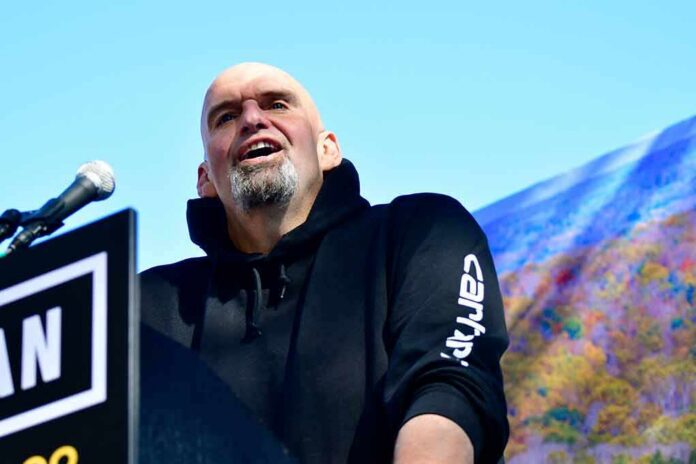
At a news conference at Sunbreak Ranch in San Diego County, Hilton moved beyond generalities and set two public, verifiable markers: local action by Labor Day 2027 and a full statewide clearing of encampments by year’s end. The pledge is categorical—“every encampment will be cleared, and Californians will have their sidewalks and parks back”—and it is attached to a programmatic vehicle: a network of Homeless Recovery Centers that provide beds, meals, showers, medical and psychiatric services, addiction treatment, job training, and transition assistance into stable housing. Framed as “Off the Streets and Back on Track,” the plan identifies Sunbreak Ranch as the prototype and asserts that enforcement of public-camping prohibitions will follow once suitable alternatives are in place.
Hilton has repeated the central promise over months, including a July statement pledging the crisis “will be cleaned up by the end of 2027,” and he has linked encampment clearance to treatment access and employment services rather than removal alone. The stated sequencing matters: meetings with mayors and county leaders in his first month in office, public deadlines, and the use of state resources if local governments fail to act—an escalation pathway that places responsibility where legal authority and service capacity sit day to day, but reserves a backstop role for the state.
How the Proposed Model Is Supposed to Work
The operating concept borrows from integrated “low-barrier” service hubs—centralized facilities where someone living outdoors can receive immediate shelter, health and behavioral health care, and case-managed pathways to housing and work. The theory of change is straightforward: replace the current pattern of visible street survival with predictable access to beds and clinically oriented services, then pair that with time-limited enforcement of camping bans to collapse the incentive to remain in encampments. In Hilton’s framing, the Recovery Centers are the fulcrum: if they are large enough, sufficiently staffed, and geographically distributed, the state can both shut down encampments and improve individual outcomes by treating addiction, stabilizing mental health, and reconnecting people to employment.
Designating Sunbreak Ranch as the prototype signals an intent to standardize operations statewide: intake and triage protocols; on-site medical and psychiatric care; medication-assisted treatment for substance use; case management that links to permanent housing subsidies; and job-readiness programming. This “services first, then enforce” sequence aligns with the legal environment after the Supreme Court’s City of Grants Pass decision, which clarified governments’ ability to enforce generally applicable camping bans, particularly where alternatives exist.
What Is Known—and Not Yet Specified—About Scale and Cost
The commitment is operationally ambitious; its success depends on capacity and timing more than on rhetoric. Reporting to date does not include a published cost model, bed counts, construction timelines, or staffing plans for a network that could absorb California’s unsheltered population and close encampments statewide by late 2027. Without those numbers—beds, clinical slots, geographic coverage—two questions remain practical rather than ideological: how many facilities are required, and how quickly can they be permitted, financed, built or adapted, and staffed to minimum clinical standards. Those details will determine whether enforcement can credibly be tied to “availability of suitable facilities,” a trigger Hilton has described but not yet defined in measurable terms—capacity per county, travel time thresholds, clinical staffing ratios, or voluntary versus mandated placement criteria.
The model’s promise—visible encampments replaced by structured care—also rests on outcomes that extend beyond opening doors. Durable success in homelessness policy is measured by exits to permanent housing, treatment engagement and retention, and reduced returns to homelessness. Rigorous evidence consistently finds that permanent housing improves stability and related outcomes; the effects of encampment clearances vary widely and depend on whether people receive appropriate placements and continuing services. Those findings do not contradict Hilton’s sequencing; they underscore that the Recovery Centers’ throughput into permanent housing, not just their initial intake capacity, will determine long-run results.
Legal and Governance Context That Shapes Implementation
California’s homelessness policy has been contested for years between two frames: one prioritizing public order and enforcement, the other emphasizing systemic shortfalls in housing, treatment, and outreach. The Supreme Court’s 2024 ruling in City of Grants Pass v. Johnson narrowed prior constraints from Martin v. Boise and created clearer space for governments to enforce generally applicable camping restrictions, especially when they can point to available alternatives. That legal shift does not substitute for operational readiness; it raises the premium on documented capacity and fair process, including disability accommodations and property handling, so that enforcement follows available placement rather than displacing people without options.
Hilton’s timeline anticipates both collaboration and confrontation: early engagement with city and county leaders, public milestones to align action, and the possibility of state intervention if local governments do not act. The approach challenges existing “housing first” orthodoxy without discarding it entirely; it incorporates treatment and employment services alongside housing navigation, positioning the Recovery Centers as the front door to longer-term solutions rather than as endpoints. The result is a hybrid: immediate order through encampment closure, paired with clinical and housing pathways designed to make those closures stick.
California Republican gubernatorial candidate Steve Hilton unveiled a plan Saturday to clear every homeless encampment in the state by the end of 2027, proposing a network of recovery centers, stricter enforcement of public camping bans and state intervention in communities that… pic.twitter.com/ITwx2f5jjR
— KTLA (@KTLA) October 17, 2026
What to Watch for as the Pledge Meets the Calendar
Three milestones will tell readers whether the promise is on course. First, a capacity and cost disclosure that matches the statewide need: facility count and locations, bed and clinical slots by county, staffing plans, and a financing stack. Second, a critical-path schedule that shows permitting, procurement, fit-out, and hiring aligned with the 2027 deadlines. Third, an operating rulebook that defines “suitable facility” access and outlines due process and clinical standards for people who decline placement. Those are the levers that convert a deadline into program delivery—and the difference between a one-time clearance and sustained reductions in street homelessness.
Sources:
nypost.com, cbs8.com, ktla.com, lifezette.com, yahoo.com, jamanetwork.com, vivo.weill.cornell.edu, justice.gov, pmc.ncbi.nlm.nih.gov