The fight over “Blue MAGA” is really a fight over who owns working-class America — the left, the right, or nobody at all.
Story Snapshot
- Rep. Ro Khanna coined “Blue MAGA” as a Democratic answer to Donald Trump’s working-class appeal.
- His plan, renamed “economic patriotism,” pushes massive federal investment to rebuild American manufacturing.
- Critics on the left and right slam “Blue MAGA” as cult-like branding that copies Trump without hard results.
- The real test is whether this vision ever turns into laws, jobs, and actual Trump voters switching sides.
Ro Khanna’s bid to steal back the Trump Democrat
Rep. Ro Khanna looked at the voters who walked away from Democrats and pulled the lever for Donald Trump and gave them a new name: “Blue MAGA”. He used the phrase to describe working and middle-class Americans he believes can be won back if Democrats talk less like Ivy League seminar leaders and more like people who care about jobs, factories, and paychecks. That is not a fringe idea. It is a direct shot at the party’s leadership and its comfort with elite culture.
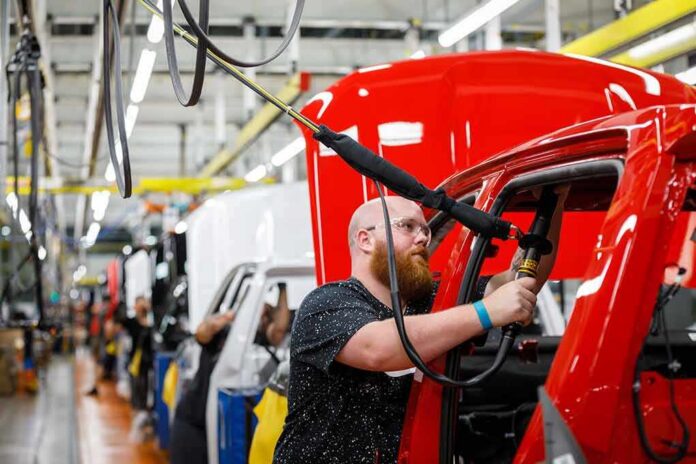
Khanna did not stop at a catchy label. He spent years selling a bigger vision he once called “progressive capitalism” and now brands as “economic patriotism”. The heart of that idea is simple enough that any factory worker or small-town shop owner can repeat it: America should make things again. He argues the federal government must help rebuild domestic production so the country is less dependent on China and so blue-collar towns do not die off one by one.
The policy guts behind the Blue MAGA slogan
Khanna’s agenda reads like a New Deal for the age of smartphones. He talks about a “Marshall Plan for America” built on a “national industrial bank” that would pour capital into steel, autos, semiconductors, shipbuilding, and other strategic industries. He calls for millions of new jobs in manufacturing hubs, remembers classic factory towns in Ohio and Pennsylvania by name, and backs trade schools and community colleges to supply the workers those jobs would need. That is closer to old-school economic nationalism than to campus-style progressivism.
He walks that line in other areas too. Khanna backs universal health care and higher taxes on billionaires, but he frames those goals as part of a “freedom budget” for workers left behind. He argues that workers should not just earn a living wage but share company profits through stock and benefits, especially as artificial intelligence threatens to tilt rewards even more toward shareholders. On foreign policy, he teamed up with Republican Rep. Thomas Massie to demand Congress approve any new military action against Iran, pushing Democrats back toward an “anti-war party” identity that spends money at home instead of on endless conflicts.
Why critics hear a cult, not a course correction
While Khanna uses “Blue MAGA” jokingly and as a bridge to Trump voters, many progressives hear something darker. Young left-wing commentators describe “Blue MAGA” as cult-like loyalty to the Democratic Party’s brand, not to real change, pointing to how some online Biden defenders treat criticism as heresy. A Guardian columnist warned that the party risks sliding into a “cult-like following” fueled by fear, social media bubbles, and groupthink. To them, MAGA is a warning label, not a word to borrow.
On the right, voices like Will Cain go even further. They say the whole exercise proves Democrats have become addicted to branding instead of results and are now trying to copy the most successful slogan of the last decade rather than fix the policies that chased away working-class voters. Conservative critics point to radicals inside groups like the Democratic Socialists of America, including members who openly say their goal is communism, to argue the left cannot credibly claim to champion the average American worker while flirting with fringe economics. From a common-sense, conservative view, that mix of hard-left rhetoric and patriotic slogans looks confused at best and dishonest at worst.
The missing pieces that will decide if Blue MAGA is real or just noise
For all the heat around “Blue MAGA,” two big gaps remain. First, there is no solid public evidence yet that Khanna’s message has pulled Trump voters back into the Democratic column in large numbers. No major polling or election data set shows a clear “Blue MAGA effect,” and without that, the phrase risks living mainly in think pieces and television segments. Second, Khanna has not tied the label to a single flagship “Blue MAGA” bill with manufacturing dollars, timelines, and job counts baked into law. His economic patriotism agenda is detailed, but it still lives mostly in speeches, tours, and opinion essays.
Khanna also refuses to say he is running for president in 2028, even as he takes his economic message on the road through Rust Belt states and lays out a 13-point plan to revive American industry. He talks about winning back the House, not about a White House bid, which leaves the movement without a clear leader or campaign vehicle. That may be tactical caution, or it may signal that “Blue MAGA” is more marketing test than marching order. Until someone runs and wins on it, the brand remains up for grabs.
Sources:
facebook.com, en.wikipedia.org, deseret.com, telegraph.co.uk, newsmax.com, yahoo.com, theguardian.com, nytimes.com, fastcompany.com