When a single violent incident is hauled into a national immigration fight, precision gets lost first: who detained whom, who released whom, and whether any earlier decision plausibly shaped what happened later are distinct questions that demand different evidence.
The Short Version
- The core facts are firm: an off-duty FBI agent shot and killed 27-year-old Oscar D. Isaya-Corrales in Chicago; the FBI opened an internal review.
- Credible outlets attribute to law-enforcement sources that Corrales was firing toward a homeless encampment immediately before the encounter; full investigative records have not been released.
- Records show Corrales had a May retail-theft arrest and missed a June court date, triggering a warrant; nothing in the public record confirms a prior ICE custody or a federal “catch and release.”
- Linking the shooting to a presidential “caught and released” policy skips the missing steps: the immigration file, the decision-maker, and a causal chain.
What is established: the shooting, the identity, and the official posture
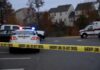
The public record supports three pillars. First, the fatal encounter is not speculative: the FBI acknowledged an agent-involved shooting near West 18th Street and South Union Avenue in Chicago and said its Inspection Division opened a review, the bureau’s standard oversight channel for deadly-force incidents. Second, Cook County authorities identified the deceased as 27-year-old Oscar D. Isaya-Corrales. Third, initial facts about the scene flow from on-the-record local reporting: responding officers encountered an FBI agent with a weapon trained on a wounded man, and witnesses described hearing gunfire before seeing the officer positioned behind an unmarked vehicle. These points anchor the discussion in verifiable events rather than rhetoric.
What led immediately to those shots is described consistently—but still through sources, not released case files. ABC7 and FOX 32, citing a senior official and federal law-enforcement sources, report that the off-duty agent observed Corrales firing into a homeless encampment before exiting a bureau-issued vehicle and shooting him. That account, if borne out by forensic reconstruction, would frame the incident as a rapid response to an imminent threat, not an immigration operation; the FBI’s own statement characterizes it as an agent-involved shooting under review, not as an enforcement action. Those are consequential claims that call for—and await—corroboration in the form of ballistics, recovered firearm records, and formal timelines.
What is not established: immigration custody, release authority, and causation
The leap from “agent-involved shooting” to “caught and released under Biden” falters on the records that are missing. Court and arrest materials document a May 25 arrest for an alleged $320 retail theft and a June 1 failure-to-appear warrant; the arrest report also flagged a Guatemalan passport that did not match Corrales’ identity, alongside reporting that listed his birthplace as Venezuela. None of that, however, is an immigration file. The available reporting does not identify an ICE encounter, an A-number, a notice to appear, a parole or release authority, or any federal custody decision tied to the executive branch. In short, the “caught and released” premise—if intended to mean federal immigration apprehension followed by discretionary release—lacks documentary substantiation in the present record.
Even if a federal custody episode later surfaces, a separate evidentiary bridge would still be needed: causation. Establishing that a different custody decision would probably have averted the October shooting is more than a temporal sequence; it requires showing that officials knew or reasonably should have known of a specific danger and that lawful tools existed to mitigate it. That standard has not been met by the current public materials, which provide a timeline but not a risk assessment or a foregone preventive pathway.
How these stories conflate different systems—and why that matters
Four distinct systems touch a case like this: local criminal process, federal immigration enforcement, federal use-of-force policy, and the media’s narrative frame. Local criminal process produced the May shoplifting case and the June warrant; immigration enforcement would be implicated only if a federal encounter and decision are documented; the FBI’s Inspection Division governs the deadly-force review; and the media frame often compresses these into a single political claim. That compression creates analytic slippage—treating a county bond decision like a DHS parole, or an off-duty, split-second shooting like an ICE operation—which then gets laundered through headlines and repeated as fact.
There is a recurring pattern in high-salience immigration-crime controversies: an individual incident becomes a proxy for national policy before investigators pin down status, decision-maker, and causal chain. That pattern is visible here, where early narratives emphasize a federal “catch and release” without the accompanying file numbers, custody logs, or court orders that would make it more than a slogan. An expert approach resists that conflation and insists on system-specific documentation.
Competing accounts about the moments before the shots
Disagreement, such as it exists, centers on sequence and immediacy rather than motive. Multiple outlets cite law-enforcement sources saying the agent witnessed Corrales actively firing, prompting an intervention; a Chicago alderman, relaying witness impressions, described two distinct bursts of gunfire minutes apart and called for a full accounting of what transpired between those bursts and the agent’s shots. The Sun-Times cites a police report placing the agent on scene with a drawn firearm post-incident and includes a witness who heard gunfire and then saw the armed officer behind an unmarked car. These narratives are not mutually exclusive; they map a narrow window of time that only forensic work—shot trajectories, casing distribution, weapon recovery, surveillance timestamps—can resolve. The FBI’s internal review is the venue for that resolution, and until those materials surface, certainty about split-second perceptions should be qualified without being paralyzed by doubt.
Why pretrial release debates don’t shortcut this case
Some will argue that “if he had been held, he would be alive and others safer,” invoking broader research on detention and public safety. The empirical literature on pretrial detention’s effects is far more ambivalent than that aphorism implies: several rigorous studies find that longer or indiscriminate pretrial detention can increase later offending relative to release for similarly situated defendants, likely via destabilizing work, housing, and social ties. Those findings do not adjudicate this case; they caution against retrofitting a complex body of research to a single event whose decisive facts—immigration custody, risk markers, legal tools available—are not yet in evidence.
What would actually answer the open questions
Three document sets would move this from argument to analysis. First, the immigration file: ICE and CBP records (A-number, detainers, release authority, notices to appear) would confirm whether Corrales was ever in federal custody and under what statutory basis. Second, the local criminal docket: bond terms, FTA notices, and warrant returns would clarify why he was not in custody after the May arrest. Third, the shooting file: weapon recovery, ballistics, scene reconstruction, and agent interviews would test the claim that he was firing into an encampment and assess compliance with FBI deadly-force policy. Without those, we have fragments—some reliable, some attributed—that do not support a confident policy indictment but do support a disciplined account of what is known and what remains to be proven.
Sources:
nypost.com, nbcchicago.com, fox32chicago.com, abc7chicago.com, univision.com