The incident of a British humanitarian worker evacuated from the Democratic Republic of Congo for “potential Ebola exposure” is best understood not as a UK Ebola case, but as a textbook example of how modern health systems use strict precautions while keeping genuine public risk very low.
Key Points
- The worker in a London hospital is asymptomatic, in isolation, and being monitored after a potential exposure in DR Congo, not treated as a confirmed Ebola case.
- UK authorities state there are no confirmed Ebola cases in the country and that the risk to the general public remains low, despite a serious outbreak abroad.
- The 21‑day monitoring window and use of specialist isolation facilities follow long‑standing international guidance for Ebola’s incubation period and transmission pattern.
- Media framing often blurs precautionary monitoring with active cases; understanding the distinction helps keep concern proportional to the actual risk.
From alarming headline to clinical reality
When people see “Ebola” and “London hospital” in the same sentence, they understandably imagine an active, highly dangerous infection on their doorstep. In this case, the evidence points to something more routine in outbreak medicine: a humanitarian worker who may have been exposed while helping to control an African outbreak has been brought home and placed under close observation, even though they are currently well and without symptoms. The UK Health Security Agency (UKHSA) describes the evacuation explicitly as precautionary, notes the person “is not currently displaying any symptoms and remains well,” and stresses that specialist infectious disease teams are simply monitoring them in isolation. That combination—no symptoms, isolation, and structured monitoring—is the standard way high‑income health systems manage plausible Ebola exposure in returning workers.
It also matters that UKHSA and other officials are unambiguous on the core point: there are no confirmed Ebola cases in the UK, and the assessed risk to the general public is low. This is not a diplomatic gloss. It reflects both what Ebola is (a virus that requires close contact with infected body fluids to spread) and how rare imported cases have been in the UK despite decades of African outbreaks and multiple evacuations of exposed or infected healthcare workers. Understanding that distinction between a monitored exposure and a diagnosed case is the key to reading these stories without either complacency or unnecessary alarm.
What “potential exposure” means in practice
Ebola virus disease is caused by several related viruses and is marked by an incubation period of roughly two to 21 days: people do not become infectious until they develop symptoms such as fever, weakness, vomiting, diarrhoea, and in severe cases bleeding. As the World Health Organization and European disease agencies both emphasise, transmission requires direct contact with blood, secretions, or other body fluids from a symptomatic patient, or indirect contact with contaminated materials like needles or bedding; there is no evidence of natural airborne spread in humans. That biology informs the monitoring regime. If someone has had a credible exposure—for example, a breach in protective equipment while caring for an Ebola patient—they are asked to isolate from high‑risk contact and to monitor their temperature and general health closely for the full 21‑day window.
UKHSA’s guidance for humanitarian aid workers in Ebola‑affected countries sets this out plainly: returning staff who think they may have been exposed should contact their organisation and UKHSA, check their temperature twice daily for 21 days, and seek immediate medical assessment if they develop symptoms in that period. A separate UKHSA explainer defines a “suspected” case as someone who has become unwell after possible exposure in the last 21 days—being exposed but still well does not, in technical terms, make you a case. In the evacuation now in the headlines, the government statement refers to a “potential healthcare related exposure,” but does not detail whether this involved a needle‑stick injury, a tear in personal protective equipment, or contact with contaminated surfaces. That lack of specificity is a gap in the public record, but it does not change the basic classification: this is an exposed, asymptomatic individual being handled according to pre‑existing protocols.
Why the person is in a London isolation unit if risk is “low”
At first glance, there is a paradox: if Ebola risk to the UK public is low, why fly exposed workers home and put them straight into high‑level isolation? The answer lies in how modern health systems manage high‑consequence infectious diseases. Ebola may be relatively hard to catch compared with respiratory viruses, but when infection does occur, case‑fatality rates in untreated or poorly resourced settings can reach 50 per cent or more. That combination—low probability, high impact—means that even a small chance of infection is taken seriously. The UK therefore designates Ebola (and its Bundibugyo variant now driving the DR Congo outbreak) as a “contact high consequence infectious disease,” with specialist centres equipped to isolate and treat patients safely.
The evacuation of exposed or infected staff to such centres is not new. During the West African epidemic, at least 20 confirmed Ebola cases were medically evacuated from West Africa to Europe and the United States for treatment, including several to the UK’s Royal Free Hospital. In that period and afterwards, Public Health England and UKHSA repeatedly emphasised that appropriate infection control procedures, including use of dedicated high‑containment units, allow the UK to manage Ebola safely while keeping community risk very low. The current case fits that pattern. The individual is being kept away from public contact not because they are known to be infectious, but because if they did develop disease, the system is already calibrated to contain it at source.
How rare Ebola is in the UK – and what history tells us
For all the anxiety Ebola headlines can provoke, the historical record in the UK is remarkably reassuring. Comprehensive reviews of high‑consequence infections identify just four Ebola virus disease cases ever managed in the UK—one laboratory‑acquired infection in 1976, and three healthcare workers who had contracted Ebola while working in West Africa between 2014 and 2015. In each of those clinical cases, patients were cared for in specialised isolation facilities, and no onward transmission occurred on UK soil. UKHSA and the NHS explicitly highlight this point when explaining Ebola risk to the public: despite occasional imported or evacuated cases, “it’s never been spread from person to person in the UK.”
Even potential cases have tended to resolve benignly. In 2022, part of Colchester Hospital was temporarily closed and thoroughly cleaned after a patient with suspected Ebola was admitted; subsequent testing proved negative, and infectious disease experts reiterated that the risk to the public was “exceedingly low.” Similar episodes have occurred in Glasgow and other centres, all ending without transmission. This pattern explains why UKHSA can simultaneously expand support for outbreak control in DR Congo, facilitate precautionary evacuations for humanitarian workers, and still credibly assess the risk to the UK population as low. The system is built precisely to absorb these rare but high‑profile events.
Outbreak in DR Congo: serious locally, low risk at distance
The humanitarian worker now in London was supporting the response to an Ebola outbreak in the Democratic Republic of Congo. The current flare‑up, caused by Bundibugyo virus, has been designated by the World Health Organization as a Public Health Emergency of International Concern because of its consequences in the affected region. Case numbers and fatalities in DR Congo are serious, and the local health infrastructure faces enormous strain, compounded by conflict and population displacement, as international news coverage has described in detail. That context explains why foreign governments, including the UK, both send support and treat any possible exposure to their nationals with caution.
Risk does not travel intact, however. WHO, UKHSA and other agencies consistently assess the global risk from such outbreaks as low, even when regional and national risk in the affected country are high or very high. For the UK specifically, outbreak monitoring reports state that as of late May and early June, “no imported cases associated with this outbreak have been reported,” and that Ebola “poses a low risk to the UK population.” The key reason is straightforward: without direct contact with sick patients or contaminated environments, Ebola does not spread, and the kinds of travel and social contact typical of UK residents simply do not provide that exposure.
Why headlines overstate the threat – and how to read them critically
One of the durable problems in outbreak communication is the gap between technical classifications and public language. Health agencies draw sharp distinctions between “exposed,” “suspected,” “probable,” and “confirmed” cases; each carries specific criteria around symptoms, laboratory findings, and epidemiological links. News headlines, by contrast, often reach for more dramatic, less precise terms: “suspected Ebola case,” “Ebola patient,” “under investigation.” In the current story, phrases like “suspected case” and “potential Ebola exposure” have been used in secondary reporting, even though the UKHSA notice is explicit that there are no confirmed UK cases and the evacuee has no symptoms.
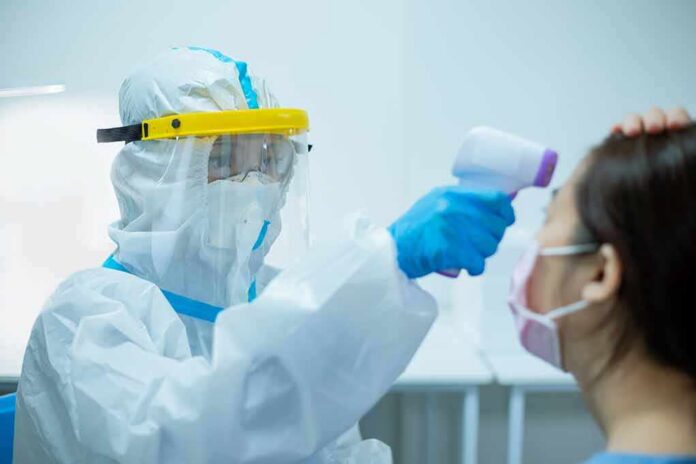
The effect is predictable. Past UK Ebola coverage has shown that even when officials say risk is “very low,” the combination of high‑fatality imagery, hazmat suits, and isolation units can make precautionary monitoring look like a local emergency. That’s why experienced outbreak practitioners emphasise mechanism when they communicate risk: Ebola is not lurking in the air; it is a virus that requires specific, usually medical or caregiving, exposures to spread. For readers, the practical takeaway is simple but powerful. When you see a headline about Ebola in a UK hospital, ask four questions: Is the person symptomatic? Has Ebola been confirmed by laboratory testing? Was the exposure clear and high‑risk? And what do official assessments say about public risk? In this case, the answers—no symptoms, no confirmed case, unspecified exposure, low public risk—point firmly away from a local crisis.
A British humanitarian worker is being monitored in isolation at a London hospital after being exposed to Ebola in the Democratic Republic of Congohttps://t.co/DIEUghy8b6
— The Daily Record (@Daily_Record) July 21, 2026
What this means for future humanitarian work and public reassurance
Humanitarian workers are essential to controlling Ebola outbreaks; they are also, by definition, the people most likely to encounter the virus directly. The UK’s current handling of the evacuated worker illustrates a compromise that has evolved over decades of managing high‑consequence infections. Exposed staff are not abandoned in the field, nor left to self‑monitor without support. Instead, they are brought into systems designed to combine world‑class clinical care with rigorous infection control, and they are monitored openly enough that the public can see what is being done.
For the UK public, the message is steady rather than sensational. Ebola remains a dangerous disease for those who catch it, and outbreaks in DR Congo and neighbouring regions are serious events that warrant attention and support. At the same time, imported Ebola disease into the UK is rare, onward transmission has never occurred, and monitoring of exposed workers is routine, disciplined, and based on well‑understood science. Reading outbreak stories through that lens—distinguishing exposure from infection, and precaution from crisis—allows concern to live where it belongs: with affected communities and front‑line staff, not with speculative fears of a domestic epidemic that the evidence simply does not support.
Sources:
telegraph.co.uk, dailymail.com, gov.uk, bbc.co.uk, ukhsa.blog.gov.uk, theguardian.com, assets.publishing.service.gov.uk, cdc.gov, ecdc.europa.eu, pmc.ncbi.nlm.nih.gov, academic.oup.com, who.int, nhs.uk