
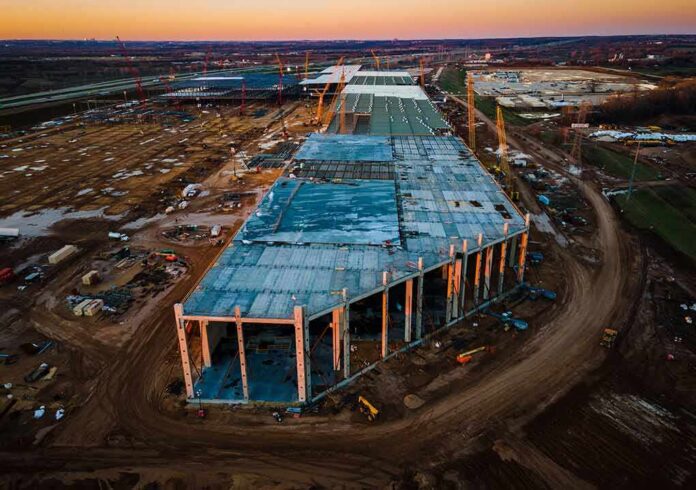
The most telling fact about the data center backlash isn’t that opposition exists — it’s that it doesn’t sort by party. When a Pew-based poll found roughly seven in ten Americans opposed new AI data centers in their area, and Texas Governor Greg Abbott and Pennsylvania Governor Josh Shapiro — a Republican and a Democrat who had each championed these projects a year earlier — both moved to impose new restrictions, that’s a signal the resentment runs deeper than partisan messaging. It’s a fight over who absorbs the cost of the AI boom, and it’s reshaping how cities and states court the industry that built the internet’s back end.
Key Points
- Polling shows roughly 70% opposition to new data centers, and the opposition is bipartisan rather than ideological.
- Core resident grievances are concrete and recurring: rising electricity bills, heavy water consumption, farmland loss, noise, and eminent domain for power lines.
- States have spent years courting data centers with sales-tax and property-tax exemptions tied to investment thresholds, treating them as economic-development wins.
- Economic research is genuinely mixed — some studies find measurable local job and wage gains, others find minimal permanent employment and rising utility and housing costs.
- Governors in both parties, and at least 15 states, have begun freezing or restricting new projects ahead of the midterms.
How the Backlash Actually Formed
Data centers are not new; they’ve housed corporate servers and cloud infrastructure for two decades with little public notice. What changed is scale. The generative-AI buildout since 2023 has produced facilities that dwarf earlier server farms — campuses covering hundreds of acres, drawing power equivalent to a mid-sized city, and requiring cooling systems that consume hundreds of thousands of gallons of water daily. A single large AI data center can use electricity comparable to 100,000 homes; the largest campuses run twenty times that. U.S. data centers already account for roughly 4% of national electricity use, a share some analysts project could double by 2030 as AI training and inference demand accelerates.
That demand doesn’t stay abstract once it reaches a local substation. In Aurora, Illinois, resident Laura Evans reported a 23% jump in her electricity bill over one year, alongside a constant low hum from backup generators 1,000 feet from her home — concerns specific enough that Aurora imposed a 180-day pause on new data center approvals to write actual regulations. In Port Washington, Wisconsin, a $15 billion project tied to the federal Stargate initiative is under construction on farmland larger than 500 football fields, and a resident’s land now faces a utility company’s eminent-domain claim for a new power line. These aren’t hypothetical externalities; they are the recurring, named complaints — utility bills, water draws, farmland conversion, noise — that show up from Missouri to Georgia to Mississippi, where roughly 10,000 residents have joined litigation over data center noise.
The Economic Case Tech and States Are Making
The industry’s argument rests on a real and long-standing policy structure, not just marketing. At least 38 states now offer data center incentives — sales and use tax exemptions, property tax abatements, or both — typically conditioned on minimum capital investment thresholds ranging from $5 million to $500 million, and often paired with job-creation requirements. Illinois, for instance, requires at least $75 million in investment and 25 new jobs to qualify for its exemption program. Alabama ties decades-long abatements to investment tiers between $200 million and $400 million-plus. These aren’t concessions extracted under duress; they were built deliberately, over roughly fifteen years, by state legislatures competing for what they saw as clean, high-value capital investment and durable tax base — Loudoun County, Virginia, now collects an estimated $1.3 billion annually from more than 600 data centers, revenue substantial enough to fund homeowner tax cuts.
Academic research complicates the picture rather than settling it cleanly in either direction. An NBER working paper using a shift-share design found data center growth produces measurable positive effects on total employment, wages, tax returns, and house prices in host communities, alongside upward pressure on electricity prices. Brookings researchers similarly found data-processing employment rising 56% over a decade in labor markets receiving their first large facility. But that gain is concentrated in specialized, often temporary construction work — thousands of jobs during the build phase collapsing to as few as 20 to 50 permanent operational staff once a facility is running. Communities that expected an economic renaissance frequently discover they got a warehouse-sized industrial building with a skeleton crew and a bigger electric bill.
Where the Genuine Disagreement Lies
The dispute isn’t really about whether data centers create any value — even opponents rarely deny the tax revenue exists. It’s about distribution: benefits that are diffuse and long-term (state GDP growth, AI competitiveness, corporate tax receipts) versus costs that are immediate and hyperlocal (a specific family’s power line, a specific well’s water table, a specific neighborhood’s hum). Harvard researchers have summarized the opposition case bluntly: the public is worried about rising electricity rates, “enormous water use,” and the absence of meaningful job creation once construction ends. Brookings, writing from a more industry-neutral policy perspective, concedes the concern is legitimate — genuine public worry about electricity rates, water usage, air quality, drought, noise, and light pollution, not manufactured panic. A widely cited estimate puts $64 billion or more in projects blocked, stalled, or delayed by community opposition since 2023, a figure that itself has become a talking point for both sides — proof of a functioning check to opponents, proof of dysfunction and lost investment to the industry.
A separate strand of criticism concerns process rather than resource use: reporting has documented data center deals negotiated under nondisclosure agreements and shell-company names, leaving local officials unable to fully brief residents before votes are taken. That opacity, layered onto a federal posture — including a 2025 executive order fast-tracking permits on national-security grounds — that frames data centers as strategic infrastructure not subject to local veto, is arguably driving as much resentment as the utility bills themselves. When residents say they’ve lost control over decisions shaping their own neighborhoods, that’s a distinct grievance from water tables and noise complaints, and it explains why opposition has proven durable across red and blue jurisdictions alike.
"Why Communities Nationwide Are Halting AI Data Centers"
Water & electricity strains, secrecy, & fast‑track deals ignite a coast‑to‑coast backlash. Data center bans, recalls of backroom dealing politicians.And in both conservative & liberal cities & stateshttps://t.co/CADthfAYKf— Steven Hill (@StevenHill1776) August 31, 2026
What Comes Next for Siting and Policy
The near-term trajectory is toward friction, not resolution. At least 15 states have floated temporary bans or moratoriums on new construction, and governors who once competed publicly to land these projects are now imposing local-approval requirements or distancing themselves ahead of midterm elections, with the National Republican Senatorial Committee reportedly warning that data centers could cost the party a competitive Senate seat. Brookings researchers who track siting patterns argue local opposition is becoming the leading constraint on where data centers can be built at all — not permitting law, not grid capacity, but neighborhood-level political resistance. Expect the incentive structures states built to attract this industry to be renegotiated county by county, with utility cost-allocation, water-use disclosure, and community-benefit agreements becoming standard demands rather than afterthoughts. The AI buildout isn’t slowing; the fight over who pays its local price is only beginning.
Sources:
news.harvard.edu, ncsl.org, thecooldown.com, forbes.com, ir.lawnet.fordham.edu, economics.yale.edu, nber.org