
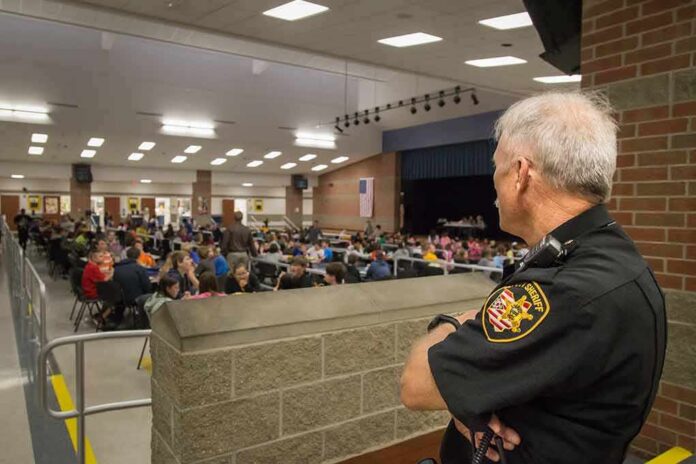
When the badge is the gateway to a child’s trust, the harm of abuse is not only criminal but institutional; that is why decisive, documented action in these cases matters as much as the allegations themselves.
The Short Version
- Pasco County Sheriff’s Office arrested and terminated Corporal Donald Bob Arnaldo on two counts of lewd and lascivious molestation and one count of unlawful sexual activity with a minor.
- The sheriff says the conduct occurred off duty, in Pasco County, over a period of time, involving a familiar custodial relationship with the victim.
- Detectives prioritized the case after the victim came forward this week; the sheriff publicly praised the victim’s courage and urged any others to report.
- The case is now with the Sixth Judicial Circuit State Attorney’s Office for prosecution; Arnaldo had been employed since January 12, 2015.
What Authorities Say Happened and Why It Matters
The Pasco County Sheriff’s Office arrested and immediately terminated Corporal Donald Bob Arnaldo on serious child sex offenses: two counts of lewd and lascivious molestation and one count of unlawful sexual activity with a minor. Sheriff Chris Nocco stated the acts were off duty, took place within Pasco County, and involved a “familiar custodial relationship”—a phrase investigators use when an adult exercises care, supervision, or authority over a minor. The victim came forward this week; detectives escalated the case, and the sheriff credited the victim as “extremely brave” for disclosing. The Sixth Judicial Circuit State Attorney’s Office, led by State Attorney Bruce Bartlett, is engaged on the case, a marker that the matter has moved from agency allegation to prosecutorial review.
Those specifics—named defendant, enumerated felony charges, employing agency’s on-record account, and an identified prosecutor—are the backbone of a verifiable criminal proceeding. They also define the stakes. When a sworn officer is accused of exploiting a custodial relationship with a child, the alleged harm extends beyond a single victim; it breaches the institutional promise that those entrusted to protect will not prey. The sheriff, who noted Arnaldo’s employment date of January 12, 2015, publicly framed the arrest as both accountability and a signal to any other victims to come forward.
The Charges in Plain Terms
Florida’s lewd and lascivious molestation statutes criminalize intentional touching of a child in a sexual manner; severity hinges on the child’s age and the circumstances, with penalties that can reach life imprisonment when the youngest victims are involved. Unlawful sexual activity with a minor centers on sexual contact with adolescents within defined age ranges, regardless of ostensible consent, and can also carry life-eligible penalties depending on facts proven at trial. Sheriff Nocco indicated one molestation count is a life felony and another a second-degree felony, and characterized the unlawful sexual activity count as punishable by life—signals of alleged severity rather than mere technical violations.
Terminology matters here. “Custodial relationship” is more than a euphemism; in charging and sentencing, an offender’s position of authority or trust over the victim often aggravates punishment. While the sheriff withheld victim-identifying details to protect privacy, his description aligns with patterns prosecutors frequently pursue: repeated conduct over time, facilitated by access and authority, rather than a single opportunistic act.
How Cases Like This Typically Move Through the System
Once a victim reports, the investigative sequence is familiar to specialized units: forensic interview (ideally by a trained child interview specialist), immediate safety planning, targeted corroboration through digital evidence or witness timelines, and rapid consultation with prosecutors to shape arrest and charging decisions. The sheriff’s account—victim disclosure, prioritized detective work, and swift arrest—follows that template. From here, the Sixth Judicial Circuit will file formal charging documents, and discovery will govern the exchange of evidence, including any recorded interviews, device extractions, and corroborative witness statements, subject to statutory protections for victim privacy.
In child sex cases, arrest is not a proxy for proof; yet arrest thresholds are meaningful. Probable cause must point to specific acts by a named suspect under statutorily defined elements. Nationally, arrests materialize in only a subset of reported child sexual assaults; one federal analysis of incidents reported to law enforcement found arrests in roughly a quarter of sexual assault victimizations, illustrating that cases reaching arrest tend to reflect attainable evidence thresholds or strong witness accounts.
Where This Fits in the Larger Pattern
Allegations against police officers for child sexual abuse are uncommon relative to the size of the profession, but they recur with regularity. A Washington Post investigation cataloging criminal charges against officers from 2005 through 2022 reported that, on average, an officer is charged with a child sex abuse-related crime twice a week nationwide; the project also noted that 99% of arrested officers were male and two-thirds had over five years of service—demographics that match a long-tenured male defendant in this case.
Two structural features recur in these prosecutions. First, access through trust—whether familial, mentoring, or community-based—lowers a child’s defenses and shields conduct from outside view. Second, institutional urgency varies; some agencies minimize or delay action, while others, as in Pasco County’s on-the-record account, move quickly to isolate risk, support the victim, and refer to prosecutors. The latter posture—swift arrest, termination, and victim services—aligns with policy guidance that treats sexual offenses involving minors as among the most serious breaches of the public trust.
What Competent Accountability Looks Like
Four elements distinguish credible institutional response in cases like this. First, clean lines between criminal investigation and employment action: the agency arrested Arnaldo and terminated his employment the same day, severing authority that could intimidate witnesses. Second, victim-centered practice: the sheriff emphasized services for the victim and guarded privacy—indispensable for minimizing retraumatization and enabling prosecution. Third, prosecutorial engagement: partnership with the Sixth Judicial Circuit signals evidentiary vetting beyond the department’s statements. Fourth, public clarity without gratuitous detail: the agency named the charges and the defendant, described the conduct category and context (off duty, custodial relationship), and avoided identifying the child, which preserves both transparency and dignity.
These choices are not merely reputational hygiene. They shape the quality of justice. When a department moves decisively and communicates precisely, it invites additional victims with relevant information to come forward, which can both strengthen the case and surface any broader risk that needs to be addressed.
Pasco County sheriff discusses arrest of deputy in child sex abuse case https://t.co/FpemjBGyYb via @YouTube
— Duffy1958 🇮🇱 (@CatherineVents) September 5, 2026
What to Watch Next
The next inflection points are procedural but substantive. The filing of an information or indictment will lock in the State’s theory of the case; a probable-cause affidavit, once publicly available through the Pasco County Clerk systems, will outline the investigative narrative supporting arrest. Defense motions may test the admissibility of statements, digital evidence, or expert testimony around victim disclosure and credibility. If additional victims exist, as the sheriff’s appeal implies, their accounts could affect both charging decisions and sentencing exposure.
Why Swift, Public Accountability Serves Public Safety
When the accused is a sworn officer, the community’s tolerance for ambiguity is thin—and justifiably so. A transparent arrest, immediate separation from duty, and clear handoff to prosecutors communicates an unambiguous norm: the authority of the badge amplifies responsibility, not license. In Pasco County, the department’s account presents the steps people expect—credible victim engagement, rapid investigative action, and alignment with prosecutors—without compromising the victim’s privacy. That is how you begin to repair trust after the most corrosive kind of allegation. The criminal process will decide guilt; the public can judge institutions by the rigor and speed of their response.
Sources:
nypost.com, pascoclerk.com, news.pascosheriff.com, pascocountycourt.org, flsa6.gov, wtsp.com