
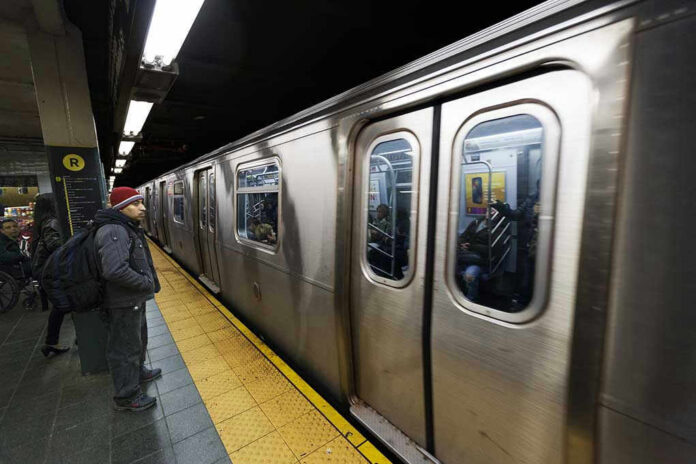
When a body turns up inside the restricted guts of a subway station, the public instinct is to hunt for a crime story; the truth, more often, is a story about how hidden spaces, limited sightlines, and routine maintenance determine what gets found and when. That is exactly the frame for the East Harlem discovery inside a utility closet along the No. 6 line.
The Short Version
- An MTA track worker found a deceased man inside a utility closet in the subway tunnel near 125th Street and Lexington Avenue during an active work project.
- The discovery occurred around late morning; EMS pronounced the man dead at the scene.
- Police reported no visible signs of trauma and did not initially suspect foul play.
- Investigators indicated the body appeared to have been there several days; identification and cause of death awaited standard medical review.
What Happened Inside the East Harlem Station
During an active project at the 125th Street–Lexington Avenue complex in East Harlem, an MTA track worker entered a utility closet in the tunnel serving the No. 6 line and found a man unresponsive inside. The worker notified responders; Emergency Medical Services arrived and pronounced the man dead on site, and police documented the scene. Law enforcement accounts described no visible signs of external trauma, and investigators said they did not suspect foul play at that time. The preliminary assessment also held that the remains appeared to have been in place for several days, though formal identification and cause of death would move to the Medical Examiner in the normal course of an unattended death investigation.
These details matter for two reasons. First, the location—a locked or restricted utility closet in the tunnel environment—immediately narrows what kinds of scenarios are plausible and shapes how quickly a person might be discovered. Second, the absence of visible trauma does not, by itself, resolve cause or manner of death; in New York, those determinations rest with the Office of Chief Medical Examiner after autopsy and toxicology, a process that can take weeks in routine cases.
Why Bodies Are Sometimes Found Late in the Subway Environment
The rights-of-way where trains run, along with adjacent rooms and closets used to stage equipment and power systems, are designed for function, not public access: they are dim, loud, and segmented by doors, bulkheads, and turnouts. Even in well-managed systems, discovery tends to follow maintenance and inspection rhythms rather than the continuous vigilance you would expect on platforms and mezzanines. New York has seen multiple cases in which workers, not riders, located deceased individuals during scheduled inspections or track access windows, including burned and decomposed remains found in lower Manhattan tunnels during off-peak hours when crews could safely enter the right-of-way.
It is a grim but consistent pattern across large rail networks: if a person ends up in a nonpublic compartment or behind a locked door, detection depends on who has keys and when they have reason to open it. That is why the role of track workers, signal maintainers, and power crews is often central to the public’s first understanding of what occurred underground—and why official timelines tend to hinge on work orders and track-access logs rather than passenger accounts.
Mechanics of an Unattended Death Investigation Underground
Once responders confirm death, the immediate priorities follow a sequence. Scene control and documentation come first: officers record the position of the body, condition of doors and locks, and any nearby tools, evidence, or containers. EMS pronounces. Transit personnel assist in isolating the area, sometimes halting service or routing around a section to preserve safety for both crews and the public. Police canvass for surveillance coverage near gates, stairwells, and service corridors leading to restricted rooms; underground camera networks are patchy, but entrances often are covered. The Medical Examiner assumes custody and conducts an autopsy to determine cause and manner—accident, natural, homicide, suicide, or undetermined—supplemented by toxicology if indicated.
Timelines and certainty evolve accordingly. An observation like “no visible signs of trauma” is exactly that: an external read that speaks to what can and cannot be inferred before internal injuries, asphyxial mechanisms, or toxins are ruled in or out. New York’s experience with rail corridors is instructive here; past cases have yielded a spectrum of findings once autopsy work was complete, from fatal head trauma in tunnel environments to deaths consistent with earlier track contact or exposure.
How This Fits a Broader Transit-Safety Pattern
New York’s subway is a 24/7 organism with millions of passenger trips and a comparatively tiny right-of-way footprint that few ever see. The rare events that end in discovery of a body off-platform compress very different mechanisms—trespass, medical crisis, exposure, prior injury—into the same headline. Historical reporting across the system shows two recurring constants: discovery most often comes from MTA employees doing inspection or project work, and the final medical picture often diverges from initial impressions once the Medical Examiner finishes.
That bifurcation between first-look assessments and forensic conclusions is not a flaw in the process; it is the process. It also helps explain why service alerts and early statements stay narrow: they are designed to communicate operational impacts and immediate safety posture, not to litigate cause. In a system where even trained crews face risk at track level, caution about details while the ME works is both common and appropriate.
The Operational Lens: Access, Inspection, and Accountability
A utility closet in a tunnel is not a public space. Access is controlled by keys, locks, and track-access permissions that show who entered when, for what work, and under which safety protections. In the East Harlem case, the reference to an “active project” tells you the closet was opened because workers had a reason to be there that day; in many such projects, documentation includes a work order, a flagging plan if track proximity is involved, and a clearance record when the site is secured again. Those records are central to reconstructing the discovery timeline and to identifying any antecedent window when someone might have entered the space unobserved.
Past incidents underscore how this documentation backbone matters later. When workers discover remains in the right-of-way—whether in a tunnel recess, under a stairwell ramp, or deeper along a non-revenue track—investigators pair ME findings with access logs and nearby surveillance to narrow the time-of-entry window and exclude foul play where appropriate. This is also where the distinction between “no visible trauma” and “no foul play suspected” earns precision: the first is descriptive; the second is an early investigative judgment that remains subject to change if autopsy results compel it. In the East Harlem discovery, both statements appeared together in early reporting—a conventional pairing for unattended deaths underground.
What to Watch For Next
Three work products typically close the loop for cases like this. First, the Medical Examiner’s determination of cause and manner of death, which settles whether the absence of visible trauma aligned with a natural or accidental cause, or whether internal findings point elsewhere. Second, the incident timeline built from NYPD incident records, EMS run sheets, and any available station camera coverage, which fixes the key minutes and hours around the discovery. Third, the MTA’s own access and work records for the project on the day of the find and in the days prior, which clarify when the closet was last opened and by whom. Each document speaks to a different question—how the person died, when they likely entered that space, and whether anything systemic about access or inspection intervals needs tightening.
Bottom Line
The East Harlem case is straightforward on the known facts: a track worker, performing authorized work near 125th and Lexington on the No. 6 line, discovered a deceased man in a tunnel utility closet; EMS pronounced on scene; police reported no visible trauma and did not initially suspect foul play; the remains appeared to have been there several days; and formal findings would proceed through the Medical Examiner. It is also characteristic of how big-city rail systems surface their rare worst moments—quietly, during maintenance, by the people who keep the trains running. Clarity about cause follows later, not because officials are hedging, but because underground environments confound quick conclusions. In this setting, patience is not avoidance; it is method.
Sources:
nypost.com, pulse2.com, abc7ny.com, nydailynews.com, fox5ny.com, manhattanda.org