
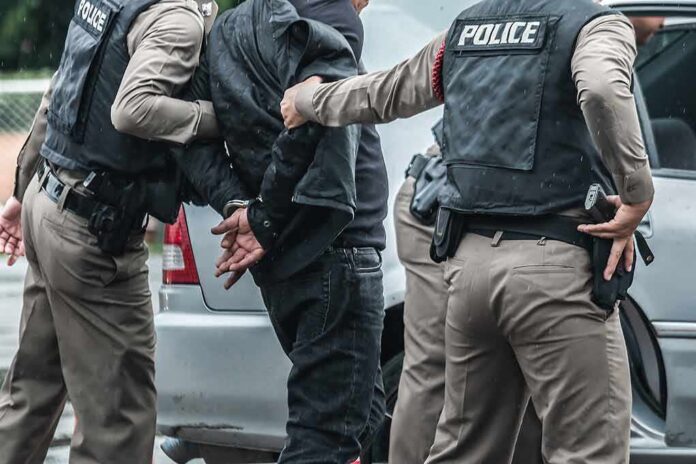
A single data point inside a rideshare app — the digital breadcrumb trail of a trip that should have ended at a stated destination — is what turned a hospital disclosure into a named suspect within roughly 48 hours, and it illustrates something the public rarely sees clearly: modern sex-crime investigations increasingly hinge on corporate telemetry as much as on witness memory.
Key Points
- Montgomery County police charged Empower rideshare driver Abdoulaye Dia, 36, of Lanham, Maryland, with first-degree rape, kidnapping, second-degree assault, and a third-degree sex offense after a 17-year-old passenger reported being assaulted.
- Investigators say the victim told them Dia diverted her trip to a Silver Spring parking lot, and detectives used ride-app data to identify him within a day of the report.
- Dia was arrested in Lanham and is being held without bond; police say they believe there may be additional victims and are asking them to come forward.
- The Department of Homeland Security says Dia is in the country illegally and was previously arrested in New York City in June 2026 on separate sexual-abuse-related charges.
- The case lands inside a documented industry-wide pattern of sexual-misconduct reports on rideshare platforms, where safety disclosures and litigation have repeatedly outpaced what drivers’ background checks catch.
What Happened in Silver Spring
According to Montgomery County police, a 17-year-old girl ordered a ride through the Empower app and reported afterward that the driver did not take her to her stated destination. Instead, officers say, he drove into a parking lot in Silver Spring, where the assault occurred. The victim disclosed the attack to a hospital, prompting officers from the department’s Special Victims Investigations Division to open an inquiry on September 15. That disclosure — not an anonymous tip or a bystander report — is what triggered the case, and it is the account on which the criminal charges rest.
Dia now faces first-degree rape, kidnapping, second-degree assault, and a third-degree sex offense. He was arrested in Lanham and is being held without bond at the Montgomery County Central Processing Unit, a detention status that signals prosecutors and a judge viewed the flight risk or danger to the community as significant enough to deny release pending trial. As with any arrest, the charges represent an allegation that will be tested in court, not a finished legal determination.
How Investigators Connected the Driver to the Crime
What makes this case a useful case study in modern policing is the speed of identification. Rideshare platforms log pickup and drop-off coordinates, route deviations, timestamps, and driver-passenger pairings automatically, creating a data trail that did not exist in comparable assault investigations a generation ago. Montgomery County detectives say they used exactly that kind of app data to identify Dia as the driver on the trip in question, moving from a hospital report to an arrest in roughly 24 hours. That timeline is fast by the standards of sexual-assault investigations generally, where identification of an unknown assailant can otherwise take weeks.
Police have also said publicly that they believe there may be more victims and are asking anyone with information to contact the Special Victims Investigations Division directly. That request is a standard step in cases involving someone with regular, unsupervised access to strangers through a commercial platform — the same investigative logic used in cases involving delivery drivers, home-service contractors, or transit employees, where a single confirmed allegation often prompts a wider look at a suspect’s full customer history.
The Prior New York Arrest and the Immigration Dimension
The case gained a second layer once the Department of Homeland Security stated that Dia is in the United States illegally and that he had been arrested previously in New York City on June 10, 2026, on charges including sexual abuse by forcible compulsion, forcible touching, injuring a child under 17, and sexual abuse without consent. That prior arrest is a matter of public record as characterized by DHS, and it is specific enough — a date, a jurisdiction, and named charge categories — to be treated as established fact for reporting purposes, even though it is a separate legal matter from the Maryland charges and carries its own, distinct evidentiary record.
It is worth being precise about what that prior arrest does and does not establish. It does not prove the Maryland allegations; each case will be adjudicated on its own facts and its own jury or judge. But two arrests for sexual-abuse-related conduct within a few months, involving the same individual, is the kind of pattern that legitimately shapes how police, prosecutors, and the public weigh risk — which is precisely why Montgomery County investigators moved quickly to seek out any additional victims once the connection became public.
Rideshare Screening and the Gap It Exposed
Empower, the platform involved, has said it cooperated fully with law enforcement and that its drivers undergo background checks including sex-offender registry and global watchlist searches. Dia reportedly passed such a check in mid-July 2026, weeks after the New York arrest, without the prior charge surfacing. That gap is not unique to this platform; it reflects a structural limitation of background-check systems generally, which rely on searchable databases that can lag behind a fresh arrest, especially one still moving through a separate jurisdiction’s court system rather than resulting in a conviction.
This is where the case connects to a much larger, well-documented industry problem. Uber’s own published safety reports have disclosed thousands of sexual-assault and misconduct reports across multi-year periods, and reporting drawing on court-unsealed material has put the true volume even higher — hundreds of thousands of reports of sexual assault or misconduct in the United States between 2017 and 2022 by one accounting, averaging roughly one report every eight minutes. Litigation over how platforms vet, monitor, and respond to drivers has produced thousands of pending federal lawsuits, with courts so far generally declining to hold companies vicariously liable for a driver’s criminal conduct while allowing narrower negligence claims to proceed.
NEWS: Republican congressional candidate Cheryl Riley is using a Montgomery County rape and kidnapping case to attack Rep. Jamie Raskin’s record on immigration enforcement.
Police say Abdoulaye Dia, 36, of Lanham, is accused of intentionally driving a 17-year-old girl past her…
— MDBayNews (@MDBayNews) September 18, 2026
What the Case Means Going Forward
For Montgomery County, the immediate priority is straightforward: identify any additional victims, build the evidentiary record behind the four charges already filed, and move the case through arraignment and, eventually, trial. For the rideshare industry, the case is another data point in a persistent pattern — one where app telemetry helps solve individual crimes quickly but has not yet closed the screening gap that lets a driver with an open sexual-abuse arrest continue picking up passengers, including minors, weeks later. That gap, more than any single case, is the durable story here, and it is one regulators, platforms, and law enforcement will keep colliding with until background-check systems catch up to the speed at which arrests actually occur.
Sources:
foxnews.com, dcnewsnow.com, foxbaltimore.com, fox5dc.com, thebanner.com, wrganews.com, wfmd.com, uber.com