
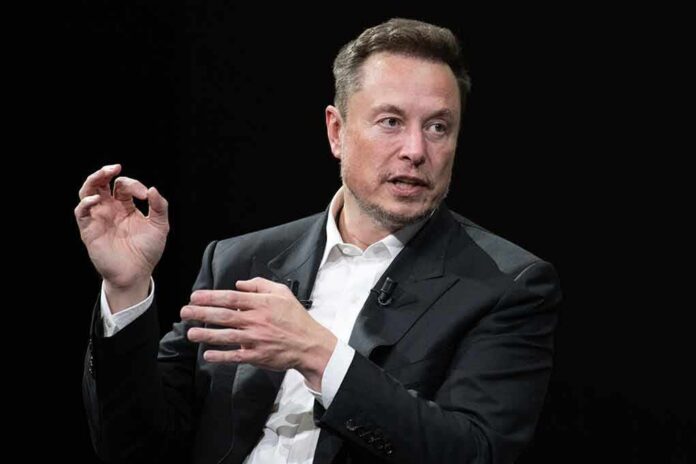
The paradox is only a paradox if you assume warnings and ambition can’t coexist in the same person — but in frontier AI, they almost always do, and Elon Musk’s career is the clearest case study the field has produced.
Key Points
- Musk has called superintelligent AI “inevitable,” predicting it could surpass the combined intelligence of all humanity within roughly a decade, while simultaneously building xAI, one of the industry’s most aggressively funded labs.
- His own 2015 correspondence with OpenAI’s founders shows he helped shape the mission to build advanced AI “for broad benefit,” years before he split from the company and founded a rival.
- In February 2026, SpaceX acquired xAI in a record-setting deal, formally merging Musk’s space and artificial intelligence ambitions under one corporate roof.
- Musk has proposed concrete safety mechanisms — peer-review calls among leading labs, government notification triggers for dangerous models — even as he races to scale his own systems.
- This dual posture is not unique to Musk; it reflects a structural pattern across frontier AI, where the firms most capable of assessing catastrophic risk are also the ones with the most to gain from building past it first.
What Musk Has Actually Said, On the Record
In a wide-ranging interview with The Economist, filmed at Tesla’s Giga facility and published in mid-2026, Musk told his interviewer that he has concluded superintelligent AI is coming regardless of what anyone does about it — “inevitable,” in his word — and that there is “no point trying to stop or slow it down.” He projected that by around 2036, AI systems collectively could exceed the combined intelligence of every human being on Earth, ushering in what he called an “age of amazing abundance,” where goods and services become so plentiful that money itself may lose relevance. He was equally blunt about the downside, assigning a 10 to 20 percent probability to an AI-driven existential catastrophe within the coming decade and comparing humanity’s coming position to that of chimpanzees relative to humans: a species that persists only at the sufferance of something smarter.
None of this is idle punditry. Musk used the same interview to propose a concrete governance mechanism: informal, recurring peer-review calls among the leading AI companies — OpenAI, Anthropic, DeepMind, and his own xAI — to test frontier models for dangerous capabilities before public release, with an agreed protocol for alerting governments if a lab refuses to address a flagged risk. He pointed to a real precedent, a government intervention involving Anthropic’s Mythos model, as the kind of trigger such a system would need to catch. That is not the language of a bystander commenting on a runaway industry; it is the language of someone trying to write the rulebook for a race he is actively running.
The Founder’s Paper Trail: OpenAI, 2015
Musk’s relationship to frontier AI did not begin with warnings; it began with funding and mission-drafting. Emails released during the Musk v. Altman litigation and reported by CNN and The Verge show Musk in 2015 discussing OpenAI’s founding structure with Sam Altman and Greg Brockman, agreeing to cover funding shortfalls and workshopping mission language — including an instruction to “avoid sounding hopeless” in public messaging. Those exchanges show a man co-authoring the idea that advanced digital intelligence should be built deliberately, as a nonprofit endeavor structured to benefit humanity broadly, rather than a critic standing outside the enterprise urging restraint. The record of his later break from OpenAI, and his lawsuit against the company over its shift toward a for-profit structure tied to Microsoft, is well documented elsewhere; what matters here is that the founding impulse was never pure caution. It was participation.
That founding involvement makes the subsequent chapter unsurprising rather than contradictory. In July 2023, Reuters reported that Musk formally launched xAI, having quietly incorporated X.AI Corp in Nevada that March, explicitly positioning the new venture to compete with OpenAI. At the launch, Musk forecast that superintelligence — AI exceeding human intelligence — would arrive within five to six years, a timeline he has since repeated and tightened in subsequent public remarks. Three years later, in February 2026, Reuters reported that SpaceX acquired xAI outright in a deal valuing the combined entity at roughly $1.25 trillion, unifying Musk’s space and artificial intelligence ambitions under a single corporate structure. This is not rhetorical positioning; it is capital, infrastructure, and legal integration on a scale that only a handful of entities on the planet can match.
Why This Isn’t Really a Contradiction
The instinct to read Musk’s warnings and his lab-building as opposing impulses misreads how frontier AI actually works. The Future of Life Institute’s ongoing safety-index work and a growing academic literature on “regulated self-positioning” describe a recurring pattern across the sector: the same firms and executives who publish safety frameworks and lobby for caution are also the ones with the deepest incentive to keep scaling, because early capability leadership determines who gets to define the acceptable-risk threshold in the first place. Anthropic’s Dario Amodei has made a similar case publicly — that frontier labs function as their own lobbyists, and their regulatory positions should be read as advocacy first, analysis second. Musk fits this pattern precisely rather than standing outside it: OpenAI, Anthropic, DeepMind, and xAI all publish safety commitments while racing each other on compute, talent, and release schedules.
What distinguishes Musk’s version of this pattern is scale and candor. Few executives will assign a specific extinction probability to their own industry’s trajectory in a televised interview, and fewer still will do so while simultaneously merging a $1.25 trillion AI-and-rocketry conglomerate. The tension between the two postures is real, but it is not evidence of insincerity in either direction — it is the operating logic of an industry where the people closest to the risk are also the people building the thing that carries it. Musk’s own account, stated plainly in the Economist interview, is that stopping is not on the table, so influencing how the race is run is the only lever left.
TIME JUST RELEASED ITS 100 MOST INFLUENTIAL PEOPLE IN AI FOR 2026, WHO IS MISSING?
Some of the names on the cover:
– Elon Musk, xAI
– Sam Altman, OpenAI
– Dario Amodei, Anthropic
– Jeff Bezos, Amazon
– Larry Ellison, Oracle
– Fei-Fei Li, Stanford
– Ilya Sutskever, Safe… pic.twitter.com/q3OGNm8got— WOLF (@WOLF_Financial) August 27, 2026
What the Record Doesn’t Show
It’s worth being precise about the limits of the public record. The available material establishes that Musk founded xAI, financed and merged it into SpaceX, and publicly champions frontier-model development — but it does not establish, from documents made public so far, exactly how xAI evaluates model safety internally, what red-teaming protocols it runs before release, or how directly Musk personally oversees day-to-day technical decisions versus setting strategic direction from a distance. Those internal governance details remain undisclosed, which is itself unremarkable — competing labs guard that information as closely as they guard model weights. The public case for what Musk believes and intends rests, appropriately, on his own repeated public statements and on the corporate footprint he has built to back them.
Sources:
youtube.com, singjupost.com, bbc.com, businessinsider.com, fintechweekly.com, cnn.com, theverge.com, reuters.com