When a partner nation invites U.S. Special Operations Forces onto its soil, the center of gravity in a security crisis shifts: intelligence, logistics, and precision targeting accelerate overnight, and so do the political and legal stakes of what follows.
The Short Version
- U.S. Southern Command publicly announced that U.S. and Ecuadorian forces launched joint operations inside Ecuador on March 3, 2026, against groups designated as terrorist organizations.
- Ecuador’s request reflects a severe security breakdown driven by narco-trafficking networks that turned the country into a logistics hub for cocaine flows across the Pacific and to the U.S. and Europe.
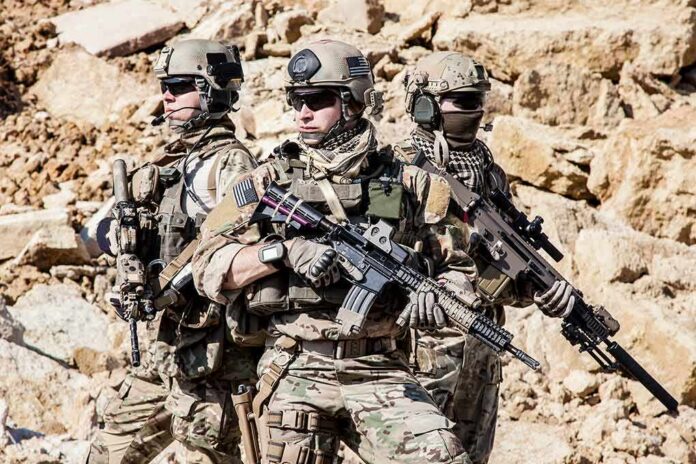
- Special Operations involvement typically centers on advising, intelligence fusion, air mobility, and targeted accompaniment with host-nation units.
- History shows these missions can achieve rapid tactical gains while raising recurring questions about scope, command relationships, civilian risk, and long-term end states.
What Changed: The Operations Are Now Public, Joint, and Inside Ecuador
The decisive development is not rumor or drift; it is an on-the-record shift. U.S. Southern Command stated that on March 3, Ecuadorian and U.S. forces launched operations in Ecuador against groups the U.S. designates as terrorist organizations. That announcement, mirrored by major outlets, confirmed what had been building through months of bilateral coordination and earlier advisory engagements: American special operators and enablers are now participating alongside Ecuadorian counterparts in an active campaign on Ecuadorian territory.
While the press statement left the order of battle and operational geometry spare by design, the pattern of reporting points to a familiar suite of functions when U.S. Special Operations partner with a host nation in a high-crime conflict: embedded advice and assist to vetted units; intelligence, surveillance, and reconnaissance (ISR) to shorten the sensor-to-shooter chain; mobility support to reach coastal and jungle targets; and precision strike options calibrated to national caveats and the host’s authorities.
Why Ecuador Asked for This: A Security Crisis With Maritime and Border Fronts
Ecuador’s security deterioration was not sudden, but its acceleration was stark. As trafficking routes shifted and local gangs professionalized, the Andean republic’s ports and nearshore waters became staging grounds for transshipment—cocaine moving from Colombia and Peru to Pacific corridors and onward. The symptoms were public and traumatic, from lethal prison gang wars to spectacular attacks in urban centers; the diagnosis, shared by Quito and Washington, was that criminal networks had reached a paramilitary scale, outmatching conventional policing and exploiting weak seams across coast, jungle, and border.
In that environment, the Ecuadorian government sought external muscle that could integrate intelligence, maritime domain awareness, and rapid interdiction. Special Operations Forces bring exactly that: small-footprint teams that plug into partner commandos, build target packages from mixed sources, and move fast enough to keep pace with networks that shift stash houses, fishing motherships, and cross-border corridors in days, not weeks. Prior partnered efforts, including advisory work that produced major cocaine seizures, previewed the model now made explicit as an operational campaign.
How These Missions Typically Work: Advise, Enable, and Accompany
Special Operations campaigns with partners share core mechanics. First, they create a fused intelligence picture—signals intercepts, human sources, aerial and maritime ISR—curated into target decks prioritized by the host government. Second, they synchronize air and ground mobility, often leveraging U.S. lift, surveillance aircraft, and allied maritime patrol to close distances that once protected traffickers. Third, they concentrate capability on vetted host-nation units that can clear, hold, and exploit sites—labs, depots, clandestine docks—while preserving the host’s lead and sovereignty on arrests and legal process.
Accompaniment ranges from “advise and assist” outside the wire to “by, with, and through” operations where U.S. personnel remain in supporting roles while Ecuadorian forces execute the assault. The mix depends on legal agreements, force protection, and politics. Public confirmation of joint action does not mean unilateral U.S. raids; it signals that the enablers—ISR, logistics, medical evacuation, targeting expertise—are now integrated with Ecuador’s campaign rhythm.
Precedents and Lessons: Speed, Friction, and the Boundaries of Mandate
Latin America offers decades of precedent. When host governments face an acute spike in violence, the fastest lever is outside support that tightens the kill chain against networked criminals. It works—at least tactically. Interdictions rise, labs and boats burn, mid-level commanders roll up. But speed introduces friction: rules of engagement differ, intelligence confidence varies by source, and maritime or littoral operations compress decision time. The line between advising and operational accompaniment blurs most in precisely the domains where traffickers hide—night waters and jungle riverine—where ISR feeds and boarding teams must act quickly or lose the target.
That is why seasoned practitioners build safeguards: clear command relationships; joint target validation with legal reviews; disciplined ISR-to-strike protocols; and post-operation assessments that fold back into training. Without these, even successful raids can seed political blowback or strategic drift. The Ecuador mission’s public framing—host-nation lead, joint operations against designated terrorist organizations—signals an intent to keep boundaries explicit while exploiting combined capabilities.
Maritime Focus: Closing the Littoral Sanctuary
Ecuador’s coastline and near-Pacific lanes are not side theaters; they are the bloodstream of the trade. Fishing fleets, go-fast boats, semi-submersibles, and innocuous coastal compounds provide cover for staging cocaine loads and refueling. Joint operations that combine coastal reconnaissance, airborne ISR, and partner commando raids threaten that sanctuary. The most important enabler is not a single platform but the fusion cell: analysts who turn radar, AIS gaps, imagery, and human tips into a time-sensitive boarding or a dawn strike on a clandestine pier.
Expect the operational map to concentrate along key chokepoints: Esmeraldas and Manabí provinces for coastal interdiction; border departments abutting Colombia for lab destruction and logistics hubs; and port-adjacent neighborhoods where containers are contaminated. When these nodes are pressured simultaneously, traffickers face rising costs and risk, which is the immediate operational aim, even if the strategic objective—durable crime reduction—demands reforms beyond the military lane.
Strategic Payoff and Real Constraints
The advantage of U.S.-Ecuador special operations lies in tempo and precision: more reliable targets, faster interdictions, and partner units that learn by doing. The constraint is structural. Criminal ecosystems regenerate if governance, policing, and courts cannot hold terrain won at dawn by commandos. The military instrument can shatter logistics; it cannot on its own replace incentives created by global demand, port corruption, and community-level protection rackets.
What to Watch Next: Indicators of Effective, Bounded Operations
Four indicators will reveal whether this campaign stays effective and bounded. First, targeting discipline—fewer broad dragnets, more high-value disruptions—signals strong intelligence hygiene. Second, maritime interdiction quality—boarding actions tied to corroborated cues rather than pattern-of-life guesswork—shows mature fusion. Third, partner capacity—Ecuadorian units independently planning and executing with lighter U.S. enablers—demonstrates progress. Fourth, political durability—clearly communicated authorities, oversight, and end-state benchmarks—prevents mission creep. The public confirmation of joint action is a starting gun, not an end state; the craft now is marrying speed with standards.
Sources:
nytimes.com, southcom.mil, riotimesonline.com, armyrecognition.com, cnn.com, facebook.com, reuters.com